Variable-Capacity Interviewing With Trusted External Panels
A spike-proof interviewing model that scales capacity without creating shadow workflows, fraud exposure, or defensibility gaps.

If it is not logged, it is not defensible. Treat surge interviewing like privileged access: identity gate before access, default-expire permissions, and evidence packs tied to the ATS record.Back to all posts
Real hiring problem
A hiring spike hits mid-quarter: 30 roles open, engineering wants pipeline velocity, and your internal interview loops are already saturating. So you bring in trusted external interviewers to absorb capacity. The calendar unblocks, but three operational risks show up within days. First, SLA breach risk moves from scheduling to decisioning. External interviewers submit late or unstructured feedback, debriefs slip, and time-to-offer becomes unpredictable. Second, legal defensibility degrades: scorecards live in email threads, recordings are inconsistently consented, and approvals are scattered. If Legal asked you to prove who approved this candidate, can you retrieve it in one place with timestamps? Third, fraud exposure increases. Remote interviewing plus temporary interviewers is a known control gap. Industry data underscores why: 31% of hiring managers say they have interviewed a candidate who later turned out to be using a false identity. A variable-capacity model that scales safely starts with one rule: identity gating before access, with evidence captured automatically.
Why legacy tools fail
Most ATS and point solutions were designed for steady-state hiring, not elastic capacity. They fail during spikes for operational reasons, not because teams are careless. Sequential checks turn spikes into compounding delays, and the lack of event logs, unified evidence packs, and rubric policy objects creates audit reconstruction work. Shadow workflows fill the gaps, and shadow workflows are integrity liabilities.
Checks run sequentially, not in parallel. Verification, scheduling, assessment, and interview setup become a waterfall workflow that compounds delays.
No unified evidence pack. Interview notes, verification outcomes, and exception approvals live in separate systems, so audit trails are reconstructed after the fact.
No SLAs or escalations. Without review-bound SLAs, scorecards arrive late and debriefs turn into 30-minute arguments.
Rubrics are not stored as standardized policy objects, so scoring drifts as external interviewers rotate in.
Shadow workflows proliferate: link-sharing, ad hoc recording, and off-platform note-taking become the real process.
Ownership and accountability matrix
Variable capacity only works when ownership and systems of record are explicit. The fastest workflow is the one that has a single source of truth and named approvers.
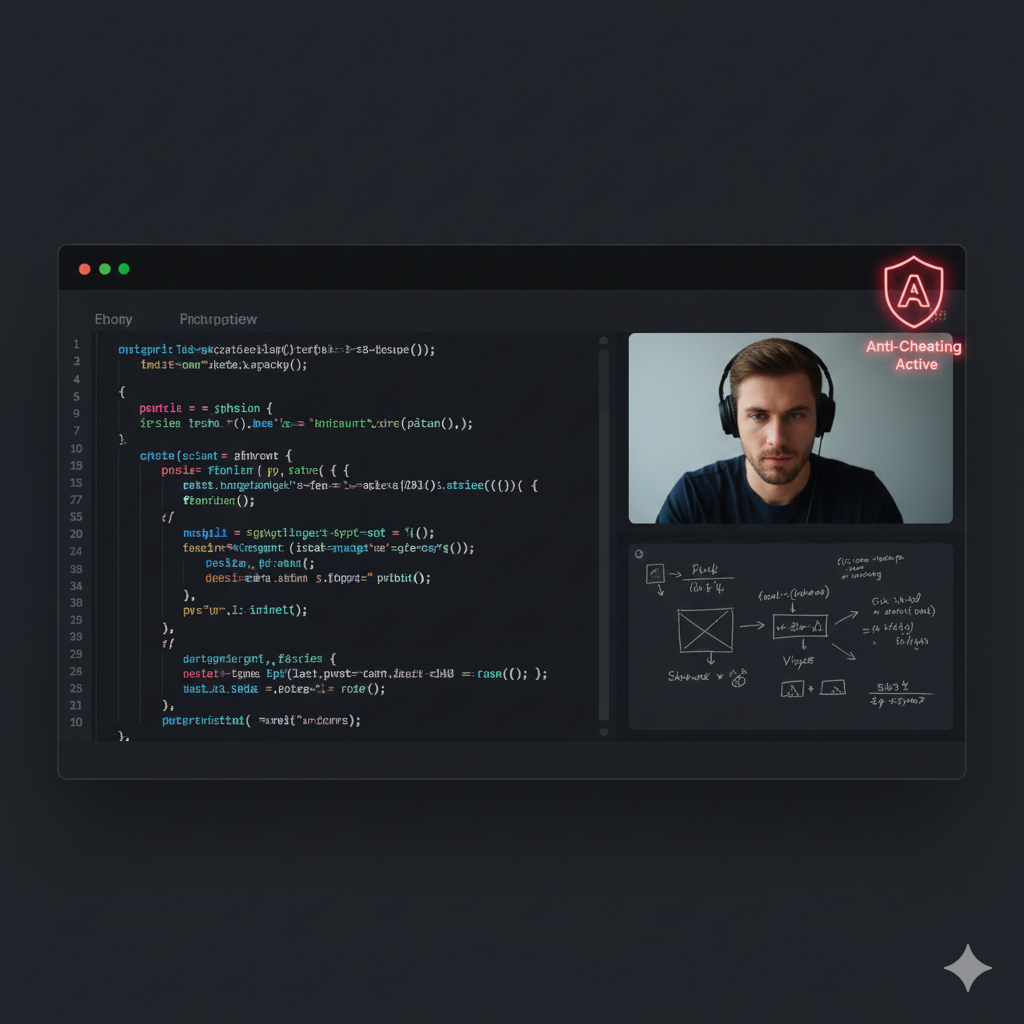
Recruiting Ops: workflow orchestration, surge triggers, interviewer provisioning, SLA enforcement.
Security: identity gate policy, access control, evidence retention rules, audit policy.
Hiring Manager: rubric discipline, interviewer calibration, debrief decision rules.
Analytics: segmented risk dashboards and time-to-event reporting.
Automated: verification initiation, scheduling triggers, rubric assignment, scorecard deadlines, ATS write-back.
Manual review: verification exceptions, high-risk fraud flags, rubric calibration updates.
ATS: candidate stage, decisions, and approvals. This is the audit anchor.
Verification service: identity events and policy versions. This is the identity truth.
Interview platform: session metadata only. Decisions must be written back to the ATS with evidence.
Modern operating model
Run surge interviewing as an instrumented workflow, not a staffing tactic. Variable capacity is controlled elasticity: you add interviewers without expanding fraud exposure or shrinking audit defensibility. The control set is consistent: identity verification before access, event-based triggers, automated evidence capture, analytics dashboards, and standardized rubrics.
Identity gate before access: no live interview link until the relevant gate passes.
Event-based orchestration: stage entry triggers parallelized checks instead of waterfall workflows.
Automated evidence capture: immutable event logs with policy versions and reviewer attribution.
Time-to-event dashboards: time-to-verify, time-to-schedule, time-to-scorecard-submit, time-to-debrief.
Standardized rubrics: structured scoring fields required before debrief to reduce drift.
Where IntegrityLens fits
IntegrityLens AI enables the variable-capacity model by making identity, interviewing, assessment, and evidence one instrumented pipeline tied to the ATS record.
Identity gating before access with biometric verification so interview access is released only after a logged gate.
Fraud prevention signals that route high-risk cases into step-up verification and SLA-bound manual review queues.
AI-powered coding assessments across 40+ languages with plagiarism detection and execution telemetry to preserve internal interviewer time during spikes.
Workflow orchestration with configurable SLAs, automated triggers, and ATS write-back so evidence lands in one place.
Immutable evidence packs and compliance-ready audit trails that capture timestamps, reviewer attribution, and policy versions.
Anti-patterns that make fraud worse
During spikes, teams optimize for calendar throughput and accidentally remove controls. Avoid these three moves because they create downstream rework, audit exposure, and fraud opportunities.
Sharing interview links before identity is verified, then attempting to retro-verify after a strong performance.
Letting external interviewers submit free-text feedback by email or chat instead of structured, ATS-anchored scorecards.
Recording interviews without consistent consent capture and retention rules, creating legal exposure without improving decision evidence.
Implementation runbook
Implement variable capacity as a surge mode with explicit triggers, SLAs, and a default-expire access model. The goal is predictable time-to-offer without sacrificing defensibility.
Step 1: Define surge mode trigger and exit criteria. Owner: Recruiting Ops. SLA: detect within 24 hours. Logged: surge_mode_enabled event with threshold, timestamp, approver.
Step 2: Provision external interviewer pool with least privilege. Owner: Recruiting Ops with Security approval. SLA: 1 business day. Logged: interviewer_provisioned event, scope, expiration, NDA and consent acceptance.
Step 3: Enforce identity gate before access. Owner: Security sets policy, Recruiting Ops enforces. SLA: verified before any live session. Logged: identity_verification_started, identity_verified or failed, policy_version, evidence pack ID.
Step 4: Risk-tier the funnel and parallelize checks. Owner: Recruiting Ops. SLA: tier assigned within 15 minutes of stage entry. Logged: risk_tier_assigned event and triggers fired.
Step 5: Assign structured rubric and lock scorecard requirements. Owner: Hiring Manager defines rubric, Recruiting Ops enforces. SLA: scorecard due within 4 hours post-interview. Logged: rubric_version_assigned, scorecard_submitted timestamps, missing_scorecard_escalation.
Step 6: Run debrief as evidence review. Owner: Hiring Manager. SLA: debrief within 24 hours of final loop. Logged: debrief_decision, approvers, rationale fields, dissent notes, risk flags.
Step 7: Exceptions process with review-bound SLAs. Owner: Security for identity exceptions, Recruiting Ops for scheduling exceptions. SLA: decision within 8 business hours. Logged: exception_requested and resolved, approver, rationale, expiration.
Close: Implementation checklist
If you want to implement this tomorrow, focus on controls that reduce rework and make every decision retrievable: identity gates, structured rubrics, SLA-bound review queues, and ATS-anchored evidence packs.
Set a surge trigger and exit threshold as a dashboard alert.
Create an external interviewer role with default-expire access and reviewer attribution.
Put an identity gate before access for candidates and external interviewers. No verified identity, no live link.
Enforce structured rubrics and require scorecards before debrief.
Add review-bound SLAs: verification exceptions (8 business hours), scorecards (4 hours), debrief (24 hours).
Require ATS-anchored evidence packs for every stage change so decisions are defensible under audit.
Related Resources
Key takeaways
- Treat external interviewing capacity like privileged access: verify identity before any live session, and expire access by default.
- Make surge capacity measurable with time-to-event metrics: time-to-verify, time-to-schedule, time-to-scorecard-submit, and time-to-debrief.
- External interviewers only work at scale if you standardize rubrics and capture tamper-resistant evidence in the ATS record.
- Run parallelized checks instead of waterfall workflows: verification, NDA/consent, and assessment can trigger together based on risk tier.
- If it is not logged, it is not defensible. Every exception needs a policy version, owner, and timestamp.
Use this as a control document you can hand to Security and Legal.
It defines surge triggers, identity gates, scorecard SLAs, exception routing, and immutable logging requirements.
The purpose is to scale interview capacity without creating shadow workflows or audit reconstruction work.
surge_mode_policy:
  version: "2026-08-15"
  trigger:
    enabled_when:
      interview_backlog_count_gte: 25
      or_time_to_schedule_hours_gte: 48
  access_model:
    external_interviewer:
      least_privilege: true
      access_expires_hours: 72
      reauth_required_each_shift: true
  identity_gates:
    candidate:
      required_before:
        - "live_interview_link_release"
        - "coding_assessment_start"
      methods:
        - "document_auth"
        - "liveness"
        - "face_match"
      typical_duration_minutes: "2-3"
      failure_path:
        route_to: "security_manual_review_queue"
        review_sla_hours: 8
    external_interviewer:
      required_before:
        - "interview_panel_assignment"
      methods:
        - "document_auth"
  scoring_controls:
    rubric_required: true
    scorecard_due_hours_after_interview: 4
    debrief_sla_hours_after_loop: 24
  logging:
    immutable_event_log: true
    evidence_pack_required_for_stage_change: true
    ats_write_back: true
Outcome proof: What changes
Before
Surge capacity relied on ad hoc external interviewers, interview links shared before verification, and scorecards collected in email. Debriefs were delayed by missing or inconsistent notes, and exception decisions were hard to reconstruct.
After
Surge mode introduced identity gating before access, structured rubrics enforced before debrief, and ATS-anchored evidence packs with immutable logs for verification and decisions. External interviewers were provisioned with default-expire access and reviewer attribution.
Implementation checklist
- Define a surge trigger (open reqs, interview backlog, or SLA breach) and a clear exit threshold.
- Create an external interviewer role with least-privilege access and default expiration.
- Put an identity gate before interview access for all non-employee interviewers and all remote candidates.
- Standardize rubrics and force structured scoring before debrief.
- Require immutable evidence packs attached to the ATS candidate record: verification outcome, policy version, timestamps, and reviewer attribution.
- Set review-bound SLAs for scorecard submission and exception handling.
Questions we hear from teams
- How do you keep external interviewers consistent with internal standards?
- Make the rubric a required, versioned object and enforce structured scorecard submission before debrief. Recruiting Ops owns enforcement and escalations, and Hiring Managers own rubric calibration. Free-text feedback outside the ATS is treated as non-defensible and excluded from debrief decisioning.
- Where should identity verification sit in the process during a spike?
- Before access. Gate live interview link release and assessment start on a verified identity event, logged with a policy version and timestamp. Exceptions go to a Security-owned review queue with a defined SLA.
- What metrics should a VP of Talent Ops track to prove the model works?
- Track time-to-event metrics: time-to-verify, time-to-schedule, time-to-scorecard-submit, time-to-debrief, plus SLA breach counts and exception volumes segmented by risk tier. These reveal where delays cluster when identity is unverified or evidence is missing.
Ready to secure your hiring pipeline?
Let IntegrityLens help you verify identity, stop proxy interviews, and standardize screening from first touch to final offer.
Watch IntegrityLens in action
See how IntegrityLens verifies identity, detects proxy interviewing, and standardizes screening with AI interviews and coding assessments.