The Breach That Cost Us Our Data Integrity
How a lack of automated controls can lead to devastating security breaches, and what engineering leaders can do to prevent them.
Effective security is not just a necessity; it's a competitive advantage.Back to all posts
The Breach That Cost Us Our Data Integrity
Your latest deployment may have introduced a vulnerability that costs your organization not just data, but trust. Imagine a critical system breach where sensitive customer data is exposed due to misconfigured access controls. The fallout? Regulatory fines, loss of customer trust, and a dent in your bottom line. In a world where data is currency, the stakes are higher than ever. Failure to implement robust security practices can lead to breaches that not only cost millions but can also destroy reputations overnight.
Why This Matters
For engineering leaders, the importance of security cannot be overstated. A single oversight can lead to catastrophic consequences. In recent years, data breaches have resulted in millions of dollars in losses for companies, not to mention the damage to brand reputation. By autom ating security controls and implementing a least-privilege access model, you can significantly reduce the risk of exposure and enhance your overall security posture. Moreover, maintaining compliance with regulations such as GDPR and HIPAA is crucial. Neglecting security can lead to hefty fines and legal repercussions, underscoring the need for a proactive approach to data protection.
How to Implement It
Step 1: Set up role-based access control (RBAC). Begin by defining roles within your organization and assign permissions based on the principle of least privilege. Regularly audit these roles to ensure they remain aligned with current business needs. Step 2: Automate secret rotation. Leverage tools like HashiCorp Vault or AWS Secrets Manager to manage and rotate secrets automatically. This minimizes the risk of exposure from hardcoded credentials and ensures that secrets are updated regularly without manual intervention. Step 3: Ensure encrypted evidence handling. Implement AES-256 encryption for all sensitive data both in transit and at rest. This protects your data from unauthorized access and ensures compliance with data protection regulations.

Key Takeaways
Always enforce least-privilege access to minimize potential exposure. Regular audits are essential to maintain this model. Automate secret rotation to reduce risk associated with hardcoded secrets. Utilize tools designed for this purpose. Encrypt all sensitive data using AES-256 standards to ensure compliance and protect against unauthorized access.
Key takeaways
- Implement least-privilege access to minimize exposure.
- Rotate secrets regularly to reduce risk.
- Use AES-256 encryption for data in transit and at rest.
Implementation checklist
- Set up role-based access control (RBAC) to enforce least-privilege access.
- Automate secret rotation using tools like HashiCorp Vault or AWS Secrets Manager.
- Ensure all data is encrypted using AES-256 standards.
Questions we hear from teams
- What is least-privilege access?
- Least-privilege access is a security principle where users are granted only the permissions necessary to perform their job functions, minimizing the risk of unauthorized access.
- Why is secret rotation important?
- Secret rotation reduces the risk of credential exposure. If credentials are compromised, rotating them regularly limits their utility and potential damage.
- What encryption standard should I use?
- AES-256 is highly recommended for encrypting sensitive data both in transit and at rest due to its strong security properties.
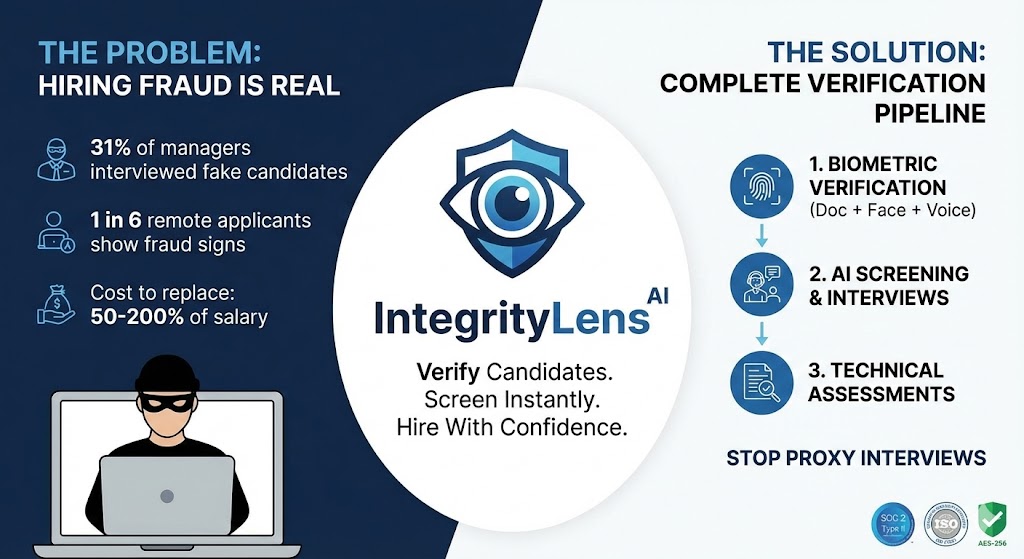
Ready to secure your hiring pipeline?
Let IntegrityLens help you verify identity, stop proxy interviews, and standardize screening from first touch to final offer.
Watch IntegrityLens in action
See how IntegrityLens verifies identity, detects proxy interviewing, and standardizes screening with AI interviews and coding assessments.