The Biometric Blind Spot: How Zero Data Retention Can Save Your Hiring Process
Unlock the power of on-device biometric processing while ensuring privacy and operational efficiency.

Zero data retention for biometric verification isn't just a best practice—it's your shield against breaches.Back to all posts
The Biometric Blind Spot
In today’s digital landscape, a single data breach can lead to catastrophic consequences. Imagine your hiring process is compromised because sensitive biometric data was leaked, leading to loss of trust and potential lawsuits. The stakes are high; protecting candidate data is not just a compliance issue—it's a brand integrity issue. As engineering leaders, the responsibility falls on you to implement solutions that ensure privacy while maintaining operational efficiency. Zero data retention for biometrics isn't just a best practice—it's a necessity.
Why This Matters
The importance of zero data retention cannot be overstated. With increasing regulatory scrutiny and public awareness about data privacy, engineering leaders must prioritize strategies that mitigate risks associated with biometric data. Failing to implement robust data protection measures can result in severe reputational damage, financial loss, and legal repercussions. By adopting on-device processing and ephemeral tokens, you not only comply with regulations but also build trust with candidates, enhancing your overall hiring process. This approach transforms security from a burden into a competitive advantage.

How to Implement It
tokens that are valid for a single session or transaction and are destroyed immediately after use. 4) Automate Continuous Integration Checks: Integrate automated checks in your CI/CD pipeline to validate that security controls are correctly configured and functioning as intended. 5) Monitor and Audit Regularly: Establish a regular audit schedule to ensure compliance and identify any potential vulnerabilities in your system.
Evaluate Your Current Systems: Identify where biometric data is currently stored and processed.
Select On-Device Processing Solutions: Choose biometric solutions that support local processing and do not store data on servers.
Implement Ephemeral Tokens: Use
Key Takeaways
Implement on-device processing to enhance security and privacy. Utilize ephemeral tokens to ensure zero data retention. Establish automated CI checks to validate security processes. Regularly monitor and audit your systems to maintain compliance and security integrity. By taking these steps, you not only protect sensitive information but also enhance the overall efficiency of your hiring process.
Key takeaways
- Implement on-device processing to enhance security and privacy.
- Utilize ephemeral tokens to ensure zero data retention.
- Establish automated CI checks to validate security controls.
Implementation checklist
- Adopt on-device biometric processing solutions.
- Implement ephemeral token systems for data verification.
- Automate CI checks to validate security processes.
Questions we hear from teams
- What are ephemeral tokens?
- Ephemeral tokens are temporary identifiers used for a single session or transaction, ensuring that sensitive data is not stored long-term.
- How does on-device processing enhance security?
- On-device processing limits the exposure of sensitive biometric data by ensuring it is processed locally and not transmitted or stored on external servers.
- What are the compliance implications of zero data retention?
- Implementing zero data retention helps organizations comply with data protection regulations by minimizing the amount of sensitive data that can be breached.
Ready to secure your hiring pipeline?
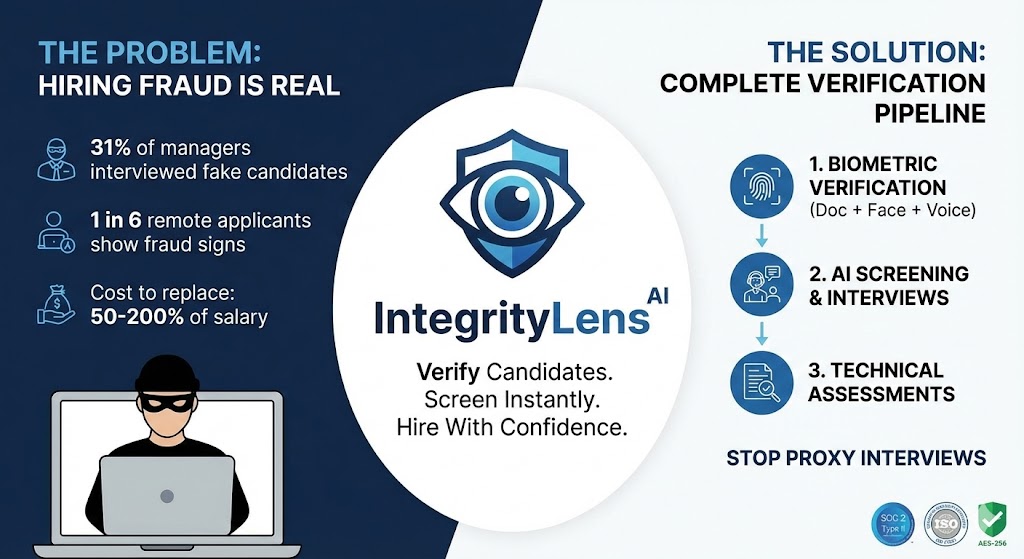
Let IntegrityLens help you verify identity, stop proxy interviews, and standardize screening from first touch to final offer.
Watch IntegrityLens in action
See how IntegrityLens verifies identity, detects proxy interviewing, and standardizes screening with AI interviews and coding assessments.