Technical Check Failures: A Fallback Plan That Saves Talent
When technical checks fail due to flaky connections or environment issues, the default reaction is to reject. This playbook shows how to recover good candidates without opening a,"
A retake is not a favor. It is a controlled recovery path with evidence, limits, and identity continuity.Back to all posts
The on-call moment: a top candidate fails for the wrong reason
It is 6:10 pm on a Thursday. Your finalist for a revenue-critical engineering role starts a timed coding assessment. Ten minutes in, their screen freezes, the proctoring feed drops, and the session auto-submits. The score is a fail. The candidate sends a screenshot showing their ISP outage. The hiring manager pings, "Can we just let them redo it?" Security replies, "Retakes are how proxy rings get in." You are the tie-breaker. By the end of this playbook, you will be able to design a fallback strategy that: (1) recovers legitimate talent quickly, (2) closes fraud openings created by ad hoc retakes, and (3) produces an audit-ready record of why you granted an exception.
Why a fallback strategy is now a PeopleOps risk control
Remote hiring has made identity and integrity part of the hiring lifecycle, not a niche concern. Checkr reported that 31% of hiring managers say they have interviewed a candidate who later turned out to be using a false identity. That implies false identity is common enough to affect policy design, not just edge cases. It does not prove your org has the same exposure, nor does it specify your industry or seniority mix, so treat it as directional pressure to add controls, not as a forecast. Pindrop reported that 1 in 6 applicants to remote roles showed signs of fraud in one real-world pipeline. Directionally, that means the retake path will be targeted if it is the easiest way to swap a person or outsource answers. It does not mean 1 in 6 of your candidates are fraudsters, because pipelines, roles, and detection definitions vary. At the same time, over-rejecting creates avoidable cost. SHRM notes replacement cost can range from 50-200% of annual salary depending on role. The implication for CHROs is not "every false negative costs X," but that a sloppy process that loses good people has material downstream cost and reputation impact.
Ownership, automation, and sources of truth
A fallback strategy fails when it is owned by "whoever is online". Set clear operators and decision boundaries: - Process owner: Recruiting Ops owns the fallback policy and workflow state changes in the ATS. PeopleOps leadership approves policy and monitors fairness and candidate experience. - Control owner: Security (or GRC) defines the minimum identity and fraud controls required for any retake or alternative step, and reviews only escalations. - Signal owner: Hiring manager owns performance interpretation once integrity is confirmed (score context, work-sample review). What is automated vs manually reviewed: - Automated: session failure classification (timeout, disconnect), retake eligibility checks, step-up verification triggers, evidence attachment, candidate messaging templates. - Manual review: only when integrity signals are mixed (for example, multiple face mismatches, anomalous device changes) or when the candidate requests an exception outside policy. Sources of truth: - ATS is the system of record for stage status and decision rationale. - The interview and assessment systems are systems of evidence (logs, recordings, scoring artifacts). - The verification service is the identity authority (verification result, liveness outcome, timestamped checks).
No retake is approved unless the ATS contains a linked Evidence Pack that explains what failed and what controls were re-run.
Design the fallback ladder: recover signal without creating loopholes
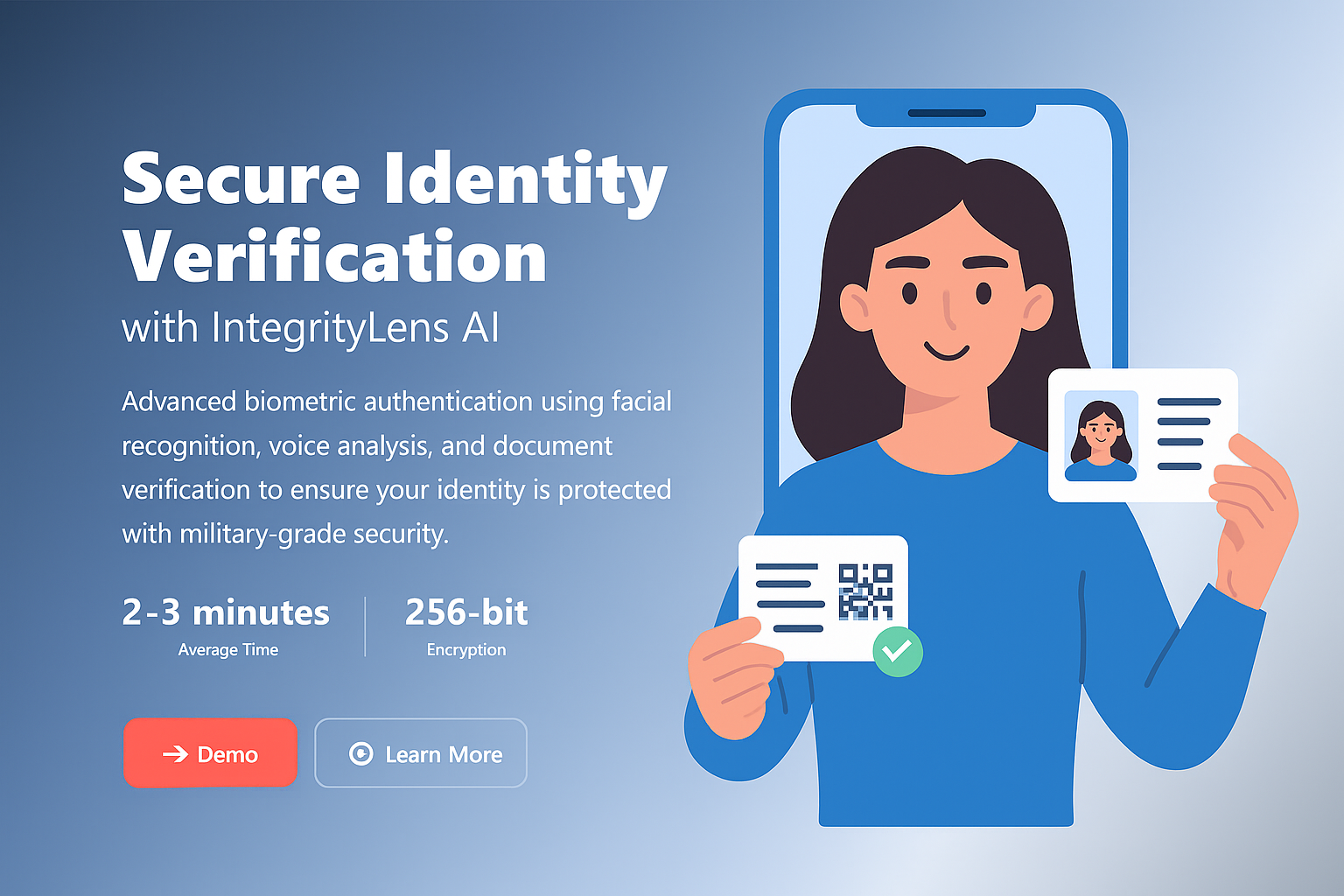
A good fallback plan is a ladder, not a single "retake" button. Each rung trades candidate friction for integrity confidence, based on what failed. Step 1: Classify the failure (within minutes). Separate platform failures from candidate environment failures and from integrity failures. If you cannot classify, treat as ambiguous and require step-up checks. Step 2: Preserve partial signal. If the candidate completed 60% of the assessment before a verified outage, store what you have as a partial artifact and do not overwrite it with a retake score. This reduces gaming and helps hiring managers interpret progress. Step 3: Choose the minimum recovery action that restores fairness: - Platform outage confirmed: restart session with same identity, same time limit remaining, same question set version. - Candidate connectivity failure: allow one retake within a short window with a new question variant and step-up verification. - Proctoring feed failure: route to an alternative assessment mode (shorter timed task plus structured interview) rather than repeated retries. Step 4: Enforce a retake budget. Define attempts and windows per role level. The goal is consistency, not punishment. Retake budgets also reduce reviewer fatigue from endless exceptions. Step 5: Add step-up controls when risk increases. Examples: device change since last attempt, unusual location shift, repeated failures, or high-stakes roles.
A written definition of "technical failure" that excludes suspicious behavior (tab switching spikes, identity mismatch, voice mismatch).
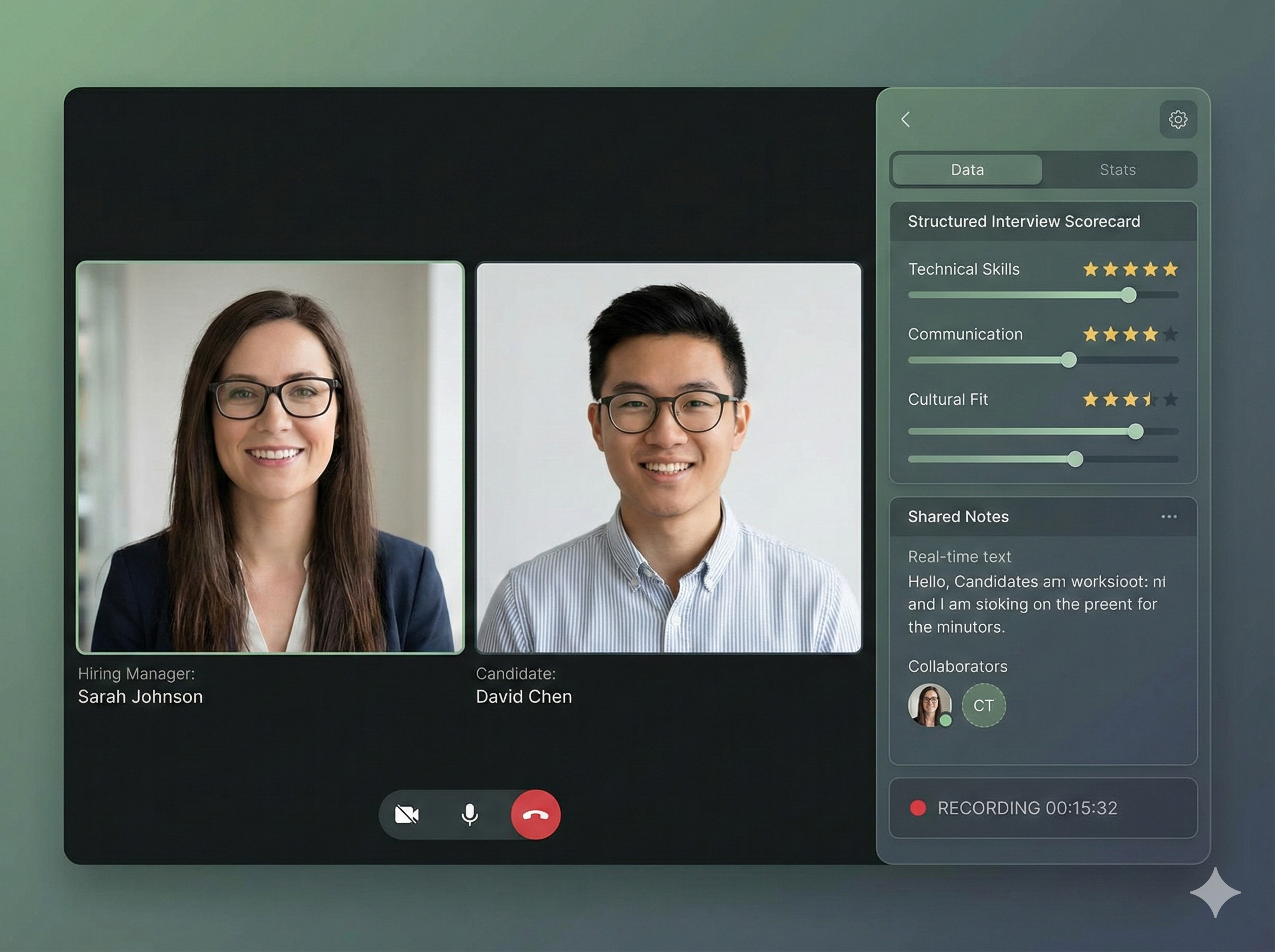
A fairness review checkpoint: track who gets retakes by geography, role, and source to spot bias from inconsistent discretion.
A policy you can actually run in production
Below is a concrete retake policy config you can hand to Recruiting Ops and Security. It encodes a bounded retake budget, integrity step-ups, and Evidence Pack requirements so decisions are consistent and auditable.
Artifact
Use this YAML as a starting point. It is intentionally strict on identity continuity and evidence capture to prevent "friendly" exceptions from becoming an attack path.
Related Resources
Key takeaways
- Treat technical check failures as an incident with a bounded, auditable recovery path, not as an ad hoc favor.
- Separate "integrity signals" (identity, liveness, anomaly flags) from "performance signals" (assessment score) so a bad connection does not erase a strong candidate.
- Use risk-tiered verification and step-up checks to prevent retakes from becoming a fraud loophole.
- Keep one source of truth in the ATS with attached Evidence Packs so Legal, Security, and hiring managers can defend decisions later.
Encodes retake eligibility, step-up verification triggers, and Evidence Pack requirements.
Designed to reduce false negatives from connectivity issues without making proxy attempts easier.
policyVersion: "2025-12-20"
owner:
  processOwner: "recruiting-ops"
  controlOwner: "security-grc"
  approverGroup: "peopleops-leadership"
scope:
  stages:
    - "technical-assessment"
  appliesToRoles:
    - "engineering"
    - "data"
    - "security"
retakeBudget:
  default:
    maxRetakes: 1
    windowHours: 72
    requireNewQuestionVariant: true
  execOrPrivilegedAccessRoles:
    maxRetakes: 0
    windowHours: 0
failureClassification:
  eligibleFailureReasons:
    - "platform-outage-confirmed"
    - "network-disconnect-confirmed"
    - "proctoring-feed-drop-confirmed"
  ineligibleFailureReasons:
    - "identity-mismatch"
    - "liveness-failed"
    - "voice-mismatch"
    - "high-anomaly-behavior"
recoveryActions:
  platform-outage-confirmed:
    action: "resume"
    resumeWithTimeRemaining: true
    requireStepUpVerification: false
  network-disconnect-confirmed:
    action: "retake"
    requireStepUpVerification: true
  proctoring-feed-drop-confirmed:
    action: "alternate-mode"
    alternateMode:
      - "short-timed-task"
      - "structured-followup-interview"
    requireStepUpVerification: true
stepUpVerification:
  requiredChecks:
    - "document"
    - "face"
    - "voice"
  expectedDurationMinutes: "2-3 (typical)"
  continuityRules:
    blockIfNewIdentity: true
    allowDeviceChangeIf:
      - "candidate-provided-reason"
      - "risk-score-below-threshold"
evidencePack:
  requiredArtifacts:
    - "assessment-session-id"
    - "failure-timestamp"
    - "platform-status-check"
    - "candidate-communication-log"
    - "verification-result-id"
    - "reviewer-notes"
  retention:
    biometrics: "zero-retention"
    evidencePackDays: 365
automation:
  autoApproveIf:
    - "eligibleFailureReason"
    - "no-integrity-flags"
    - "within-retakeBudget"
  manualReviewIf:
    - "multiple-failures"
    - "location-change"
    - "device-change"
    - "integrity-flags-present"
notifications:
  candidateTemplates:
    - key: "retake-approved"
      slaHours: 4
    - key: "manual-review-required"
      slaHours: 24
  internal:
    notifyChannels:
      - "#ta-ops"
      - "#security-hiring"
Outcome proof: What changes
Before
Retakes were handled by Slack escalation. Recruiters made inconsistent calls, hiring managers lost trust in assessment outcomes, and Security pushed for blanket retake bans after a suspected proxy incident.
After
Recruiting Ops implemented a standardized fallback ladder with ATS-enforced retake budgets, step-up identity checks, and Evidence Packs attached to every exception. Security shifted to exception-based review instead of policing every retake, and hiring managers received clearer context on partial attempts vs retakes.
Implementation checklist
- Define failure types (network, proctoring, device, platform outage) and map each to an allowed recovery action.
- Set a retake budget (attempts, time window, and versioning) and make it consistent across roles.
- Require an Evidence Pack for every exception: timestamps, logs, screenshots, identity checks, reviewer notes.
- Automate safe cases and reserve human review for ambiguous or high-risk signals to avoid reviewer fatigue.
- Measure funnel leakage: failure rate by step, retake conversion rate, and time-to-recover.
Questions we hear from teams
- Should we always offer a retake if the candidate claims a bad connection?
- No. Offer a bounded recovery path only when the failure is classified as technical and the integrity signals remain clean. When classification is ambiguous, require step-up verification and manual review.
- How do we prevent retakes from becoming a proxy interview entry point?
- Require identity continuity and step-up checks on higher-risk retakes (device change, location change, repeated failures). Ensure question variants change and keep an Evidence Pack so decisions can be audited.
- What is the fastest alternative when an assessment keeps failing?
- Use a short, structured fallback: a smaller timed task plus a structured follow-up interview. The goal is to recover signal quickly while keeping integrity controls consistent.
Ready to secure your hiring pipeline?
Let IntegrityLens help you verify identity, stop proxy interviews, and standardize screening from first touch to final offer.
Watch IntegrityLens in action
See how IntegrityLens verifies identity, detects proxy interviewing, and standardizes screening with AI interviews and coding assessments.