Source Quality Scorecards That Predict Interview-to-Retention
Stop rewarding channels for volume. Instrument source quality as a downstream, audit-ready scorecard tied to interview performance, integrity signals, and retention outcomes.

A source is not high-quality if it only produces interviews. It is high-quality if it produces verified identities that clear evidence-based scoring and sustain retention markers, with a defensible audit trail.Back to all posts
A "top source" just created your next audit problem
Track source quality by downstream evidence or you will keep paying for volume that converts into rework, fraud exposure, and early attrition. The failure pattern is predictable in a CPO war room: a channel delivers a spike of applicants, recruiting hits SLA pressure, and screening shortcuts emerge. Two weeks later, hiring managers complain about interview quality. Two months later, you are backfilling a role and Legal is asking for documentation you cannot reconstruct. The operational risk is not the bad candidate. The risk is that your process cannot prove how a candidate moved from "sourced" to "approved" across tools, reviewers, and identity states. If legal asked you to prove who approved this candidate, can you retrieve it with timestamps, rubrics, and identity continuity? If it is not logged, it is not defensible. Cost shows up twice. First, cycle-time waste: recruiter hours spent on candidates who never clear an evidence-based bar. Second, mis-hire replacement exposure. SHRM estimates replacement cost can range from 50-200% of annual salary depending on role. When a source inflates low-signal volume, you pay that tax more often and you pay it with less defensibility. Fraud makes this worse because it changes what "quality" means. Checkr reports 31% of hiring managers say they have interviewed a candidate who later turned out to be using a false identity. If your scorecards treat interviews as ground truth without identity gating, you can end up optimizing for the channels that most efficiently deliver unverifiable humans.
Why legacy tools fail to measure source quality downstream
The market did not solve this because most stacks are built for handoffs, not continuity. Your ATS can store stages. Your background check vendor can return a pass-fail. Your interview tool can store notes. Your coding tool can store scores. None of them are accountable for end-to-end evidence continuity from source to retention. The failure modes are operational, not philosophical:
Sequential checks slow everything down. When identity verification, screening, and assessments run in a waterfall, teams start skipping steps to hit time-to-offer. Time delays cluster at moments where identity is unverified.
No immutable event logs or unified evidence packs. Decisions are spread across email threads, calendars, and PDFs. Manual review without evidence creates audit liabilities.
No SLAs or audit trails. You cannot tell which stage breached, who owned the queue, or why one channel produces longer time-to-event than another.
No standardized rubric storage. Hiring managers score differently by team, so interview performance cannot be compared by source without litigation risk from inconsistent evaluation criteria.
Shadow workflows and data silos. Sourcers keep channel notes in spreadsheets. Interviewers keep concerns in chat. Those insights never write back to the ATS, so your downstream analytics optimizes the wrong thing.
Who owns source quality and what is the source of truth?
Assign ownership explicitly or your scorecards become an argument instead of a control system. Ownership and accountability matrix: - Recruiting Ops owns workflow design, source taxonomy, SLAs, and ATS data hygiene. They are accountable for the instrumented funnel and reconciliation when events fail. - Security owns identity gate policy, access control, audit policy, and step-up verification thresholds for higher-risk roles. They are accountable for evidence pack integrity and reviewer authorization. - Hiring Managers own scoring discipline: rubric completion, calibrated interview decisions, and documented rationale. They are accountable for evidence-based scoring, not "gut feel" notes. - People Analytics owns dashboards, segmentation, and retention joins. They are accountable for time-to-event analytics and confidence levels when data is missing. Sources of truth by object: - Candidate record, stage timestamps, source field: ATS is the system of record. - Identity verification state, integrity flags, and evidence pack artifacts: IntegrityLens evidence pack with ATS write-back references. - Interview rubric scores and notes: ATS-anchored rubric objects (not docs) with reviewer identity and timestamps. - Retention marker (30-60-90 day): HRIS is the system of record, joined back to ATS candidate ID with reconciliation jobs.
What is the modern operating model for source quality?
Instrument source quality as a controlled workflow where every candidate event is attributable, time-stamped, and joined to outcomes. Recommendation: treat hiring like secure access management. A source is not "good" because it delivers volume. It is good because it reliably delivers verified identities that clear evidence-based scoring and sustain retention markers, without inflating review queues or audit risk. Operating model components (answer-first, then mechanics):
Identity gate before access. Before a candidate enters high-cost stages (live interviews, take-home access, privileged repo tests), enforce identity verification. Use step-up verification for higher-risk roles or suspicious signals.
Event-based triggers instead of manual handoffs. When a candidate moves stages, emit events that start checks in parallel, with idempotency keys so retries do not duplicate records.
Automated evidence capture. Every score, reviewer note, verification artifact, and integrity signal is attached to an evidence pack tied to the ATS candidate ID.
Standardized rubrics. Store structured rubric fields, not free text. This makes source comparisons defensible and reduces bias litigation exposure from inconsistent criteria.
Segmented risk dashboards. Slice by source, role risk tier, and location. Measure time-to-event, conversion, and integrity flag rates together. You are looking for sources that look efficient but produce high integrity risk or early fallout.
Where IntegrityLens fits in this operating model
IntegrityLens acts as the ATS-anchored control plane that keeps identity, screening, and assessments in one evidence chain so source quality can be measured downstream, not guessed upstream. Operationally, IntegrityLens enables: - Identity gating with biometric verification (liveness, face match, document authentication) before expensive interview time is allocated. - Fraud prevention signals (deepfake and proxy interview detection, behavioral signals) that can be used to route only high-risk sessions into a manual review queue. - AI screening interviews that run 24/7 with consistent prompts, producing structured outputs that can be joined back to source and rubric expectations. - AI coding assessments across 40+ languages with plagiarism detection and execution telemetry, supporting evidence-based scoring rather than subjective impressions. - Immutable evidence packs with timestamped logs, reviewer notes, and zero-retention biometrics architecture, written back into the ATS for audit-ready provenance.

Anti-patterns that make fraud and bad source math worse
Do not implement source scorecards in ways that create new integrity liabilities: - Optimizing channels on top-of-funnel volume while leaving identity unverified until late stages. You will reward sources that can generate proxies and deepfakes efficiently. - Allowing rubric-free interviews or unstructured notes for some teams. Inconsistent evaluation criteria makes your source comparisons non-defensible under audit. - Running manual exceptions through email or chat without logging rationale and approver. Shadow workflows are integrity liabilities.
Implementation runbook: from volume metrics to retention-linked source quality
Normalize source data at ingestion - Owner: Recruiting Ops - SLA: Within 1 business day of candidate creation - Log/evidence: Source taxonomy version, original UTM or referral code, recruiter override reason if edited. Store as structured fields in ATS.
Apply risk-tiering rules by role - Owner: Security with CPO sign-off - SLA: 2 business days to publish policy, then continuous - Log/evidence: Risk tier decision per requisition, policy ID, effective date in immutable event log.
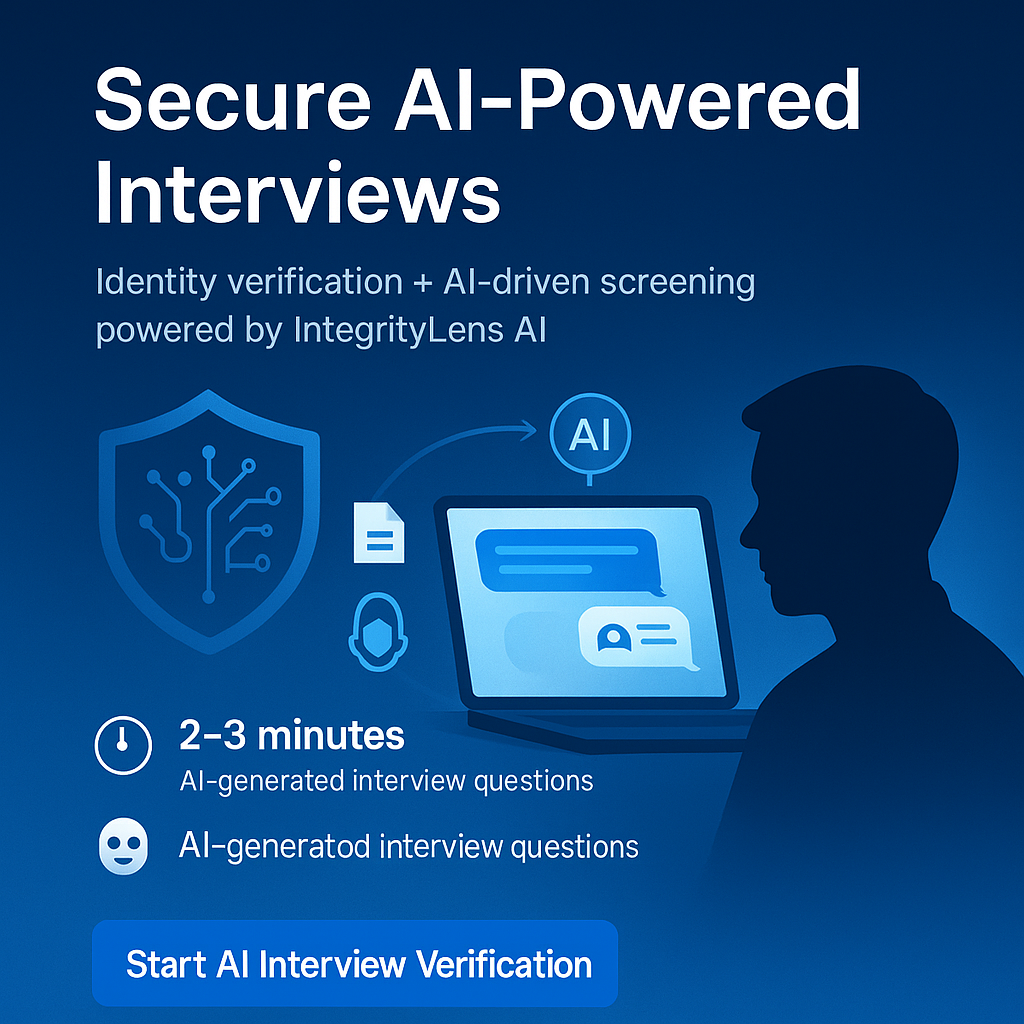
Identity gate before high-cost stages - Owner: Security (policy) and Recruiting Ops (workflow) - SLA: Verification completed before scheduling live interview. Typical end-to-end verification time is 2-3 minutes (document + voice + face). - Log/evidence: Verification timestamp, method, result, evidence pack pointer, reviewer override if any.
Standardize rubrics and scoring capture - Owner: Hiring Manager (completion) with Recruiting Ops (design) - SLA: Rubric submitted within 24 hours of interview end - Log/evidence: Rubric version, scorer identity, time submitted, tamper-resistant feedback record. Block stage movement if rubric is missing unless exception is approved and logged.
Parallelize screening and assessments - SLA: Screening and assessment invitations sent within 2 hours of stage entry - Log/evidence: Event triggers, idempotency keys, retry counts. Record assessment telemetry and AI interview outputs as structured objects tied to the ATS candidate ID.
Build the source quality scorecard join - Owner: People Analytics - SLA: Weekly refresh with daily incremental loads - Log/evidence: Data lineage job logs, reconciliation report for missing joins (ATS candidate ID to HRIS employee ID).
Set review-bound SLAs for manual queues - Owner: Recruiting Ops (queue ops) and Security (integrity review) - SLA: High-risk integrity review within 4 business hours; standard review within 1 business day - Log/evidence: Queue entry time, reviewer assignment, decision time, decision rationale, evidence pack completeness score.
Retention feedback loop without blame - Owner: CPO with HR Ops and People Analytics - SLA: 30-60-90 day markers captured within 5 business days of each milestone - Log/evidence: Retention marker definition, manager-confirmed status, reason codes. Use these as source scoring inputs, not as punitive metrics for recruiters. Operational guardrails: - Governance against robot rejection bias lawsuits: automated scores can route or prioritize, but adverse decisions require documented human review and rubric evidence. - Reconciliation when integrations fail: if webhooks drop, rerun idempotent backfills and mark scorecards as "incomplete" until evidence packs are present.
Related Resources
Key takeaways
- Treat source quality as a downstream metric: interview evidence, assessment telemetry, offer outcomes, and retention signals, all time-stamped and attributable.
- If it is not logged, it is not defensible. Build an ATS-anchored audit trail that ties every score to a rubric, a reviewer, and a timestamp.
- Use risk-tiered funnels: step-up identity verification and manual review only when integrity signals or role risk justify it.
- Eliminate shadow workflows by writing back source metadata, rubrics, and verification outcomes into the ATS as the system of record.
- A decision without evidence is not audit-ready. Standardize rubrics and evidence pack completeness to reduce legal exposure.
A versioned policy that defines downstream source quality, required evidence, and SLA gates. Store the policy ID in your ATS and evidence packs so every decision is attributable to a rule set.
version: "1.0"
policy_id: "src-quality-scorecard-v1"
effective_date: "2026-07-20"
owners:
  recruiting_ops: "workflow + source taxonomy + SLA operations"
  security: "identity gate policy + integrity review"
  hiring_manager: "rubric completion + decision rationale"
  people_analytics: "dashboards + retention joins"

definitions:
  source_quality: "A downstream score for a sourcing channel based on verified identity continuity, rubric-based interview performance, assessment telemetry, offer outcomes, and retention markers."

required_evidence_for_audit_ready_score:
  - ats_candidate_id
  - source_type
  - source_detail
  - stage_timestamps
  - identity_verification_result
  - rubric_version
  - rubric_scores
  - reviewer_identities
  - evidence_pack_id

risk_tiers:
  low:
    requires_identity_gate_before: ["onsite", "offer"]
  medium:
    requires_identity_gate_before: ["live_interview", "offer"]
  high:
    requires_identity_gate_before: ["screen", "live_interview", "offer"]

slas:
  identity_verification:
    target: "< 1 hour from link sent"
    breach_action: "block scheduling; allow exception only with security-approved override"
  interview_rubric_submission:
    target: "< 24 hours from interview_end"
    breach_action: "hold decision meeting until rubric submitted or exception logged"
  integrity_manual_review_high_risk:
    target: "< 4 business hours from queue_entry"
    breach_action: "escalate to security lead; record reason code"

dashboard_metrics:
  by_source:
    - "verified_identity_rate"
    - "integrity_flag_rate"
    - "screen_to_live_interview_conversion"
    - "live_interview_pass_rate (rubric-based)"
    - "assessment_pass_rate"
    - "offer_accept_rate"
    - "30_60_90_day_retention_marker_rate"
    - "median_time_to_offer (time-to-event)"
  data_quality:
    - "missing_source_field_rate"
    - "missing_rubric_rate"
    - "evidence_pack_incomplete_rate"

exceptions:
  allowed:
    - "identity_gate_outage"
    - "candidate_accessibility_accommodation"
  requires:
    - "approver_id"
    - "timestamp"
    - "rationale"
    - "compensating_controls"
Outcome proof: What changes
Before
Channels were evaluated by applicant volume and cost per applicant. Interview notes lived in the interview tool, source tags were inconsistent, and identity was verified late or inconsistently. Leadership could not reliably explain why certain sources had higher early-attrition or higher integrity review load.
After
Recruiting Ops enforced clean source taxonomy at ingestion, standardized rubrics in the ATS, and moved identity gating ahead of live interviews for medium and high-risk roles. People Analytics shipped a weekly source scorecard joined to verification outcomes, interview rubric evidence, and 30-60-90 day retention markers. Security operated a review-bound integrity queue with timestamps and documented overrides.
Implementation checklist
- Define a source taxonomy and enforce clean source data entry at ingestion.
- Create a scorecard that joins: source -> interview rubric -> assessment telemetry -> verification outcomes -> offer outcome -> retention marker.
- Set review-bound SLAs for each gate (identity, screening, assessments, decision).
- Implement event-based triggers with retries and idempotency to prevent missing evidence packs.
- Ship segmented risk dashboards: performance by source, integrity flags by source, time-to-event by source.
Questions we hear from teams
- What is the minimum retention signal to tie back to a source without overfitting?
- Use a simple, consistent marker first: active at 30-60-90 days with a reason code for non-retention. Treat it as a feedback loop for source scoring, not a blame metric, and log data completeness so you do not draw conclusions from missing joins.
- How do we avoid bias risk when using AI screening or assessment signals in source scorecards?
- Do not use automated outputs as sole rejection criteria. Use them to route candidates, prioritize review, or trigger step-up verification. For adverse decisions, require a human reviewer, a standardized rubric, and documented rationale tied to the evidence pack.
- How do we handle integration failures without corrupting source scorecards?
- Use event-based orchestration with retries and idempotency keys. Run daily reconciliation jobs that flag missing evidence packs, missing rubrics, or missing HRIS joins and mark the scorecard row as incomplete until the record is repaired.
Ready to secure your hiring pipeline?
Let IntegrityLens help you verify identity, stop proxy interviews, and standardize screening from first touch to final offer.
Watch IntegrityLens in action
See how IntegrityLens verifies identity, detects proxy interviewing, and standardizes screening with AI interviews and coding assessments.