Silver Medalist Re-Engagement With Audit-Ready Notes
A workflow briefing for reactivating past finalists using structured interview evidence, identity gating, and ATS-anchored audit trails.
Re-engagement is a re-entry event. If you do not re-verify identity and re-anchor evidence, you are granting privileged access on stale context.Back to all posts
When a "fast backfill" becomes an audit problem
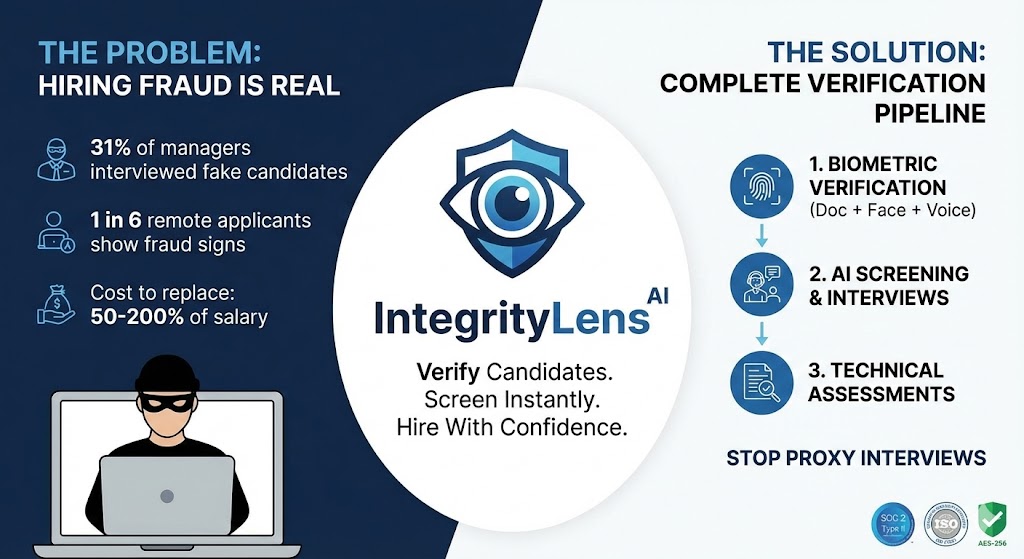
Recommendation: run silver-medalist re-engagement as a risk-tiered, instrumented workflow with identity gating and ATS-anchored evidence packs, not as ad hoc recruiter outreach. The high-stakes scenario looks like this: a hiring manager needs a backfill in 10 business days. Recruiting pulls a "silver medalist" list from 6 months ago and starts re-contacting candidates from old notes and calendars. Within 48 hours you have three operational failures at once. First, SLA breakdown: interviews get scheduled off-platform because the fastest path is email plus a shared scheduling link. Time-to-offer looks better until reschedules and no-shows spike because you are not controlling preconditions (identity verification, updated availability, refreshed role requirements). Second, legal exposure: the re-engagement message references reasons someone was not selected last time. Those reasons live in unstructured notes, mixed with subjective language, and nobody can prove what was actually used in the new decision. If legal asked you to prove who approved this candidate, can you retrieve it? If it is not logged, it is not defensible. Third, fraud risk: reactivated candidates are treated as "known" and often bypass identity checks. Remote hiring fraud is not hypothetical. Checkr reports 31% of hiring managers say they have interviewed a candidate who later turned out to be using a false identity. Pindrop reports 1 in 6 applicants to remote roles showed signs of fraud in one real-world pipeline. A fast backfill that skips the identity gate is privileged access without verification. Finally, cost of mis-hire: replacing an employee can cost 50-200% of annual salary depending on role, per SHRM. Re-engagement is supposed to reduce wasted sourcing time, not increase downstream replacement risk.
Why legacy tools fail at silver-medalist reactivation
Recommendation: stop treating "silver medalist" as a label and start treating it as a reusable evidence pack with a re-entry policy. Why the market failed to solve this is structural. Traditional ATS workflows assume forward motion, not re-entry. Background check and assessment vendors assume a single candidacy event, not a second pass that must reconcile prior evidence with new evidence. Common failure modes you see in war rooms: Sequential checks that slow everything down. Teams wait to see if a candidate replies before initiating verification or assessments, then compress everything into the last 72 hours, exactly when exceptions occur. No unified evidence packs. Notes live in calendars, email threads, scorecards, and PDFs. A decision without evidence is not audit-ready, and scattered evidence is effectively no evidence. No review-bound SLAs. Recruiters chase approvals in chat. Hiring managers revise requirements in text threads. Nobody can tell where time delays cluster because nothing is timestamped as an event. No standardized rubric storage. Six-month-old notes do not map cleanly to today's competencies, so teams either ignore them or over-weight them, both of which create defensibility risk. Shadow workflows and data silos. Sourcing insights never reach the interview loop, and interview outcomes never update the re-engagement list. The list gets "hand-managed" and becomes an integrity liability.
Ownership and accountability matrix (non-negotiable)
Recommendation: assign explicit owners, define what is automated versus manually reviewed, and declare the ATS as the single source of truth with append-only evidence artifacts. Ownership model: Recruiting Ops owns the workflow, cohort rules, templates, routing, SLAs, and reconciliation. They are accountable for time-to-event metrics and data quality. Security owns identity gate policy, verification exception handling, access control, and audit policy. They are accountable for fraud exposure and evidence retention posture. Hiring Manager owns scoring discipline: which competencies must be re-validated, what counts as a "material change" from six months ago, and final decision rationale. What gets automated vs manually reviewed: Automated: candidate selection into cohorts, note normalization into structured fields, outreach sequencing, event logging, reminders, and queue routing. Manual review: any use of negative signals, any disposition decision, any verification exception, and any re-offer decision without refreshed assessment evidence. Sources of truth: ATS is the system of record for status, disposition, timestamps, and the evidence pack pointer. Interview notes and scorecards must write back into the ATS as structured objects (competency, signal, severity, evidence link, author, timestamp). Verification service is the source of truth for identity events, but the ATS must store the immutable event log references so audits do not depend on third-party portals.
Re-engagement cohort id, cohort rule version, and enrollment timestamp
Prior role id, prior stage reached, and prior disposition reason code (controlled vocabulary)
Structured interview signals: competency, rating, evidence snippet, concern flag, reviewer id, timestamp
Identity gate status: not-started, passed, step-up-required, failed, exception-approved (with approver)
What is the modern operating model for re-engagement?
Recommendation: build an instrumented re-entry lane with identity gating before access, event-based triggers, automated evidence capture, and dashboards that merge speed and risk. Operating model, end to end:
Risk-tiered funnel. Not every silver medalist is equal. Segment by role criticality, access level, prior signal strength, and time since last verification. High-risk roles require step-up verification by default.
Identity verification before access. Before issuing any new interview link, enforce an identity gate. This is the same principle as privileged access management: verify identity before granting system access, not after the fact.
Event-based triggers. Every state transition is an event: cohort-enrolled, outreach-sent, candidate-accepted, verification-started, verification-passed, interview-scheduled, assessment-completed, offer-approved. Use idempotent webhooks so retries do not create duplicate outreach or duplicate assessments.
Automated evidence capture. Convert six-month-old notes into structured signals, store them as tamper-resistant feedback, and append new evidence as the candidate re-enters. The point is not "better notes". The point is an ATS-anchored audit trail.
Segmented risk dashboards. Your dashboard must show time-to-event (outreach-to-response, response-to-verification-pass) alongside integrity signals (verification exception rate, duplicate candidate rate, proxy flags) so speed does not blind you to risk.
Candidates change email or phone. Without identity gating and reconciliation, you create duplicates and lose history.
The role changed. Old positives may no longer map to current requirements. Require a rubric delta review by the hiring manager.
Webhooks retry. Without idempotency keys, you double-send outreach or double-book interviews, then recruiters create manual workarounds.
Where IntegrityLens fits in this workflow
Recommendation: use IntegrityLens as the ATS-anchored control plane that gates re-entry on verified identity and preserves an immutable evidence pack across old and new candidacy events. IntegrityLens enables: Identity gate before access using biometric verification (liveness, document authentication, face match) so reactivated candidates do not bypass controls. Immutable evidence packs with timestamped logs and reviewer notes so six-month-old notes and today's decisions are linked, attributable, and audit-ready. Zero-retention biometrics architecture to reduce privacy exposure while still capturing pass-fail evidence and verification metadata. AI screening interviews and AI coding assessments that run on demand, so you can refresh evidence quickly without compressing the schedule into a last-minute scramble. ATS-anchored write-backs so outcomes do not die in inboxes and spreadsheets.
Anti-patterns that make fraud worse
Do not do these three things. Each one increases fraud exposure and weakens defensibility: Skip identity gating because the candidate is "known" from last cycle. Let recruiters paste subjective, unstructured prior notes into outreach or scorecards without controlled reason codes and human review. Run re-engagement from a spreadsheet or email sequence tool that does not write events back to the ATS, creating shadow workflows and missing audit trails.
Implementation runbook: re-engagement you can run on timestamps
Cohort build and enrollment Owner: Recruiting Ops SLA: 4 business hours from new req opened Evidence logged: cohort rule version, candidate ids, prior disposition code, enrollment timestamp Controls: exclude candidates with legal hold, opted-out status, or unresolved verification failures
Note normalization into structured signals Owner: Recruiting Ops (automation), Hiring Manager (spot review) SLA: 1 business day Evidence logged: extracted competencies, signal ratings, concern flags, source note links, author attribution, normalization job id Controls: if negative signal is used, require human confirmation before outreach
Outreach approval gate SLA: 8 business hours Evidence logged: approved template id, role id, comp band, approver id, timestamp Controls: template must avoid prior-cycle adverse statements unless approved by Legal policy
Candidate consent and re-entry acceptance Owner: Candidate action, monitored by Recruiting Ops SLA: 5 calendar days before cohort expires Evidence logged: acceptance timestamp, consent artifact, updated contact info Controls: if no response, auto-expire access by default, not exception
Identity gate before scheduling Owner: Security (policy), Recruiting Ops (queue ops) SLA: verification completed within 2-3 minutes typical end-to-end (document + voice + face) once started; exception review within 4 business hours Evidence logged: verification-started, verification-passed or failed, step-up required, exception approver, immutable event log pointer Controls: no interview link is issued until verification passes or an exception is logged with approver and rationale
Evidence refresh (screening interview and assessment) Owner: Hiring Manager (rubric), Recruiting Ops (orchestration) SLA: schedule within 2 business days of verification pass; complete within 5 business days Evidence logged: rubric version, scoring events, telemetry links for assessments, reviewer ids, timestamps Controls: standardize pass criteria; route borderline cases into a review-bound SLA queue
Decision and closure Owner: Hiring Manager (decision), Recruiting Ops (closure), Security (final audit spot checks) SLA: 1 business day from final evidence completion Evidence logged: decision rationale code, evidence pack snapshot id, offer approvals, timestamps Controls: decision must reference evidence pack ids, not free-text summaries; auto-generate audit-ready packet for legal inquiry
Related Resources
Key takeaways
- Treat re-engagement as a controlled re-entry into a privileged workflow, not as a marketing drip.
- Use structured notes as evidence-based scoring inputs, but require human review gates to avoid automated adverse action risk.
- Instrument the workflow with timestamps, ownership, and SLA-bound review queues so decisions are defensible six months later.
- Re-verify identity before any new interview access to reduce proxy interview and deepfake exposure.
- Prevent data silos by writing re-engagement outcomes and refreshed scores back to the ATS as the single source of truth.
Versioned policy for cohorting, identity gating, SLAs, and required evidence logging. Designed to be enforced by workflow automation with idempotent events and ATS write-backs.
version: "1.0"
policyName: "silver-medalist-reengagement"
owners:
  recruitingOps: "ta-ops@company.com"
  security: "security-identity@company.com"
  hiringManager: "hm-role-owner"
cohortRules:
  lookbackDays: 210
  eligiblePriorStages: ["final", "onsite", "offer_declined"]
  excludeDispositionCodes: ["fraud_suspected", "policy_violation", "legal_hold", "opt_out"]
  requireStructuredNotes: true
  requiredFields:
    - competency
    - rating
    - evidenceSnippet
    - reviewerId
    - timestamp
workflow:
  slas:
    cohortEnrollmentHours: 4
    noteNormalizationBusinessDays: 1
    outreachApprovalHours: 8
    verificationExceptionReviewHours: 4
    decisionAfterFinalEvidenceHours: 24
  gates:
    - name: "outreach_approval"
      type: "manual"
      requiredApproverRole: "recruiting_ops"
      evidenceToLog: ["templateId", "approverId", "approvedAt"]
    - name: "identity_gate_before_interview"
      type: "automated"
      blockActions: ["issue_interview_link", "send_assessment_link"]
      passCriteria: ["liveness_pass", "document_auth_pass", "face_match_pass"]
      stepUpOn: ["deepfake_signal", "proxy_interview_signal", "mismatch_signal"]
      evidenceToLog: ["verificationStartedAt", "verificationResult", "eventLogRef"]
    - name: "negative_signal_review"
      type: "manual"
      triggerOn: ["concernFlag=true"]
      requiredApproverRole: "hiring_manager"
      evidenceToLog: ["concernCategory", "reviewDecision", "reviewedAt"]
logging:
  systemOfRecord: "ATS"
  writeBackEvents: true
  eventIdempotencyKey: "candidateId + eventType + policyVersion"
  requiredEvents:
    - "cohort_enrolled"
    - "outreach_sent"
    - "candidate_accepted"
    - "verification_started"
    - "verification_passed_or_failed"
    - "assessment_completed"
    - "decision_recorded"
retention:
  biometrics: "zero-retention"
  evidencePackRetentionDays: 730
Outcome proof: What changes
Before
Silver medalist lists lived in spreadsheets and recruiter inboxes. Candidates were re-contacted without consistent rubric mapping, and interview links were issued before re-verification. Exception handling happened in chat with no durable audit trail.
After
Re-engagement ran as an ATS-anchored re-entry lane with structured notes, identity gate before access, and immutable evidence packs linking prior and current candidacy events. Exceptions moved into SLA-bound queues with named approvers.
Implementation checklist
- Define the re-engagement cohort rules (role family, score bands, recency, prior disposition).
- Normalize legacy notes into a structured schema (competencies, signals, concerns, evidence links).
- Set a review-bound SLA for outreach approval and a separate SLA for verification exceptions.
- Identity gate before any new interview link is issued.
- Create an ATS-anchored evidence pack per candidate: prior notes, new outreach, verification events, updated rubric, final decision.
- Add reconciliation rules for duplicates and changed emails/phones.
Questions we hear from teams
- How far back should silver medalist notes be considered reliable?
- Treat prior notes as context, not as a decision input. Use them to prioritize outreach and to pre-fill a structured rubric, then require refreshed evidence (new interview and or assessment) before any hire decision. Store the rubric delta as a logged event.
- What creates legal exposure in automated re-engagement?
- Two things: using prior negative notes as automated adverse action, and failing to show consistent application of a policy. Mitigate with controlled reason codes, human review gates for negative signals, and ATS-anchored audit trails that show who approved what and when.
- Why is identity gating required if the candidate already interviewed?
- Re-engagement is a new access event. Identities can be reused, proxied, or deepfaked in remote workflows, and the risk increases when teams assume someone is "known" and skip controls. Identity gating before issuing interview links closes that gap.
- What should the VP of Talent Ops measure weekly?
- Time-to-event metrics (req-open-to-cohort-enrolled, outreach-sent-to-response, response-to-verification-pass, verification-pass-to-decision) plus integrity metrics (verification exception rate, duplicate rate, step-up rate) segmented by role family and location.
Ready to secure your hiring pipeline?
Let IntegrityLens help you verify identity, stop proxy interviews, and standardize screening from first touch to final offer.
Watch IntegrityLens in action
See how IntegrityLens verifies identity, detects proxy interviewing, and standardizes screening with AI interviews and coding assessments.