Source Quality Triage: Prove Which Channels Actually Perform
An operator briefing for CPOs: stop rewarding sourcing volume and start instrumenting downstream performance with defensible, logged signals.
Source quality is not an upstream metric. It is the identity-verified, rubric-scored, retention-linked performance of a channel, recorded in an audit-ready event log.Back to all posts
Real Hiring Problem
Your sourcing report shows record applicant volume. Two weeks later, the interview loop is overloaded, time-to-offer breaches your internal SLA, and a post-mortem reveals that a meaningful slice of interviews never should have happened because identity was unverified or interview performance was consistently below bar from one channel. For a CPO, the risk is not just wasted recruiter hours. It is audit liability and cost exposure: you funded channels based on volume, then advanced candidates without a defensible evidence trail connecting source to performance. Replacement costs are commonly estimated at 50-200% of annual salary, role-dependent, so scaling the wrong source mix is a budget leak you can quantify in Finance terms. (SHRM) Fraud turns "source quality" into a security control. 31% of hiring managers report interviewing someone who later turned out to be using a false identity. If you do not segment conversion and performance by source with identity gating, you cannot isolate which sources are creating the exposure. (Checkr)
Recruiting Ops cannot defend channel spend because quality is not measured downstream.
Hiring Managers lose confidence because debriefs are flooded with low-signal interviews.
Legal cannot reconstruct who approved what, when, and based on which evidence.
WHY LEGACY TOOLS FAIL
Most stacks measure what is easy: applicant counts, clicks, and time-in-stage inside the ATS. They do not measure what is defensible: identity-verified conversion, rubric-calibrated interview outcomes, and early retention proxies tied back to the original source. Why the market failed to solve it: legacy tools split your truth across systems. ATS records stages, interview platforms hold rubrics inconsistently, assessment vendors store telemetry elsewhere, and background checks arrive late. Without an immutable event log and unified evidence packs, you cannot answer basic audit questions: If legal asked you to prove who approved this candidate, can you retrieve it? Operationally, the typical failure pattern is predictable: - Sequential checks that slow everything down. - No unified event logs or evidence packs per candidate. - No review-bound SLAs, so exceptions and edge cases sit in inboxes. - No standardized rubric storage, so "quality" becomes subjective and non-reproducible. - Shadow workflows and data silos, where sourcing insights never reach the interview loop.
Volume KPIs create an incentive to push unverified candidates into scheduling.
Interview load increases without improving offer acceptance or retention.
Channel decisions become political because the evidence is fragmented.
OWNERSHIP & ACCOUNTABILITY MATRIX
Recommendation: assign owners per control point before you change metrics. Source quality becomes reliable only when each step has a named owner, an SLA, and a log artifact written back to the ATS. Ownership model (minimum viable): - Recruiting Ops owns workflow design, required fields, queue SLAs, and reconciliation when webhooks fail. - Security owns identity gate policy, step-up verification rules, access control, and audit policy for evidence packs. - Hiring Managers own rubric discipline, structured scoring, and debrief decision logging. - People Analytics owns dashboards, segmentation by source, and monthly channel rationalization.

ATS: candidate record, stage history, source field, offer decisions.
Verification service: identity events, liveness outcomes, document authentication outcomes.
Interview and assessment modules: rubric scores, telemetry, reviewer identity, timestamps.
HRIS: retention outcomes (30-60-90 day), start dates, termination reasons (as available).
MODERN OPERATING MODEL
Recommendation: treat sourcing as an instrumented, risk-tiered funnel where every downstream outcome is attributable to a source and anchored to an identity-verified candidate record. Operating model components:
Identity verification before access. Do not grant interview access (calendar invites, links, take-home prompts) until the identity gate is satisfied for risk-tiered roles or sources.
Event-based triggers. When a candidate moves stages, emit an event (stage_changed, identity_verified, assessment_completed) that updates dashboards and enforces SLAs.
Automated evidence capture. Every decision point should produce an artifact: verification result, rubric scores, reviewer notes, exception approvals.
Analytics dashboards. Track time-to-event (time-to-verify, time-to-first-interview) and quality distributions by source, not just conversion.
Standardized rubrics. Store structured rubric fields, not PDFs or free text, so you can compare channels and interviewers without interpretation.
Identity-verified pass rate by source.
Interview pass-through rate by source (per stage).
Rubric score distribution by source (median, variance).
Offer acceptance and early retention proxies by source (30-60-90 day where available).
Exception rate by source (manual overrides, re-verification, suspicious signals).
WHERE INTEGRITYLENS FITS
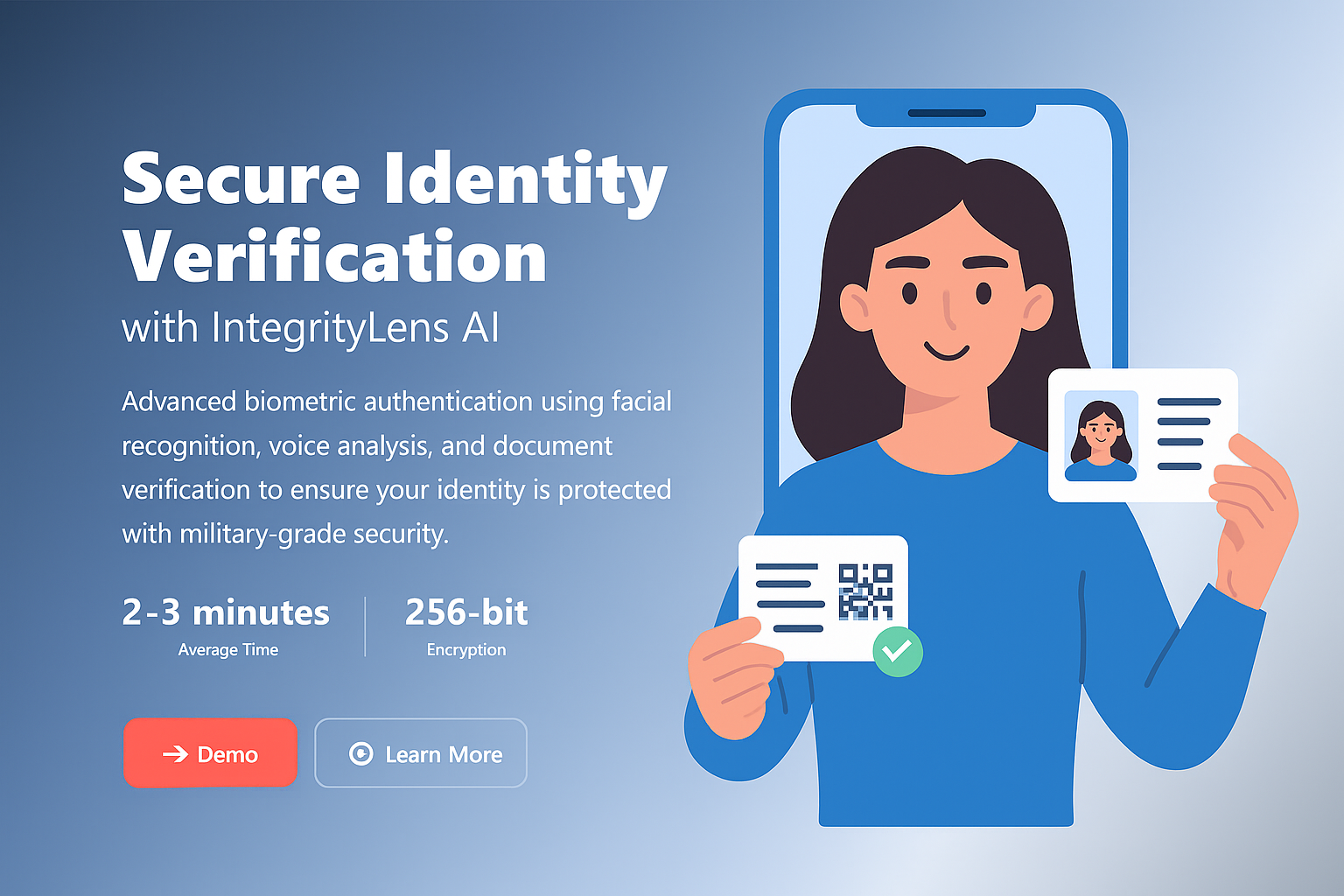
IntegrityLens AI fits as the ATS-anchored control plane that ties source to downstream, identity-verified outcomes with tamper-resistant logs. The goal is not more data. The goal is defensible, timestamped evidence that survives audit questions and budget reviews. What it enables operationally: - Identity gate before interview access using liveness checks, face match, and document authentication, with typical end-to-end verification in 2-3 minutes. - Risk-tiered verification so higher-risk sources and remote roles step up controls without slowing every candidate. - AI screening interviews available 24/7 to normalize early-stage signal capture across timezones. - Technical assessments across 40+ languages with plagiarism detection and execution telemetry for evidence-based scoring. - Immutable evidence packs: timestamped logs, reviewer notes, and audit-ready exports with zero-retention biometrics options.

Channel spend becomes a controllable lever tied to defensible outcomes.
Fraud risk becomes measurable per source, not anecdotal.
Time-to-offer improves by parallelizing checks while keeping audit trails intact.
ANTI-PATTERNS THAT MAKE FRAUD WORSE
Do not do these three things if you want source quality metrics you can defend: - Let scheduling happen before identity verification for remote roles or flagged sources. It creates privileged access without gating and wastes interview capacity. - Store rubrics in free text or attachments that cannot be aggregated, compared, or audited. If it is not structured and timestamped, it is not defensible. - Run exceptions in Slack or email without writing back approvals to the ATS event log. Shadow workflows are integrity liabilities.
No consistent timestamps for who approved an exception and why.
No ability to prove consistent treatment across candidates and sources.
No reliable way to isolate bad channels when fraud or mis-hire incidents occur.
IMPLEMENTATION RUNBOOK
Recommendation: implement source quality tracking as a staged control rollout. Start with clean source data, then identity gating, then rubric standardization, then retention linkage. Step-by-step (with SLAs, owners, and evidence):
Standardize source capture at ingest (SLA: immediate). Owner: Recruiting Ops. Evidence: ATS required field with controlled values and timestamped field-change history.
Apply risk-tier rules per source and role (SLA: 5 business days to define, reviewed quarterly). Owner: Security with CPO sign-off. Evidence: policy document and change log.
Identity gate before interview scheduling for high-risk tiers (SLA: verify within 15 minutes of candidate initiating; manual review within 4 business hours if flagged). Owner: Security for policy, Recruiting Ops for queue operations. Evidence: identity_verified or identity_failed events with timestamps.
Run screening in parallel once identity is verified (SLA: schedule or AI screen within 24 hours). Owner: Recruiting Ops. Evidence: interview_scheduled, ai_screen_completed events, stored transcript and scoring rubric.
Enforce structured rubrics for each interview (SLA: submit within 2 hours post-interview; debrief within 24 hours). Owner: Hiring Manager. Evidence: rubric_submission event with interviewer identity, scores, and notes.
Close the loop to retention proxies (SLA: monthly refresh). Owner: People Analytics. Evidence: HRIS join keyed by candidate ID, dashboard snapshot stored for audit (who ran it, when).
Monthly source rationalization (SLA: 30 days cadence). Owner: CPO with Recruiting Ops and Security. Evidence: decision log stating which sources were paused, capped, or expanded and the metrics used.
Use idempotency keys for webhook-driven events (candidate_id + event_type + timestamp) to prevent duplicates.
Build retries with reconciliation: if verification events fail to write back, queue a nightly job to backfill missing events.
Treat dashboard numbers as derived views, not the system of record. The ATS event log remains the source of truth.
Related Resources
Key takeaways
- Define "source quality" as downstream, identity-verified outcomes: pass-through rates, rubric scores, and early retention proxies - not applicants per week.
- Instrument every stage with timestamps and owners so you can explain channel decisions to Legal, Finance, and Security.
- Use parallelized checks (identity verification plus screening) to reduce time-to-offer without creating shadow workflows.
- Treat low-trust channels as risk-tiered funnels with step-up verification and review-bound SLAs.
- If it is not logged, it is not defensible: unify evidence packs per candidate and write back outcomes to the ATS.
Use this as a starting control policy to connect source to identity gates, interview requirements, SLAs, and what gets written to the immutable event log. Recruiting Ops owns enforcement in workflow. Security owns tiers and step-up rules.
version: 1
policy_name: source-quality-risk-tiers
sources:
  - name: employee_referral
    risk_tier: low
    identity_gate:
      required_before: onsite_or_remote_interview
      step_up_on_signals: ["deepfake_flag", "proxy_suspected"]
    screening:
      mode: "ai_screen_or_recruiter_screen"
      sla_time_to_screen_hours: 24
    rubric:
      required: true
      sla_submit_hours: 2
    logging:
      events_required:
        - application_ingested
        - source_captured
        - identity_verified_or_exempted
        - screen_completed
        - rubric_submitted
        - stage_changed

  - name: job_board_unknown
    risk_tier: high
    identity_gate:
      required_before: any_interview_link_issued
      methods: ["document_auth", "liveness", "face_match"]
      sla_complete_minutes: 15
      manual_review_sla_hours: 4
    screening:
      mode: "ai_screen_required"
      sla_time_to_screen_hours: 12
    rubric:
      required: true
      structured_fields_only: true
      sla_submit_hours: 2
    logging:
      events_required:
        - application_ingested
        - source_captured
        - identity_check_started
        - identity_verified_or_failed
        - ai_screen_completed
        - rubric_submitted
        - exception_requested
        - exception_approved_or_denied
        - stage_changed

dashboard_requirements:
  segment_by: ["source", "risk_tier", "role_family", "location"]
  metrics:
    - identity_pass_rate
    - time_to_identity_verified_minutes
    - interview_pass_through_rate
    - rubric_score_median
    - rubric_score_variance
    - offer_accept_rate
    - early_attrition_90d_rate
  refresh_cadence: "daily"
Outcome proof: What changes
Before
Channel performance was evaluated by applicant volume and recruiter responsiveness. Interview load grew, but debriefs were inconsistent and exceptions were approved in email without a durable record.
After
The team enforced controlled source values, added an identity gate before interview links for high-risk sources, and required structured rubric submission with timestamped events written back to the ATS. Source dashboards were redefined to include identity-verified conversion and rubric distributions, then reviewed monthly with Security present.
Implementation checklist
- Add a required "source" field with controlled values at application ingest (no free-text).
- Gate interview scheduling on identity verification for remote roles and high-risk sources.
- Store interview rubrics as structured data tied to interviewer identity and timestamps.
- Create a "source quality" dashboard that includes conversion, score distributions, and early retention proxies.
- Set SLAs for review queues and exceptions with named owners.
- Run a monthly source rationalization: pause channels with high fraud signals or low downstream performance.
Questions we hear from teams
- What is the minimum data you need to track source quality beyond volume?
- At minimum: a controlled source field at ingest, identity verification outcome, structured interview rubric scores, stage pass-through rates, and an early retention proxy (such as 90-day status) joined back to the candidate record.
- How do you avoid bias or "robot rejection" when adding automation?
- Make automation a routing and evidence-capture layer, not an opaque decision-maker. Define which signals can auto-route to manual review, store the rationale in the event log, and require structured rubrics so humans make job-related decisions with consistent criteria.
- What if sources are messy and recruiters use free-text?
- Lock down source capture using controlled values, backfill mappings for historical records, and track a "source_unknown" bucket explicitly. Do not mix unknowns into performance comparisons without separating them in dashboards.
- How do you connect retention to source without creating a privacy risk?
- Join HRIS outcomes using internal candidate IDs and store only the minimum necessary retention fields for analytics. Keep identity artifacts in evidence packs with access controls, and follow retention and deletion policies aligned to GDPR/CCPA-ready controls.
Ready to secure your hiring pipeline?
Let IntegrityLens help you verify identity, stop proxy interviews, and standardize screening from first touch to final offer.
Watch IntegrityLens in action
See how IntegrityLens verifies identity, detects proxy interviewing, and standardizes screening with AI interviews and coding assessments.