Webhooks and Idempotency for ATS Stage Handoffs
A security-first operating model for hiring stage transitions: event-based triggers, replay-safe integrations, and evidence packs you can defend in an audit.
If it is not logged, it is not defensible. Stage changes without idempotency and evidence packs are policy bypasses waiting to happen.Back to all posts
the stage-change that becomes a security incident
Legal exposure: if legal asked you to prove who approved this candidate, can you retrieve it, with timestamps and evidence?
Cost of mis-hire: replacement costs are often estimated at 50 to 200% of annual salary depending on role and context, which turns a single integrity miss into a budget event, not a recruiting event.
Fraud risk: hiring fraud is not theoretical. 31% of hiring managers report interviewing a candidate who later turned out to be using a false identity, and 1 in 6 applicants to remote roles showed signs of fraud in one real-world pipeline. The common root cause is not "bad recruiters." It is ambiguous handoffs. Stage changes are treated as UI actions, not controlled events with idempotency, reconciliation, and audit trails.
Why legacy tools fail: the market optimized for forms, not controls
Most ATS and point-solution vendors were built around a sequential workflow: move stage, then run check, then schedule, then assess. That waterfall feels "safe," but it creates two failure modes that show up in security reviews:
Sequential checks slow everything down, so teams bypass them. When identity is not gated, "just send the link" becomes the default behavior and shadow workflows proliferate.
No unified event log means no defensibility. You might have a background check PDF in one portal, an interview recording elsewhere, and a separate ID verification result. Nothing ties those artifacts to the same candidate, the same timestamps, and the same decision owner.
No SLAs or audit trails for exceptions. Vendor portals show statuses, but they do not give you review-bound queues with assigned owners and escalations. Manual review without evidence creates audit liabilities.
No standardized rubric storage. Scoring lives in documents, email threads, and meeting notes. If it is not logged, it is not defensible.
Data silos become integrity liabilities. Sourcing insights and risk signals do not flow into the interview loop, and recruiter actions do not write back to the systems Security audits.
Access was granted before identity was verified.
There is no tamper-resistant timeline of who triggered what and when.
Exceptions are handled in Slack, not in a logged queue with timestamps and owners.
Ownership and accountability matrix (who does what, and what is the source of truth)
Security (owner): defines identity gate policies, step-up verification thresholds, audit retention, and access-control requirements. Owns periodic audit sampling.
Hiring Manager (owner): owns rubric adherence, score submission SLAs, and dispute resolution for borderline candidates.
Analytics (supporting): owns dashboards, time-to-event reporting, and segmentation by risk tier. Sources of truth must be explicit:
ATS: canonical candidate record and stage state.
Verification service: canonical identity status and evidence pack references.
Interview and assessment modules: canonical artifacts (recordings, rubrics, telemetry) but written back into ATS-anchored audit trails via immutable event logs.
Automate: stage-change event emission, downstream trigger fan-out, evidence pack attachment, reconciliation reports.
Manual review: identity mismatches, deepfake or proxy interview flags, rubric anomalies, and any step-up verification outcome that blocks progression.
Modern operating model: instrumented stage handoffs, not hopeful clicks
Treat hiring like secure access management. Every stage transition is an event that can grant access to privileged material: interview links, internal systems, take-home prompts, or code repositories. A workable model has five properties:
Identity verification before access. Put an identity gate at the first privileged moment, not at offer. Use risk-tiered funnel logic: low risk flows through standard verification; higher risk triggers step-up verification.
Event-based triggers. ATS stage changes emit webhooks with a stable schema, delivery retries, and replay-safe idempotency keys.
Automated evidence capture. Each event writes to an immutable event log, and key artifacts are packaged into evidence packs attached to the candidate record.
Analytics dashboards. Track time-to-event per stage (stage-entered to verification-complete to interview-complete), and show SLA breakpoints as exceptions, not averages.
Standardized rubrics. Scores and reviewer notes are captured in a tamper-resistant feedback object, tied to identity and timestamps.
Retries with backoff for webhook delivery. Assume the network fails.
Idempotency keys on every trigger. Assume the same event is delivered multiple times.
Reconciliation and remediation. Assume some events are lost or processed out of order.
Where IntegrityLens fits (and why Security should care)
Runs biometric identity verification (liveness, face match, document authentication) with typical end-to-end verification time of 2 to 3 minutes, so gates do not become multi-day bottlenecks.
Produces immutable evidence packs with timestamped logs and reviewer notes, so decisions are audit-ready.
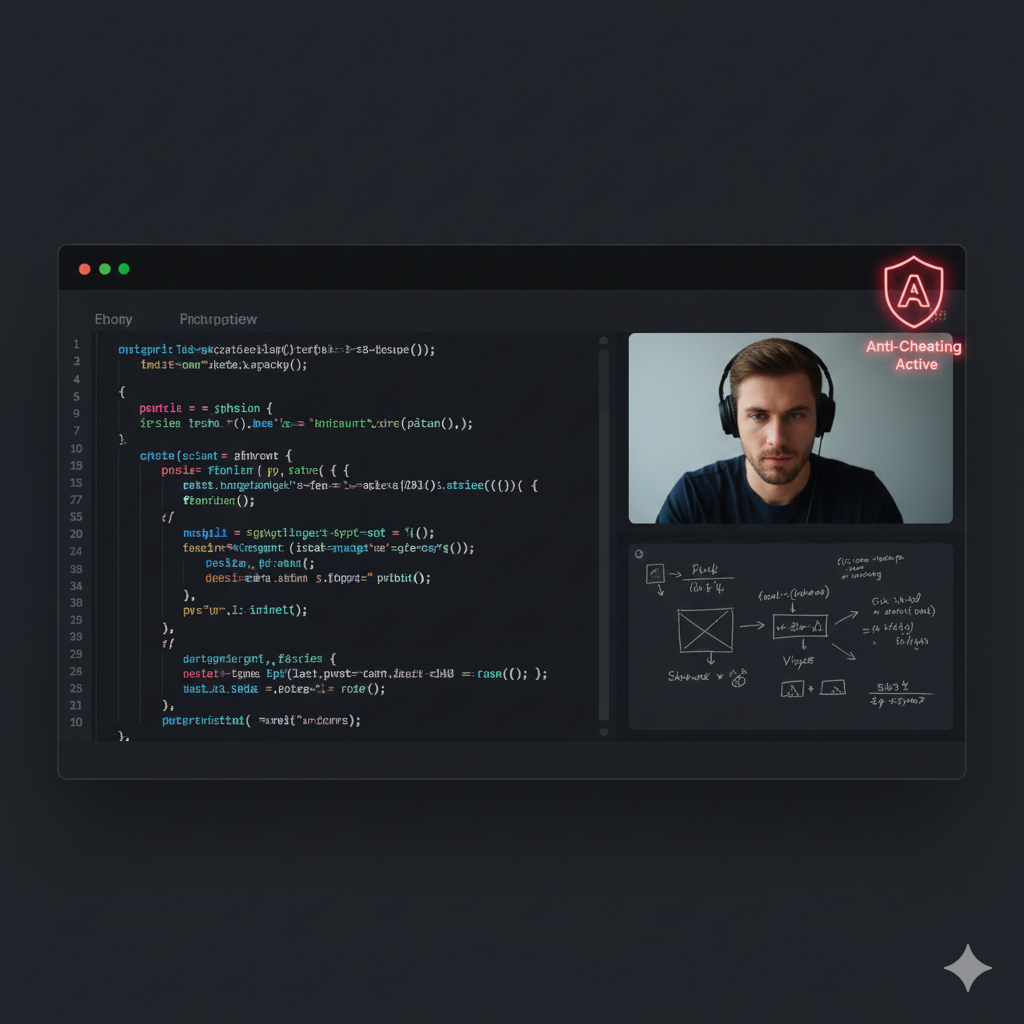
Uses fraud prevention signals (deepfake detection, proxy interview detection, behavioral signals) to drive step-up verification and exception queues.
Supports zero-retention biometrics as an operating model, so Security can minimize biometric data handling while still gating access.
Anti-patterns that make fraud worse
- Treating webhook retries as "duplicates to ignore" without idempotency keys. This silently creates double invites, conflicting statuses, and unverifiable timelines. - Allowing stage changes to be the only control. If a recruiter can move a candidate to "Interview" without an identity gate, you have built a policy bypass into the UI. - Handling exceptions in Slack or email. Shadow workflows are integrity liabilities and create gaps you cannot defend in an audit.
Implementation runbook: clean handoffs with webhooks, idempotency, and a log recruiters use
Owner: Recruiting Ops
SLA: 2 business days to publish schema and required fields
Evidence: schema version, required field checklist, mapping to ATS stages
Owner: Security (policy) + Engineering (implementation)
SLA: 1 second max response to ATS webhook (ack fast, process async)
Evidence: request signature validation, idempotency store, processing state machine
Owner: Recruiting Ops (workflow) + Security (policy)
SLA: within 60 seconds of stage-change event, enqueue verification and interview setup
Evidence: queued job IDs, vendor request IDs
Owner: Security
SLA: verification completes before interview link is usable or assessment starts
Evidence: verification status, timestamped evidence pack reference
Owner: Recruiting Ops (queue ops) + Security (high-risk review)
SLA: high-risk identity exceptions reviewed within 4 business hours; standard within 1 business day
Evidence: reviewer assignment, reviewer notes, final disposition
Owner: Hiring Manager
SLA: rubric submitted within 24 hours of interview completion
Evidence: rubric object, score breakdown, reviewer identity
Owner: Analytics (reports) + Recruiting Ops (remediation)
SLA: daily reconciliation run, exceptions created automatically
Evidence: diff report between ATS stage and vendor states
Owner: Security
SLA: evidence pack retrievable within 1 hour for any candidate in last 12 months (or your retention policy)
Evidence: export job logs, access logs
Sources
- Checkr, Hiring Hoax (Manager Survey, 2025): 31% of hiring managers say they've interviewed a candidate who later turned out to be using a false identity. https://checkr.com/resources/articles/hiring-hoax-manager-survey-2025
Pindrop: 1 in 6 applicants to remote roles showed signs of fraud in one real-world hiring pipeline. https://www.pindrop.com/article/why-your-hiring-process-now-cybersecurity-vulnerability/
SHRM: replacement cost estimates of 50-200% of annual salary (role-dependent). https://www.shrm.org/in/topics-tools/news/blogs/why-ignoring-exit-data-is-costing-you-talent
Close: if you want to implement this tomorrow
Make every ATS stage change emit a signed webhook event with a canonical schema and a stable candidateId.
Require an idempotency key per (candidateId, eventType, occurredAt) and persist processing state (accepted, completed, failed).
Enforce identity gate before access to interview links and assessment starts. Move the gate earlier, not later.
Stand up a recruiter-visible "Hiring Integrity Timeline" embedded in the ATS record. If recruiters cannot see it where they work, it will become a shadow workflow.
Create an SLA-bound exception queue with assigned owners (Recruiting Ops for standard, Security for high-risk step-up verification).
Run daily reconciliation: ATS stage state vs verification, interview, and assessment states. Auto-create tickets for mismatches.
Standardize rubrics and log submission timestamps. A decision without evidence is not audit-ready.
Reduced time-to-hire by eliminating rework from duplicated invites and missing triggers.
More defensible decisions via ATS-anchored audit trails and evidence packs.
Lower fraud exposure by gating privileged access on verified identity and step-up signals.
More consistent scoring through standardized rubrics tied to logged reviewer accountability.
Related Resources
Key takeaways
- Treat ATS stage changes as security-relevant events, not admin clicks. Every transition needs a logged trigger, an owner, and a replay-safe integration contract.
- Use idempotency keys per candidate and stage-event so retries cannot double-trigger verifications, interviews, or assessment invites.
- Make the audit log recruiter-usable: embed it in the ATS context, tie it to timestamps and owners, and attach evidence packs to decisions.
- Define "identity gate before access" at the earliest privileged moment (interview link, repo access, take-home prompt), not at offer.
- Reconciliation is not optional. You need a daily job that compares ATS stage state to vendor states and produces an SLA-bound exception queue.
A baseline policy contract you can hand to Recruiting Ops and Engineering.
Defines event schema requirements, idempotency rules, logging fields, and review SLAs for exceptions.
Designed to prevent duplicate triggers, out-of-order processing, and unowned exceptions.
```yaml
policyVersion: "1.0"
owner:
  recruitingOps: "own-stages-and-required-fields"
  security: "own-identity-gate-and-audit-policy"
  hiringManager: "own-rubrics-and-score-submission"

atsEvents:
  - name: "candidate.stage_changed"
    requiredFields:
      - candidateId
      - fromStage
      - toStage
      - occurredAt
      - actorId
      - schemaVersion
    delivery:
      transport: "webhook"
      verifySignature: true
      retry:
        strategy: "exponential-backoff"
        maxAttempts: 8
    idempotency:
      # replay-safe key; same event retried must not trigger twice
      keyTemplate: "${candidateId}:${name}:${occurredAt}"
      ttlHours: 168

controls:
  identityGate:
    appliesToStages:
      - "technical-interview"
      - "assessment"
    rule: "deny-access-until-identity_verified"
    stepUpVerification:
      enabled: true
      triggers:
        - "name_mismatch"
        - "device_anomaly"
        - "proxy_interview_signal"

logging:
  immutableEventLog: true
  mustLogFields:
    - eventId
    - candidateId
    - eventName
    - occurredAt
    - receivedAt
    - processedAt
    - actorId
    - idempotencyKey
    - signatureValid
    - outcome
    - evidencePackRef
  retention:
    # align with your legal retention policy
    auditTrailMonths: 12

slas:
  webhookAckSeconds: 1
  triggerFanoutSeconds: 60
  identityVerificationTargetMinutes: 3
  exceptionReview:
    highRiskHours: 4
    standardBusinessDays: 1
  rubricSubmissionHours: 24

reconciliation:
  schedule: "daily"
  compares:
    - "ATS.stage"
    - "Verification.status"
    - "Interview.status"
    - "Assessment.status"
  onMismatch:
    createExceptionQueueItem: true
    assignOwner:
      default: "recruitingOps"
      highRisk: "security"
```
Outcome proof: What changes
Before
Stage changes triggered downstream actions inconsistently. Retries caused duplicate invites, identity verification was sometimes performed after interview access was granted, and exceptions were handled in Slack with no durable timestamps.
After
Stage changes became signed, replay-safe events with idempotency keys. Identity gating was enforced before interview and assessment access. Exceptions moved into an SLA-bound queue with assigned owners, and each candidate record carried an evidence pack reference and an ATS-anchored integrity timeline.
Implementation checklist
- Define a canonical event schema for ATS stage changes (candidateId, fromStage, toStage, occurredAt, actor).
- Require an idempotency key for every downstream trigger and persist the result state (accepted, completed, failed).
- Set review-bound SLAs for exceptions: identity-verification failures, mismatched names, proxy interview signals.
- Embed a "Hiring Integrity Timeline" view in the ATS record so recruiters do not run shadow workflows.
- Run daily reconciliation between ATS and verification/interview/assessment systems and auto-create an exception queue.
Questions we hear from teams
- Why does a CISO care about ATS webhooks and idempotency keys?
- Because stage changes are access-granting events. Without replay-safe triggers and a tamper-resistant log, you cannot prove who got access, when, and under what identity gate. That is an audit and incident-response problem, not just a recruiting ops problem.
- What should be the "source of truth" for identity verification?
- The verification service is the source of truth for identity status and evidence pack references. The ATS remains the source of truth for candidate lifecycle state. The audit requirement is that verification outcomes are written back into ATS-anchored audit trails with immutable event log entries and timestamps.
- How do you prevent automation from creating unfair or non-defensible rejections?
- Use automation to route and gate, not to silently reject. High-risk or ambiguous signals should create an exception with an owner, a review SLA, and required reviewer notes. That produces a documented rationale and reduces "robot rejection" legal exposure.
- What breaks most often in event-based hiring integrations?
- Out-of-order events, duplicate deliveries, and partial failures where one downstream system succeeds and another fails. That is why you need idempotency keys, correlation IDs, and a daily reconciliation job that creates an exception queue for mismatches.
Ready to secure your hiring pipeline?
Let IntegrityLens help you verify identity, stop proxy interviews, and standardize screening from first touch to final offer.
Watch IntegrityLens in action
See how IntegrityLens verifies identity, detects proxy interviewing, and standardizes screening with AI interviews and coding assessments.