The Voice-Clone Internship Offer: Engineering a Coaching Portal That Can’t Be Gamed
A blueprint for building university-scale interview coaching with real-time feedback, measurable skill gains, and identity-aware integrity controls.

Scalable coaching isn’t about louder AI—it’s about measurable skill gains and integrity controls that hold up under incentives.Back to all posts
## The Credential That Collapsed in One Day
Your coaching portal issues a “ready” badge that gets students fast-tracked into employer office hours. A week later, two employers report the same pattern: students who aced the mock interview can’t answer basic follow-ups live, and one candidate appears to be reading from an on You dig into recordings and find a repeatable exploit: replayed video segments paired with cloned voice, stitched to match common rubric prompts. The program’s credibility takes the hit, not the attackers. Staff now spend hours on appeals, while engineering scrambles to add “just The stakes aren’t theoretical. A compromised readiness program can trigger partner churn, funding scrutiny, and reputational damage that outlasts any single cohort. And because it’s “just practice,” teams often ship without the integrity controls they’d require for proctored te The trade-off is immediate: you need real-time, personalized feedback with low friction, but you also need a defensible signal that the person practicing is the person receiving credit—especially when coaching outputs become credentials.
## Why Scalable Coaching Fails Without Instrumentation (and Integrity)
Most coaching platforms break in two places: feedback quality and measurement. Real-time tips drift into generic advice, and “improvement” becomes self-reported confidence instead of rubric-aligned skill gains. Without a measurable loop, you can’t tell whether you’re helping stu At university scale, the system must survive messy reality: low-end webcams, shared devices, variable bandwidth, accents, speech differences, and anxiety. If your model can’t distinguish nervous pauses from lack of structure, you’ll create false negatives that drive disengagement Integrity is the second fracture point. When practice artifacts are tied to access, stipends, course credit, or employer visibility, you’ve created an incentive to spoof. The platform needs risk-tiered controls that protect outcomes while keeping the default flow accessible. Treat this like any other high-impact production system: define SLOs (latency, completion, review time), define quality targets (precision, calibration), and define controls (step-ups, audit trails, MTTR) before you scale adoption.
## How to Implement a Coaching Platform Engineering Leaders Can Defend
Start by defining what “skill development” means in machine-readable terms. Build a rubric with 4–6 dimensions (e.g., structure, clarity, technical depth, evidence, reflection, conciseness) and version it. Your models should score against that rubric, and your human coaches Next, design real-time feedback as a low-latency pipeline with explicit budgets. Aim for p95 tip latency under 800ms for in-session nudges, and under 5s for post-answer summaries. Emit events for every step—capture quality, transcription confidence, rubric deltas, and user a Then add personalization that’s earned, not guessed. Use a short onboarding calibration (2–3 prompts) to infer baseline level and goals (internship vs. apprenticeship vs. returnship). Personalize by selecting prompts, difficulty, and feedback depth, but keep the rubric stable so Finally, implement integrity controls as step-ups based on stakes and anomaly signals. For low-stakes practice, keep friction near-zero. For credentialed outcomes, add liveness and anti-replay checks and require re-auth when risk rises. A practical sequence looks like: (1) doc or
## A Reference Architecture: “Practice-to-Credential” Without the Trust Gap
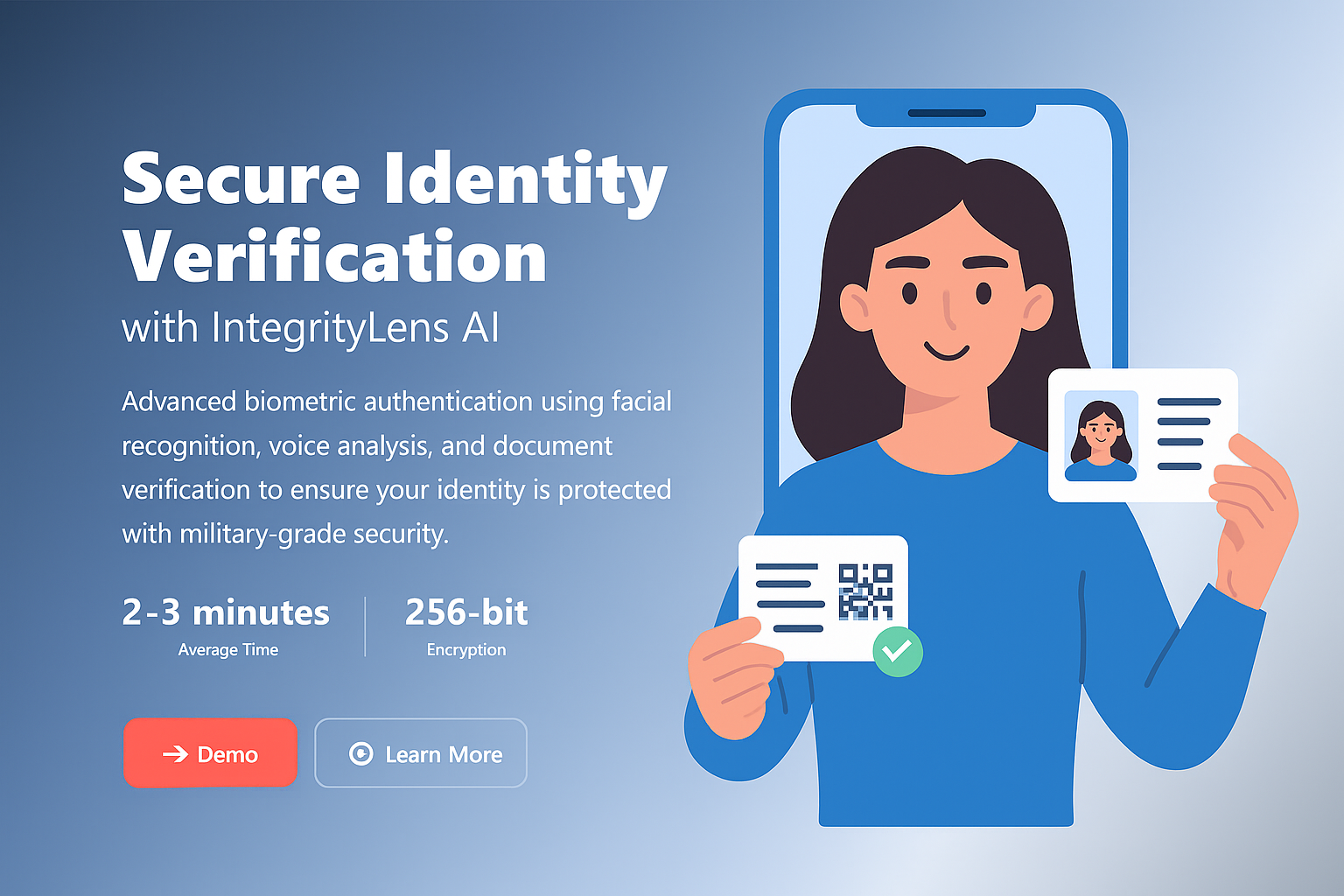
In one deployment pattern, career services runs weekly practice sessions and monthly “credentialed” mocks that unlock employer-facing benefits. The system treats those two flows differently: practice prioritizes speed and accessibility, credentialing prioritizes auditability and防 On the coaching side, real-time feedback is constrained to rubric tags and short, actionable deltas (e.g., “Add a measurable outcome” vs. “Be more confident”). Each suggestion is logged with a rationale and later sampled for human audit. Teams commonly target a 5–10% human review On the integrity side, the platform uses multi-modal signals when it matters: face liveness to reduce replay, voice liveness to reduce cloning, and document checks only when needed for program eligibility. The important detail is operational: every step-up produces an explainable What improves outcomes isn’t the novelty of the model—it’s the closed loop. Students see their rubric deltas over time, coaches get queueable sessions with clear issue flags, and program leaders get cohort analytics tied to placement success rather than vanity completion metrics.
## Key Takeaways for Engineering Leaders
Build the portal like a platform, not a content generator. Define SLOs for feedback latency, completion rate, and review throughput, then enforce them with instrumentation and operational runbooks. You’ll prevent the slow failures that turn coaching into busywork. Make personalization measurable. If you can’t show rubric-aligned deltas (pre/post) and inter-rater reliability for coach audits, you can’t defend outcomes to employers or funders. Treat calibration as a recurring cadence, not a one-time launch task. Use risk-tiered integrity controls. The goal isn’t to suspect every student; it’s to keep credentialed signals defensible while keeping practice accessible. Publish targets like FAR <0.1% for credentialed events and FRR <2% overall, and tune thresholds with real population data. If you want help designing this end-to-end—coaching pipeline, observability, and identity-aware step-ups—IntegrityLens AI can review your current flow and propose a reversible rollout plan that protects outcomes without blowing up completion.
Key takeaways
- Design coaching as an instrumented system: every practice session should emit latency, completion, and skill-metric events.
- Use risk-tiered identity controls to protect coaching integrity without adding universal friction.
- Make outcomes measurable with pre/post scoring, rubric calibration, and cohort-level analytics (not anecdotal feedback).
- Treat real-time feedback as a product surface with strict reliability budgets and human-in-the-loop review paths.
Implementation checklist
- Define a readiness rubric (e.g., communication, structure, technical depth, reflection) and version it in Git; run a monthly rubric review with career staff and hiring partners.
- Instrument the session pipeline with OpenTelemetry: track p50/p95 end-to-end feedback latency, dropout step, and device/browser mix; alert when p95 exceeds 800ms for real-time tips.
- Set explicit model quality budgets: target precision lift of +10–20% on rubric-aligned coaching suggestions versus baseline templates; measure via blinded human audit weekly.
- Implement risk-tiered step-ups: start with low-friction account verification, then require face/voice liveness only for high-stakes events (mock interviews used for credentialing, employer-visible “co
- Publish FAR/FRR targets and tune thresholds by population: e.g., aim FAR <0.1% for credentialed outcomes, keep FRR <2% for accessibility; review deltas quarterly.
- Add noisy-capture handling: require minimum audio SNR and frame quality; enable one-tap retakes; track retake rate and keep it <8% while maintaining rubric reliability (ICC >0.75).
Questions we hear from teams
- How do we add identity verification without hurting student completion rates?
- Use risk-tiered step-ups. Keep low-stakes practice frictionless, and apply face/voice liveness only for credentialed events (badges, employer-visible results). Track completion rate by step and demographic proxy segments; if FRR rises above ~2% or retake rate
- What metrics should an engineering team own for an interview coaching portal?
- Own both reliability and learning outcomes. Reliability: session start success rate, p95 feedback latency, crash-free sessions, and MTTR for degraded capture. Outcomes: rubric delta per session, retention 1/7/30 days, human audit agreement (e.g., ICC >0.75), 5
- Can AI-based technical screening fit into this coaching model without becoming a gate?
- Yes—treat it as practice with calibrated difficulty and explainable feedback. Use question banks with tagged competencies, run unit tests in a sandbox, and provide rubric-based feedback (problem framing, correctness, complexity, communication). For high-stakes
Ready to secure your hiring pipeline?
Let IntegrityLens help you verify identity, stop proxy interviews, and standardize screening from first touch to final offer.
Watch IntegrityLens in action
See how IntegrityLens verifies identity, detects proxy interviewing, and standardizes screening with AI interviews and coding assessments.