The Identity Crisis: How Anomalies in Verification Cost Us $100K
Engineering leaders must act fast to mitigate fraud risks by developing a robust fraud taxonomy and incident playbooks.
Fraud risks demand immediate action; a robust taxonomy and playbook can save your organization from costly mistakes.Back to all posts
The Identity Crisis: How Anomalies in Verification Cost Us $100K
Imagine this: your verification system flags a candidate as legitimate, only to discover later that their credentials were fabricated. The result? A $100K hit to your bottom line due to refunds and lost trust. This is not just a hypothetical scenario; it’s a reality that many... Creating a fraud taxonomy and incident playbooks is essential for reducing mean-time-to-resolution (MTTR) when issues arise. By categorizing different fraud types—such as deepfakes, document spoofing, and voice mismatches—you can streamline your response efforts and minimize the.
Why This Matters
For engineering leaders, the implications of fraud extend beyond mere financial loss. Brand reputation, customer trust, and regulatory compliance are all at stake. In a world increasingly reliant on digital verification, the need for effective fraud detection mechanisms has never With a well-structured fraud taxonomy, organizations can not only identify but also prioritize risks. This enables faster response times and more efficient use of resources, ultimately lowering the MTTR and contributing to a more secure hiring process.
How to Implement It
Step 1: Establish a clear fraud taxonomy. Identify and categorize risks based on historical data and anticipated threats. Create tiers of risk to streamline response efforts. Step 2: Develop incident response playbooks. For each category in your fraud taxonomy, outline specific steps for evidence collection, escalation procedures, and team responsibilities. Step 3: Train your team. Conduct regular training sessions to ensure all team members are familiar with the taxonomy and response protocols, fostering a culture of vigilance.
Key Takeaways
Always validate identity verification outputs against concrete signals to catch anomalies early. Establishing a fraud taxonomy is critical for effective risk management and faster response times. Regular training on incident response protocols can significantly reduce MTTR and enhance team performance.

Key takeaways
- Develop a fraud taxonomy to categorize risks effectively.
- Create incident response playbooks to streamline MTTR.
- Utilize concrete signals to identify verification issues quickly.
Implementation checklist
- Establish clear categories in your fraud taxonomy.
- Implement a decision tree for incident response.
- Train your team on evidence handling protocols.
Questions we hear from teams
- What is a fraud taxonomy?
- A fraud taxonomy is a structured classification system that categorizes different types of fraud risks, helping organizations prioritize and respond effectively.
- Why is MTTR important in fraud detection?
- Mean-time-to-resolution (MTTR) is crucial because faster response times can significantly reduce the financial and reputational impact of fraud.
- How can we train our team on incident response?
- Regular training sessions, simulations, and accessible documentation are key to ensuring your team is well-prepared to handle fraud incidents.
Ready to secure your hiring pipeline?
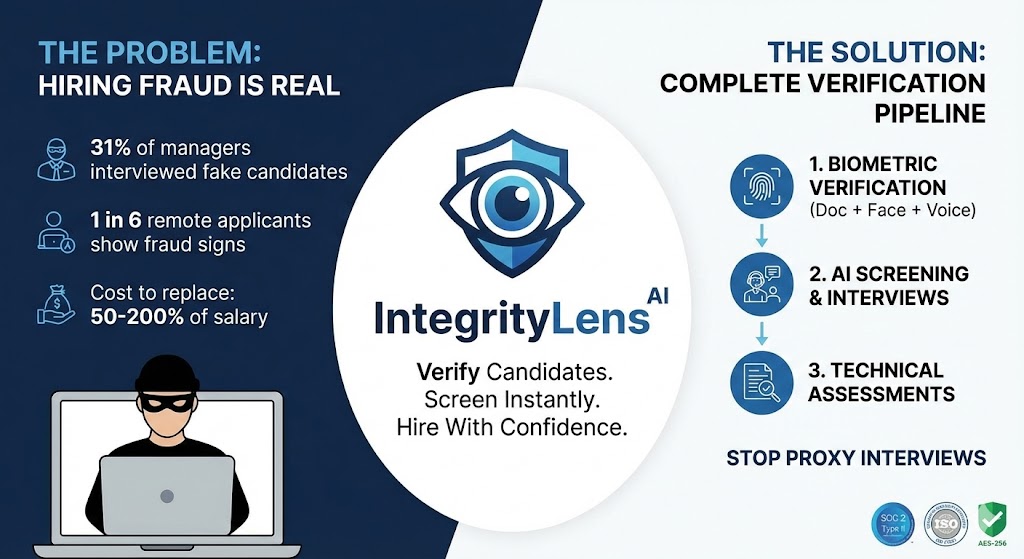
Let IntegrityLens help you verify identity, stop proxy interviews, and standardize screening from first touch to final offer.
Watch IntegrityLens in action
See how IntegrityLens verifies identity, detects proxy interviewing, and standardizes screening with AI interviews and coding assessments.