The Deepfake That Almost Derailed Our Hiring Process
Navigating the complexities of candidate verification without alarming candidates while ensuring security.

Transparency in verification builds trust and enhances candidate satisfaction.Back to all posts
The Deepfake That Almost Derailed Our Hiring Process
Your AI model just failed to detect a deepfake during a crucial interview, putting your hiring process and company reputation at risk. With cyber threats evolving, the stakes are higher than ever. A single instance of fraud can lead to costly hires, eroded trust, and compliance. As engineering leaders, it’s vital to ensure that verification methods are robust while maintaining a transparent and calm communication channel with candidates. How can you achieve this balance?
Why This Matters
To foster trust and mitigate risk, it is essential to communicate verification outcomes effectively. Candidates need to understand the process without feeling alarmed or discouraged. Transparency in this communication can significantly improve candidate experience and satisfaction, leading to higher completion rates and lower drop-off rates. Studies show that clear communication can improve conversion rates by up to 25%.
How to Implement It
Establish a clear communication template that outlines what candidates can expect during the verification process. This should include timelines, what data will be collected, and how it will be used. Incorporate micro-interactions, such as progress indicators or brief updates, to keep candidates informed throughout the verification process. These small touches can make a significant difference in maintaining engagement. Create recovery paths for common verification failures. If a candidate's identity cannot be verified, provide them with clear, actionable steps to rectify the situation, minimizing frustration and enhancing their experience.
Key Takeaways
Always communicate verification outcomes clearly to candidates. Transparency builds trust and reduces anxiety. Implement recovery paths for verification failures to maintain trust. A positive recovery experience can salvage candidate relationships. Measure candidate satisfaction to refine the verification process. Regular feedback helps to continuously improve.
Related Resources
Key takeaways
- Always communicate verification outcomes clearly to candidates.
- Implement recovery paths for verification failures to maintain trust.
- Measure candidate satisfaction to refine the verification process.
Implementation checklist
- Set up clear communication templates for verification outcomes.
- Utilize micro-interactions to guide candidates through the process.
- Establish recovery paths for common verification failures.
Questions we hear from teams
- What steps can we take to improve candidate communication during verification?
- Establish clear communication templates, incorporate micro-interactions, and create recovery paths for verification failures.
- How do we measure candidate satisfaction in the verification process?
- Focus on metrics such as completion time, conversion rates, and regular feedback from candidates.
- What are common verification failures, and how can we address them?
- Common failures include identity mismatches and document verification issues. Provide clear steps for candidates to rectify these issues.
Ready to secure your hiring pipeline?
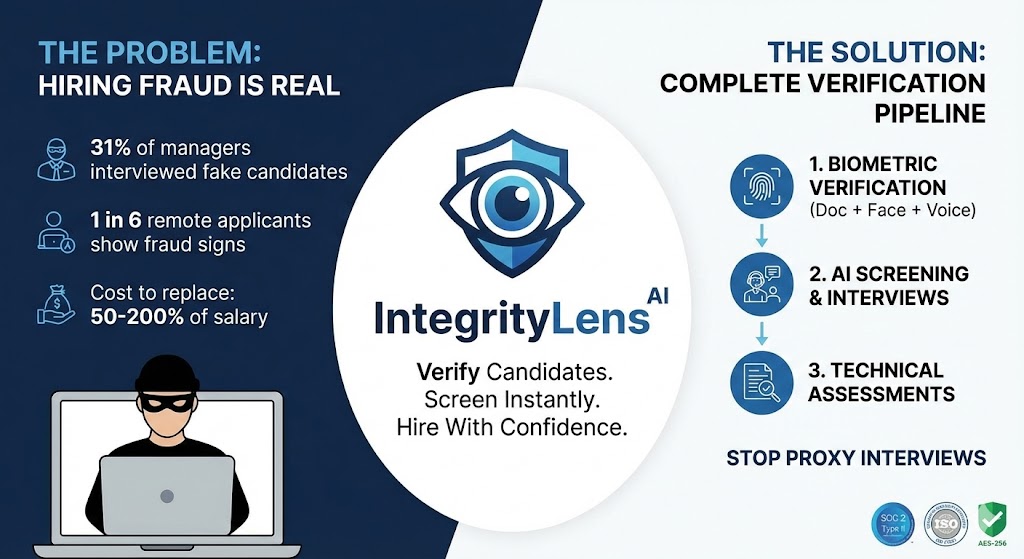
Let IntegrityLens help you verify identity, stop proxy interviews, and standardize screening from first touch to final offer.
Watch IntegrityLens in action
See how IntegrityLens verifies identity, detects proxy interviewing, and standardizes screening with AI interviews and coding assessments.