The Deepfake Dilemma: Protecting Your Hiring Pipeline from Identity Fraud
How engineering leaders can detect deepfakes, replays, and proxy test takers using advanced verification techniques.

In a world of deepfakes, your hiring pipeline must evolve or risk being compromised.Back to all posts
The Deepfake Dilemma
In today's fast-paced hiring landscape, the stakes have never been higher. Imagine this: your recruitment system just allowed a deepfake candidate to pass through, costing your company not only time but potentially hundreds of thousands in lost revenue. With the rise of advanced, sophisticated identity fraud techniques, including deepfakes and proxy test takers, engineering leaders must act decisively to safeguard their hiring processes.
Why This Matters
Deepfake technology has advanced rapidly, making it increasingly difficult to differentiate between genuine candidates and fraudulent impersonators. Traditional verification methods are no longer sufficient. By leveraging liveness detection, device fingerprints, and behavioral telemetry, organizations can implement a robust strategy to combat these threats effectively.
How to Implement It
Implementing liveness detection is a crucial first step. This technology ensures that candidates are physically present during the verification process, making it much harder for deepfakes to succeed. Solutions like real-time facial recognition combined with behavioral cues can create a strong defense against impersonation attempts. Additionally, integrating device fingerprinting allows organizations to link candidates to their devices, creating a unique identifier that can be monitored for suspicious activity.
Key Takeaways
By proactively addressing these identity verification challenges, organizations can significantly reduce the risk of fraud in their hiring processes. The combination of liveness detection, device fingerprints, and behavioral telemetry not only enhances security but also builds trust in your recruitment process. Remember, a robust hiring pipeline is key to attracting and retaining top talent.
Key takeaways
- Implement liveness detection to thwart deepfake attempts.
- Utilize device fingerprints for enhanced identity verification.
- Leverage behavioral telemetry to identify anomalies in candidate responses.
Implementation checklist
- Set up liveness detection in your hiring pipeline.
- Integrate device fingerprinting solutions.
- Monitor behavioral telemetry for anomalies.
- Develop a response runbook for suspected fraud cases.
Questions we hear from teams
- What are the key technologies for detecting deepfakes in hiring?
- Key technologies include liveness detection, device fingerprinting, and behavioral telemetry, all of which help identify fraudulent candidates.
- How can we respond to suspected identity fraud?
- Develop a clear response runbook that outlines steps for reviewers to take when fraud is suspected, ensuring swift action and proper evidence handling.
- What metrics should we monitor for effective fraud detection?
- Monitor metrics such as false acceptance rates (FAR), false rejection rates (FRR), and the time taken to resolve suspicious cases.
Ready to secure your hiring pipeline?
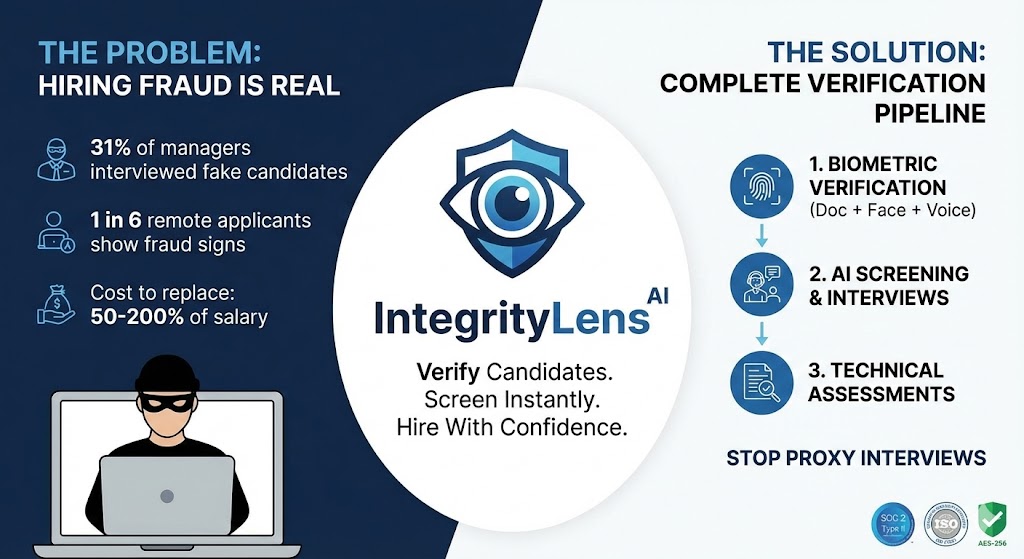
Let IntegrityLens help you verify identity, stop proxy interviews, and standardize screening from first touch to final offer.
Watch IntegrityLens in action
See how IntegrityLens verifies identity, detects proxy interviewing, and standardizes screening with AI interviews and coding assessments.