The Canary Rollout That Saved Our Hiring Process
Discover how integrating verification into your ATS can prevent costly hiring mistakes and streamline operations.
Integrating verification systems effectively can save your organization from costly hiring mistakes.Back to all posts
The Canary Rollout That Saved Our Hiring Process
In the high-stakes world of recruitment, a single misstep in your verification process can lead to catastrophic outcomes. Imagine this: a candidate presents a seemingly flawless identity document, only to have it exposed as a forgery weeks into their tenure. The fallout? Legal f ines, brand damage, and a staggering $100K in remediation costs. This is not just a hypothetical scenario; it's a reality that many engineering leaders face when integrating verification systems into their ATS or HRIS.
Why This Matters
The stakes are high, and the risks are real. As AI and automation become more prevalent in the hiring process, the potential for fraud increases dramatically. From deepfake identities to proxy candidates, the need for robust verification mechanisms is paramount. Integrating these systems effectively can mean the difference between a streamlined hiring process and a costly debacle.
How to Implement It
To successfully integrate verification services into your existing ATS, you need a strategic approach. Start by setting up webhooks that trigger verification requests in real-time whenever a candidate submits their information. This allows for immediate feedback and reduces latency, a critical factor in maintaining candidate engagement. Next, ensure that your APIs are idempotent, meaning they can handle repeated requests without adverse effects, reducing the risk of duplicate processing and errors. Implementing event logs is equally important. Th ese logs provide a detailed record of every verification attempt, allowing you to monitor and audit your processes effectively.
Key Takeaways
Integrate verification to reduce hiring risks. Use canary rollouts to minimize disruption during new system integrations. Implement event logs for better observability and compliance. Ensure idempotent APIs to avoid duplicate processing and errors. Rollbacks and kill switches are essential safety nets for your verification processes.

Key takeaways
- Integrate verification to reduce hiring risks.
- Implement event logs for better observability.
- Use canary rollouts to minimize disruption.
Implementation checklist
- Set up webhooks for real-time verification updates.
- Ensure idempotent APIs to avoid duplicate processing.
- Implement event logs for transaction tracking.
Questions we hear from teams
- What are webhooks and how do they work in ATS integration?
- Webhooks are automated messages sent from one system to another when an event occurs. In ATS integration, webhooks can trigger real-time verification requests, improving response times.
- What is an idempotent API, and why is it important?
- An idempotent API ensures that multiple identical requests have the same effect as a single request. This is crucial in verification processes to prevent duplicate actions or data corruption.
- How can canary rollouts help in system integration?
- Canary rollouts involve deploying new features to a small user base first. This allows you to monitor performance and gather feedback before a full rollout, reducing risks.
Ready to secure your hiring pipeline?
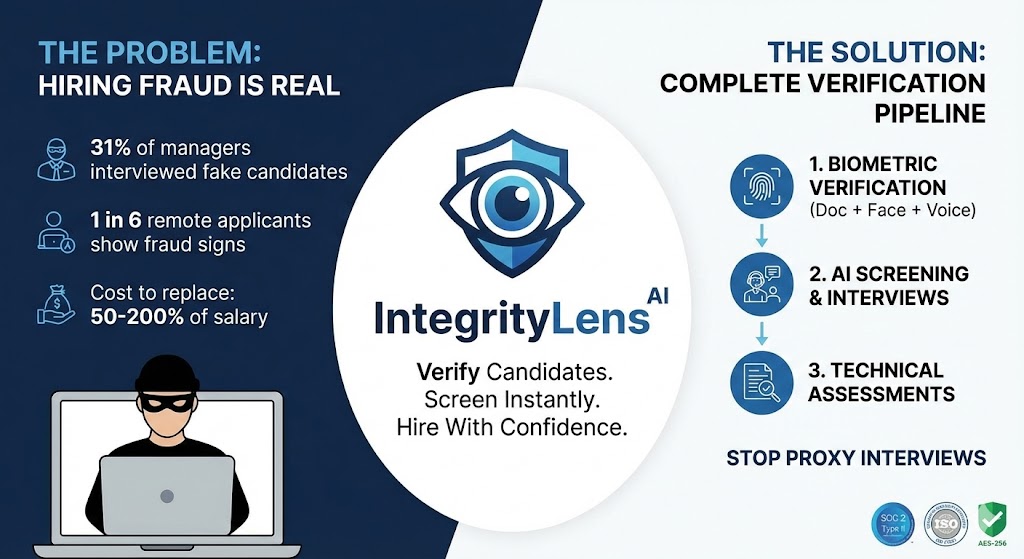
Let IntegrityLens help you verify identity, stop proxy interviews, and standardize screening from first touch to final offer.
Watch IntegrityLens in action
See how IntegrityLens verifies identity, detects proxy interviewing, and standardizes screening with AI interviews and coding assessments.