The Adaptive Interview Template: Safeguarding Against Knowledge Leaks
Design interview templates that dynamically adjust difficulty while preserving answer integrity.
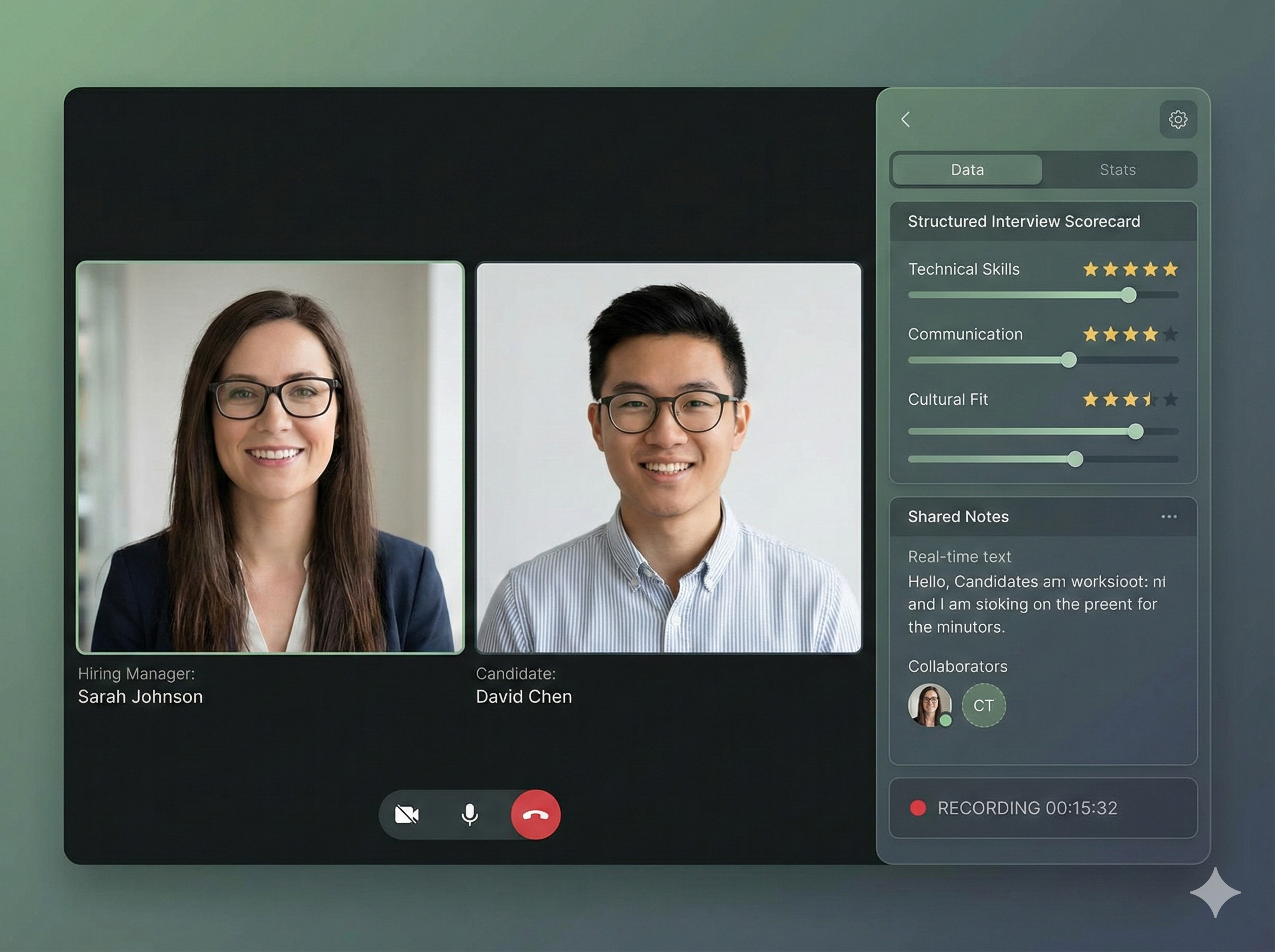
Adaptive interview templates are not just a luxury; they are a necessity for safeguarding hiring integrity.Back to all posts
The High-Stakes Interview Dilemma
Your engineering team is tasked with hiring a new developer to lead a critical project. After several rounds of interviews, you select a candidate who performed exceptionally well. However, weeks later, you discover they had access to the interview questions beforehand, leading a to a costly hiring mistake. This scenario underscores the need for adaptive interview templates that protect against knowledge leaks while accurately assessing candidate skills.
Why This Matters
For engineering leaders, the integrity of the hiring process is paramount. Inaccurate assessments can lead to poor hires, impacting team dynamics and project success. Moreover, with the rise of remote work, the potential for knowledge leaks has increased. Candidates can easily share information with peers or use resources to prepare, making it essential to adapt your interview strategies to mitigate these risks.
How to Implement Adaptive Templates
Step 1: Develop a structured interview template that includes varying levels of difficulty. This should be based on the candidate's responses, allowing for real-time adjustments during the interview. Step 2: Utilize a scoring system that focuses on reproducibility. Implement metrics like completion rates and precision lift to provide a more objective assessment of candidate performance.
Key Takeaways
Always prioritize adaptive interview templates that dynamically adjust based on candidate performance. Standardize scoring metrics to minimize bias and enhance reproducibility in assessments. Establish a clear dispute resolution process to address scoring discrepancies and foster accountability.
Key takeaways
- Implement dynamic difficulty adjustments in interviews.
- Prioritize reproducible scoring for fair assessments.
- Establish clear dispute resolution workflows.
Implementation checklist
- Utilize structured templates that adapt based on candidate performance.
- Incorporate reproducible scoring metrics to minimize bias.
- Ensure clear documentation for dispute resolution.
Questions we hear from teams
- How can I ensure the integrity of my interview process?
- Implement adaptive templates that adjust difficulty and use standardized scoring metrics to minimize bias.
- What metrics should I track for effective screening?
- Focus on completion rates, review rates, and precision lift to evaluate candidate performance accurately.
- How do I handle disagreements among interviewers?
- Establish a clear dispute resolution workflow that documents scoring decisions and allows for feedback.
Ready to secure your hiring pipeline?
Let IntegrityLens help you verify identity, stop proxy interviews, and standardize screening from first touch to final offer.
Watch IntegrityLens in action
See how IntegrityLens verifies identity, detects proxy interviewing, and standardizes screening with AI interviews and coding assessments.