Structured Behavioral Interviews at Scale: Rubrics, SLAs, Audit Logs
A CPO-focused operating model to stop rubric drift, debrief churn, and defensibility gaps by turning behavioral interviews into an instrumented, SLA-bound workflow.
If it is not logged, it is not defensible. Structured behavioral interviews scale only when rubrics, follow-ups, and approvals produce an immutable evidence pack.Back to all posts
Real Hiring Problem
You do not feel the structured interview problem as a philosophy debate. You feel it as a scheduling and defensibility incident. A candidate is fast-tracked. A behavioral interview gets added using a reused video link. Notes are captured in a doc. Debrief becomes a 30-minute argument because everyone asked different follow-ups and scored on different mental models. Then Legal asks the question that exposes the gap: "If legal asked you to prove who approved this candidate, can you retrieve it?" If the answer requires searching calendars, chat logs, and personal notes, you do not have an interview process. You have shadow workflows. The financial risk compounds quickly. SHRM notes replacement cost estimates can range from 50-200 percent of annual salary depending on role, which makes a single mis-hire a budget event, not a people ops annoyance.
Why Legacy Tools Fail
Most stacks were built to move candidates between stages, not to produce evidence. Behavioral interviewing gets treated as unstructured conversation, so the tooling optimizes for scheduling and storage, not accountability. The common failure pattern: sequential checks that slow the funnel, no immutable event log for who did what when, no unified evidence pack tying identity to scoring, no review-bound SLAs for feedback, and no standardized rubric storage that survives turnover. When the system does not enforce structure, teams invent it. Spreadsheets, docs, and chat threads become the real workflow. Shadow workflows are integrity liabilities, because they break audit trails and normalize link-sharing and ad hoc recording/consent handling.
Ownership and Accountability Matrix
Recruiting Ops owns the workflow: stages, templates, reviewer queues, and SLA timers. Security owns access control and audit policy: when identity gating is mandatory, who can view verification status, and how exceptions are approved and logged. Hiring Managers own rubric discipline: competency definitions, scoring anchors, required follow-ups, and calibration cadence. People Analytics owns dashboards: time-to-event, SLA breaches, score variance, and segmentation by team. Source of truth rules: the ATS is the system of record for stages and decisions. The interview workflow is the evidence system for prompts, notes, and timestamps. The verification layer is the evidence system for identity outcomes and fraud signals. All artifacts must write back to the ATS-anchored audit trail.
Automated: stage triggers, interview template injection, SLA timers, evidence pack assembly, ATS write-backs.
Automated with policy thresholds: identity gating, step-up verification triggers, fraud signal flagging.
Manual review: exception approvals, rubric calibration decisions, final hiring decision sign-off.
Modern Operating Model
To scale structured behavioral interviews, treat interviewing like secure access management. Identity gate before access, emit events for every stage change, capture evidence automatically in a consistent format, and enforce SLAs so feedback does not decay. This is an instrumented workflow: identity verified, interview completed, rubric submitted, debrief held, decision recorded. Each event is time-stamped and attributable to a named owner. If it is not logged, it is not defensible. The practical payoff is debrief efficiency. When rubric fields are complete and follow-ups are consistent, you spend five minutes reviewing evidence instead of thirty minutes reconstructing what happened.
Identity gate before interview access for risk-tiered roles.
Required follow-ups per competency to prevent interviewer freelancing.
Rubric submission before debrief attendance to stop late feedback.
Immutable evidence packs tied to the candidate record.
Dashboards that track time-to-event and SLA breaches by team.
Where IntegrityLens Fits
IntegrityLens AI is the hiring pipeline that combines a full ATS with biometric identity verification, AI screening interviews, and technical assessments so you can run behavioral interviews as an SLA-bound, audit-ready workflow. It enables the operating model by anchoring identity gating, evidence packs, and tamper-resistant scoring inside the candidate lifecycle, instead of scattering artifacts across tools. Operationally, this means parallelized checks, automated triggers, and write-backs into the ATS record so you have a single source of truth for who verified, who interviewed, who scored, and who approved.
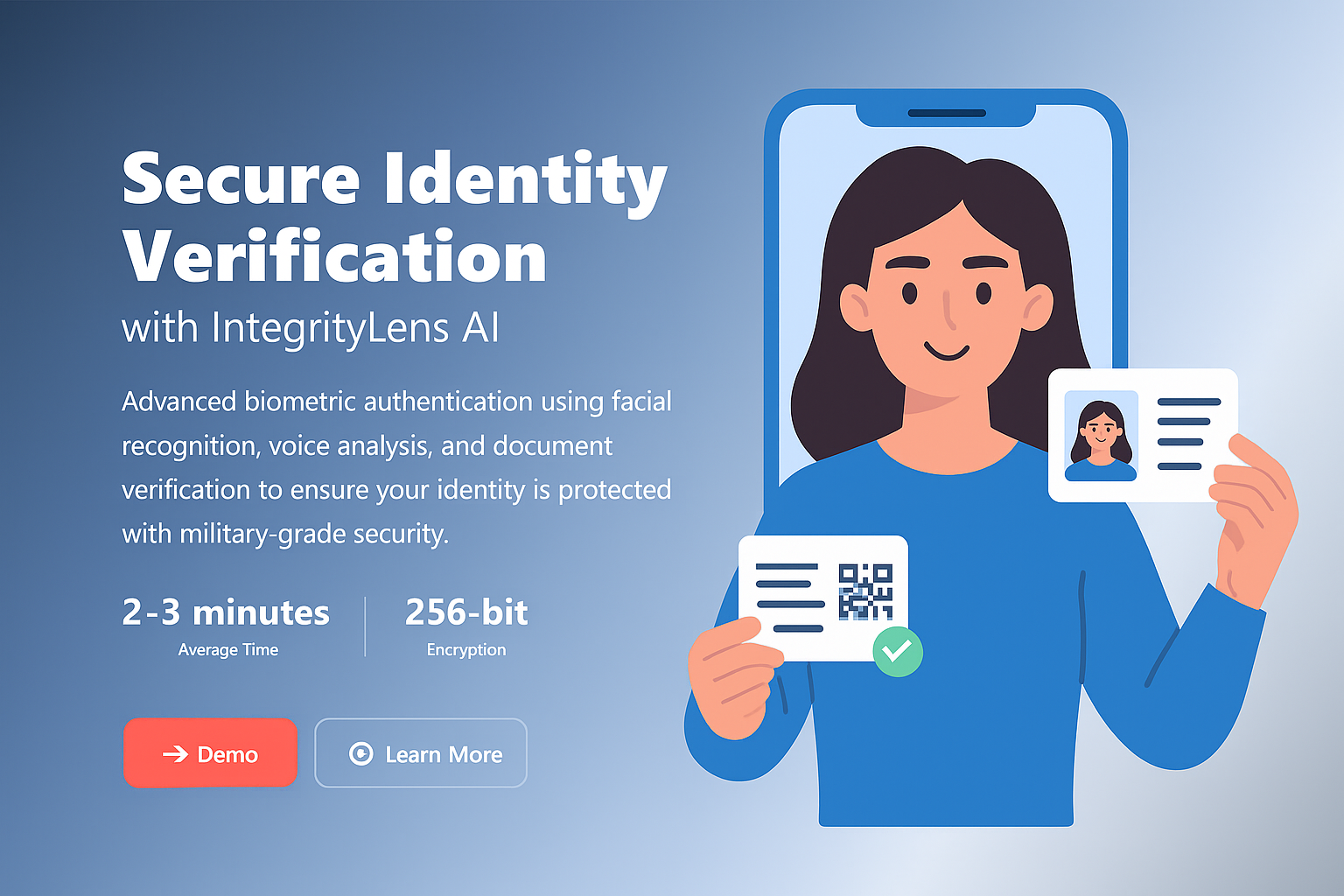
Identity gating before access using liveness, face match, and document authentication, with time-stamped outcomes.
AI screening interviews available 24/7 to standardize first-pass behavioral signals and reduce scheduling bottlenecks.
AI coding assessments (40+ languages) with plagiarism detection and execution telemetry to run in parallel with behavioral steps.
Fraud prevention signals including deepfake and proxy interview detection, logged as events.
Configurable SLAs, automated triggers, and ATS write-backs that produce immutable evidence packs.
Anti-Patterns That Make Fraud Worse
- Reusable interview links and unlogged reschedules that make link-sharing and proxy attendance hard to detect. - Free-form feedback with no rubric anchors, which creates post-hoc rationalizations and audit defensibility gaps. - Recording and consent handled ad hoc, which creates compliance gaps and forces evidence deletion under legal pressure.
Implementation Runbook
Define competencies and scoring anchors. Owner: Hiring Manager plus People Analytics. SLA: 10 business days. Evidence: rubric version, approvers, effective date.
Configure the risk-tiered funnel and identity gate policy. Owner: Security plus Recruiting Ops. SLA: 5 business days. Evidence: role mapping, step-up triggers, exceptions register.
Publish structured interview templates with required follow-ups. Owner: Recruiting Ops plus Hiring Manager. SLA: 5 business days. Evidence: template version, question set, follow-up requirements.
Enforce identity gate before interview access where required. Owner: Security plus Recruiting Ops. SLA: completed before interview start. Evidence: verification timestamps and outcomes.
Require rubric submission within 4 hours of interview end. Owner: Interviewer under Hiring Manager accountability. Evidence: time-stamped rubric, structured notes, reviewer identity.
Run debrief within 24 hours and record decision within 2 hours. Owner: Hiring Manager plus Recruiting Ops. Evidence: decision record, attendees, dissent notes.
Weekly audit sampling and monthly calibration. Owner: Security plus People Analytics. Evidence: SLA breach report, score variance report, remediation actions.
Use the YAML policy in this briefing as the starting configuration for rubric discipline, identity gating, SLAs, evidence pack requirements, and exception control.
Related Resources
Key takeaways
- Treat behavioral interviews like controlled access: identity gate before interview access, then evidence-based scoring with tamper-resistant notes.
- Scale comes from instrumentation: time-to-event metrics, review-bound SLAs, and ATS-anchored audit trails across every interview step.
- Calibrated scoring is an operating model: same rubric, same follow-ups, same evidence pack format, and accountable owners for each decision.
- Debriefs get shorter when the evidence is structured: convert 30-minute arguments into 5-minute decisions by forcing rubric discipline.
- Fraud risk increases when interview links and recordings float outside the system of record. Keep access ephemeral and logs immutable.
A copy-pastable policy config that operationalizes rubric anchors, required follow-ups, identity gating, feedback SLAs, evidence pack contents, retention boundaries, and exception approvals.
Use it to align Recruiting Ops, Security, and Hiring Managers on what must be logged to keep debriefs fast and decisions defensible.
policyName: structured-behavioral-interview-v1
scope:
  jobFamilies: ["engineering", "product", "finance", "customer-success"]
  geos: ["US", "EU", "UK", "CA"]
identityGate:
  requiredFor:
    - rolesWithSystemAccess: true
    - remoteFirst: true
  stepUpTriggers:
    - type: "risk-tier"
      condition: "candidateRiskTier in ['high','elevated']"
    - type: "anomaly"
      condition: "proxyOrDeepfakeSignal == true"
  sla:
    verificationCompleteBefore: "interview_start"
    expectedDurationMinutes: 3
rubric:
  scale: [1,2,3,4]
  competencies:
    - id: "ownership"
      requiredFollowUps: 2
      anchors:
        1: "Avoids responsibility; no concrete example"
        2: "Partial ownership; limited scope"
        3: "Clear ownership; measurable outcomes"
        4: "Ownership under ambiguity; preventative controls described"
    - id: "conflict-management"
      requiredFollowUps: 2
    - id: "execution-discipline"
      requiredFollowUps: 2
feedbackControls:
  requireSubmissionBeforeDebrief: true
  slaHoursAfterInterviewEnd: 4
  tamperResistantNotes: true
evidencePack:
  requiredArtifacts:
    - "identityGateResult"
    - "rubricScores"
    - "structuredNotes"
    - "timestamps"
    - "decisionRecord"
  retention:
    biometrics: "zero-retention"
    auditTrailDays: 365
exceptions:
  requireApproverRole: ["SecurityLead", "RecruitingOpsLead"]
  logExceptionReason: true
Outcome proof: What changes
Before
Debriefs reopened due to missing or inconsistent feedback. Notes lived in docs and chat, so Legal could not reliably reconstruct who asked what, how candidates were scored, or why a rejection occurred.
After
Behavioral interviews ran as an SLA-bound workflow with standardized rubrics, required follow-ups, identity gating before access for risk-tiered roles, and ATS-anchored evidence packs with immutable timestamps.
Implementation checklist
- Define your behavioral competency model and map each competency to 2-3 standardized follow-ups.
- Set a single rubric scale (for example 1-4) with anchors and examples for each score.
- Implement identity gating before interview access for any role with sensitive access or remote risk.
- Create SLA timers for invite sent, interview completed, feedback submitted, debrief completed.
- Require structured notes and calibrated score submission before debrief attendance.
- Centralize evidence packs in the ATS record with immutable timestamps and reviewer identity.
Questions we hear from teams
- Do we need recordings to be audit-ready?
- Not necessarily. Audit readiness comes from structured notes, rubric anchors, timestamps, and reviewer identity. If you record, standardize consent capture and retention as logged checkpoints to avoid compliance gaps.
- How do we keep this from slowing down hiring?
- Use review-bound SLAs and require rubric submission before debrief attendance. Parallelize identity checks and assessments rather than running them sequentially. Track time-to-event to find bottlenecks.
- What is the CPO accountable for in this model?
- Assign owners, fund calibration cadence, and require ATS-anchored audit trails. Your main exposure is defensibility: being unable to show how decisions were made, by whom, and based on what evidence.
Ready to secure your hiring pipeline?
Let IntegrityLens help you verify identity, stop proxy interviews, and standardize screening from first touch to final offer.
Watch IntegrityLens in action
See how IntegrityLens verifies identity, detects proxy interviewing, and standardizes screening with AI interviews and coding assessments.