Silver Medalists: 6-Month Re-Engagement Runbook
A Director of Recruiting Ops briefing on turning last cycle's structured interview evidence into an SLA-bound re-engagement workflow that is defensible, measurable, and fraud-aware
Re-engagement without structured evidence is just a faster way to create an indefensible decision trail.Back to all posts
1) Hook: the silver-medalist scramble that breaks audit readiness
Scenario: It is Monday 9:10 AM. A critical role reopens after an offer fallout. The hiring manager wants interviews scheduled by Wednesday to hit a customer delivery date. Recruiting pulls "silver medalists" from six months ago, but the notes are scattered and inconsistent. One interviewer used a rubric in the ATS, another wrote paragraphs in a doc, and a third left only a calendar invite. Your operational risks stack up fast: - SLA breach: your time-to-first-interview blows up because recruiters have to reconstruct context before they can even send a credible outreach. - Legal exposure: if legal asked you to prove why Candidate A was re-contacted and Candidate B was not, you cannot retrieve a consistent, timestamped rationale. If it is not logged, it is not defensible. - Cost of churned cycle time: every hour spent rebuilding prior context is pure waste. Worse, a rushed re-engagement can create a mis-hire that you will pay to replace. Replacement cost estimates are often cited in the 50-200% of annual salary range, depending on role and level. - Fraud risk: re-engagement is a high-trust path. Candidates know they are "almost in," which is exactly when proxy help and identity substitution become attractive. One report found 1 in 6 applicants to remote roles showed signs of fraud in one real-world pipeline.
Re-open a prior decision using old evidence, under a new business context and deadline.
Produce a shortlist quickly without creating a "robot rejection" lawsuit risk from unreviewed automation.
Prove, later, who approved what and based on which evidence pack.
2) Why legacy tools fail to solve silver-medalist re-engagement
The market mostly treats re-engagement as CRM email automation or as an ATS search problem. Neither is sufficient because the bottleneck is not outreach. It is evidence integrity. Common failure modes: - Sequential checks slow everything down. Teams re-check references, re-run screens, and re-administer assessments in a waterfall because systems cannot trigger parallelized checks based on events. - No immutable event log. Outreach happens in email, decisions happen in Slack, and the ATS becomes a partial record. Shadow workflows are integrity liabilities. - No unified evidence packs. Structured notes, scorecards, and assessments live in different places, so reviewers cannot see a complete record without manual stitching. - No standardized rubric storage. Six months ago, the interview loop may have used different questions, different scoring anchors, or no rubric at all. You cannot compare candidates consistently across cycles. - No SLAs or audit trails on review steps. The re-engagement queue becomes whoever has time, and escalations are informal. Time delays cluster at moments where identity is unverified and ownership is unclear.
Re-engagement is not a sourcing task. It is recertification of prior evaluation under controlled access and logged decisioning.
3) Ownership and accountability matrix
Before you automate anything, assign ownership explicitly. This is where most programs fail: automation runs, but no one is accountable for eligibility, exceptions, or audit retrieval. Ownership model (recommended): - Recruiting Ops owns workflow: eligibility rules, routing, SLAs, templates, reconciliation, and ATS write-backs. - Security owns access control and audit policy: identity gating thresholds, step-up verification triggers, evidence retention, and who can view biometric outcomes. - Hiring Manager owns scoring discipline: rubric versioning, re-interview rules, and final decision attestations. - Analytics owns dashboards: time-to-event instrumentation, funnel segmentation, and failure mode reporting (missing notes, stale rubrics, SLA breaches). Sources of truth: - ATS is the system of record for candidate state, requisition mapping, decisions, and timestamps. - Interview notes platform is a supporting system only if it writes structured fields back into the ATS. - Verification service is authoritative for identity events, but outcomes must be written back into the ATS-anchored audit trail.
Automate: candidate identification, eligibility pre-filtering, outreach sequencing, scheduling links, and reminders.
Review-bound: eligibility exceptions, rubric equivalency calls (is old evidence comparable), and any adverse decision based on automation.
Security review-bound: any identity mismatch, liveness failure, or step-up verification exception.
4) Modern operating model: instrumented re-engagement, not bulk outreach
A defensible re-engagement program behaves like an instrumented workflow with controls, not a campaign. Model components: - Identity gate before access: do not issue live interview links, assessment links, or offer steps until identity is verified for this cycle. Treat it like privileged access management. - Event-based triggers: re-engagement should be driven by ATS events (req opened, stage changed, shortlist approved), not by manual exports. - Automated evidence capture: every outreach, response, scheduling event, and reviewer decision is logged with timestamps and actor identity. - Standardized rubrics: store the rubric version and scoring anchors used six months ago. If the rubric changed, require a delta review or a lightweight re-interview. - Segmented risk dashboards: track silver-medalist conversion by role family, time since last interview, missing evidence rate, and identity step-up rate. Key metric discipline: measure time-to-event (time from req open to shortlist creation, shortlist to scheduled screen, verification initiated to verification completed), not just time-to-fill.
Free-text notes without a rubric key.
Interviewers not submitting scorecards, creating silent nulls.
Candidates duplicated across reqs, breaking linkage to prior evidence.
Outreach done outside the ATS, losing timestamps and accountability.
5) Where IntegrityLens fits
IntegrityLens is used here as the ATS-anchored control plane that turns re-engagement into a logged recertification workflow. Operationally, it enables: - An identity gate before access: biometric identity verification with liveness detection, document authentication, and face matching, completed before any new interview or assessment access is granted. - Parallelized checks instead of waterfall workflows by triggering verification, interview scheduling, and rubric retrieval as event-based tasks with retries and idempotency. - Immutable evidence packs that bundle timestamps, reviewer notes, verification outcomes, and rubric versions into an audit-ready record tied to the candidate and requisition. - Zero-retention biometrics architecture to reduce data handling scope while still producing verifiable outcomes in the audit trail. - ATS write-backs so recruiting does not maintain shadow spreadsheets to track who was contacted, who responded, and why someone was excluded.
6) Anti-patterns that make fraud worse
- Sending assessment or interview links to silver medalists before step-up verification, then trying to "clean up identity" later. That contaminates your evidence pack. - Allowing recruiters to re-engage from personal email or external sequences without ATS write-back. You lose the immutable event log and create undiscoverable decision paths. - Auto-rejecting re-engagement candidates based on stale six-month-old scores without a rubric equivalency check and documented reviewer attestation. Automation without review creates legal exposure.
7) Implementation runbook (with SLAs, owners, and evidence)
Define eligibility policy (one-time setup) - Owner: Recruiting Ops (policy), Hiring Manager (rubric), Security (identity triggers) - SLA: 5 business days to publish v1 policy - Log: policy version, approvers, effective date in ATS configuration notes
Candidate discovery event - Trigger: ATS event req.opened or req.reopened - Owner: Recruiting Ops - SLA: within 30 minutes of event (automated job) - Log: query parameters, timestamp, candidate list snapshot ID
Evidence completeness check - SLA: 4 business hours - Log: per candidate completeness flags (rubric present, interviewer attribution, decision reason, last-contact date) - Rule: if structured notes are missing or rubric version is unknown, route to "Needs re-screen" queue
Rubric equivalency review - Owner: Hiring Manager (primary), Recruiting Ops (facilitator) - SLA: 1 business day - Log: rubric version comparison, required delta interview yes or no, approver identity
Outreach sequencing (review-bound launch) - SLA: send within 2 business hours after shortlist approval - Log: message template ID, send timestamp, channel, opt-out status, consent status - Control: idempotency key per candidate per req so retries do not spam
Response handling and scheduling - Owner: Recruiting Ops (automation), candidate (action) - SLA: first follow-up at 24 hours, second at 72 hours, then close loop - Log: response timestamp, meeting scheduled timestamp, no-response disposition reason
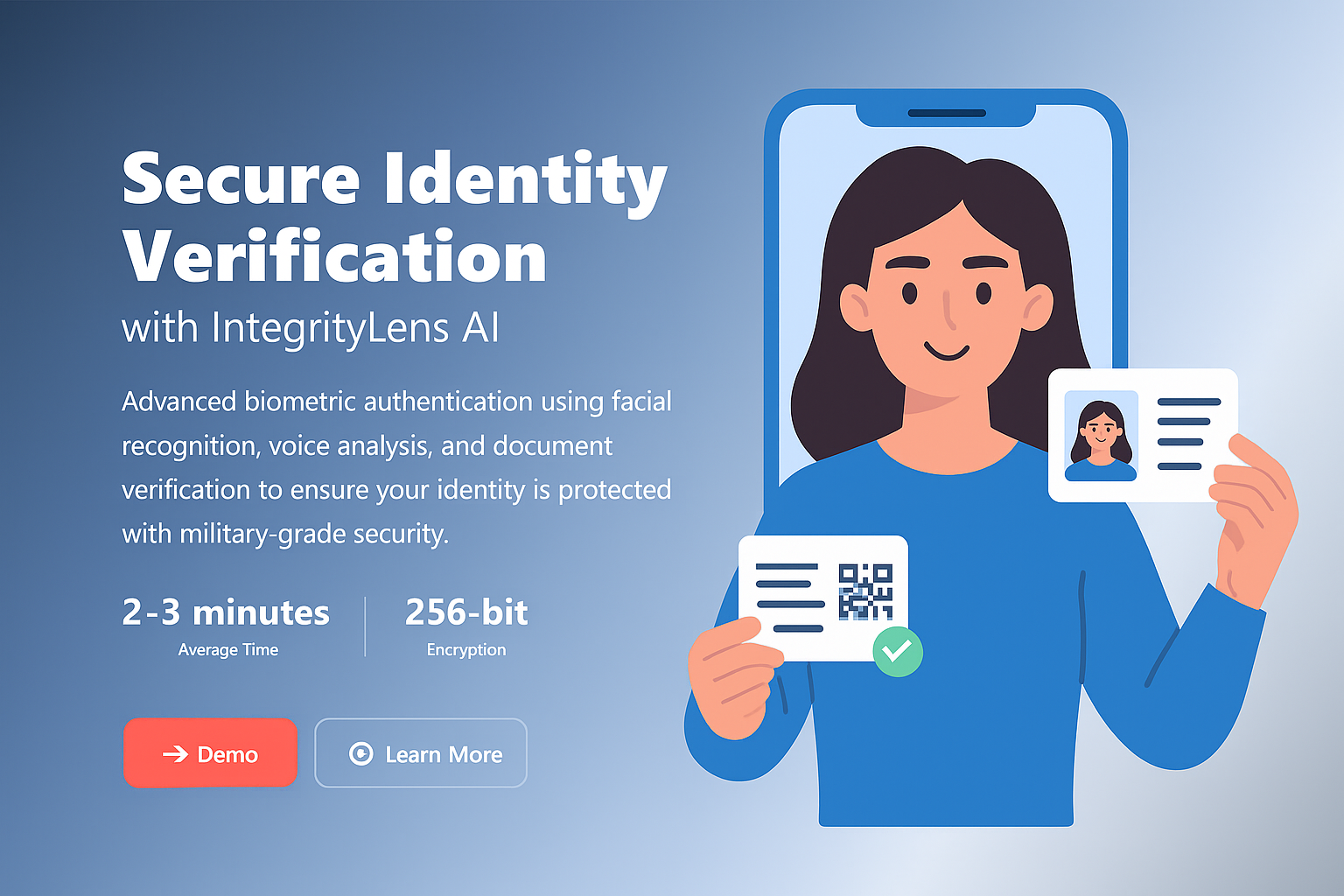
Identity gate before access - Owner: Security (policy), Recruiting Ops (queue ops) - SLA: verification initiated within 15 minutes of scheduling; typical end-to-end verification time is 2-3 minutes (document + voice + face) - Log: verification initiated, liveness result, document auth result, face match result, decision, reviewer override if any - Control: step-up verification required if last verification is older than 90 days or if role is high-risk
Interview loop or targeted delta interview - Owner: Hiring Manager - SLA: complete within 3 business days of verification - Log: structured scorecard fields, rubric version, interviewer identity, timestamped submission
Decision and evidence pack sealing - Owner: Hiring Manager (decision), Recruiting Ops (pack assembly), Security (audit access policy) - SLA: decision within 24 hours of final interview - Log: decision, reason codes, approver, sealed evidence pack ID, link stored in ATS
Reconciliation and analytics - Owner: Analytics - SLA: weekly - Log: time-to-event dashboards, SLA breach report, missing evidence rate, identity exception rate, conversion by segment What can go wrong (and how to design for it): - Duplicate candidate records: use deterministic matching keys and merge workflows. Log merges as events. - Webhook retries: enforce idempotency for outreach and verification initiation. Store idempotency keys in the ATS. - Partial write-backs: build a reconciliation job that compares outreach events to ATS stage changes daily, and raises exceptions into a review queue.
Related Resources
Key takeaways
- Treat silver-medalist re-engagement like access recertification: re-open the file only when evidence is current, attributable, and logged.
- Structured interview notes are only useful if they are timestamped, rubric-bound, and linked to a requisition and interviewer identity.
- Automate outreach and scheduling, but keep eligibility decisions review-bound with explicit SLAs and named owners.
- Identity gate before any new privileged step (live interview, assessment link, offer) to prevent proxy participation and evidence contamination.
- Measure time-to-event (time-to-shortlist, time-to-schedule, time-to-decision) and track where delays cluster when identity is unverified.
A practical policy-as-code template Recruiting Ops can version-control.
Encodes eligibility rules, required evidence fields, review SLAs, and identity gating triggers.
Designed to support retries, idempotency, and ATS write-backs without shadow spreadsheets.
version: 1
policy_name: silver-medalist-reengagement
window_days_since_last_interview: 210
eligibility:
  require_prior_stage: ["onsite", "final"]
  require_scorecard_complete: true
  min_overall_score: 3.5
  allowed_disposition_reasons: ["runner_up", "headcount_pause", "timing"]
  exclude_if_opted_out: true
  exclude_if_open_complaint: true
rubric_controls:
  require_rubric_version: true
  if_rubric_version_changed:
    action: "delta_interview_required"
    owner: "hiring_manager"
slas:
  shortlist_review_hours: 8
  rubric_equivalency_review_hours: 24
  outreach_send_hours_after_approval: 2
  verification_initiate_minutes_after_schedule: 15
  decision_hours_after_final: 24
identity_gating:
  gate_before_steps: ["live_interview", "assessment_access", "offer"]
  step_up_if:
    last_verification_older_than_days: 90
    role_risk_tier_in: ["high", "privileged_access"]
  on_verification_exception:
    route_to_queue: "security-review"
    access_expiration_minutes: 0
logging:
  ats_writeback_required: true
  required_events:
    - req.reopened
    - silver_medalist.shortlist_created
    - shortlist.approved
    - outreach.sent
    - outreach.response_received
    - verification.initiated
    - verification.completed
    - interview.scorecard_submitted
    - decision.made
idempotency:
  keys:
    outreach: "candidate_id:req_id:template_id"
    verification: "candidate_id:req_id:verification_policy_version"
reconciliation:
  daily_job:
    compare_events_to_ats_stage: true
    route_discrepancies_to_queue: "reengagement-ops"
Outcome proof: What changes
Before
Silver medalists were tracked in spreadsheets and outreach happened via email sequences. Interview notes were often free-text, and hiring managers re-decided from memory under deadline pressure. Audit retrieval required manual reconstruction across tools.
After
Re-engagement runs as an ATS-anchored workflow: candidates are shortlisted only if structured evidence is complete, rubric equivalency is attested, and identity is verified before new interview or assessment access. Every action produces a timestamped event that seals into an evidence pack.
Implementation checklist
- Define eligibility rules for silver medalists (role match, seniority, previous score threshold, recency window).
- Normalize interview notes into a structured rubric with required fields and scoring anchors.
- Create an SLA-bound re-engagement queue with reviewer accountability and escalation.
- Add step-up verification before any new interview or assessment access.
- Log every decision and outreach event to an ATS-anchored audit trail and evidence pack.
Questions we hear from teams
- Can we re-engage without re-interviewing?
- Yes, but only if the prior evidence is structured, attributable, and comparable to the current rubric. If the rubric changed or scorecards are incomplete, route to a delta interview with a documented equivalency decision.
- How do we avoid automated outreach creating disparate impact risk?
- Keep outreach automation separate from eligibility decisions. Eligibility should be review-bound with documented reasons and rubric equivalency checks. Also log who was included and excluded and why, so you can audit patterns.
- What is the minimum data we need from six months ago to make this work?
- A requisition link, a structured scorecard with rubric version, interviewer identity, timestamps, and a recorded disposition reason. Without these, treat the candidate as a warm lead, not a silver medalist.
Ready to secure your hiring pipeline?
Let IntegrityLens help you verify identity, stop proxy interviews, and standardize screening from first touch to final offer.
Watch IntegrityLens in action
See how IntegrityLens verifies identity, detects proxy interviewing, and standardizes screening with AI interviews and coding assessments.