High-Volume Hiring Triage With Risk Scoring and Audit Trails
Seasonal spikes break funnels when review capacity is fixed but applicant volume is not. The fix is not more inbox triage. It is risk-tiered automation with identity gates, immutable logs, and SLA-bound human review.
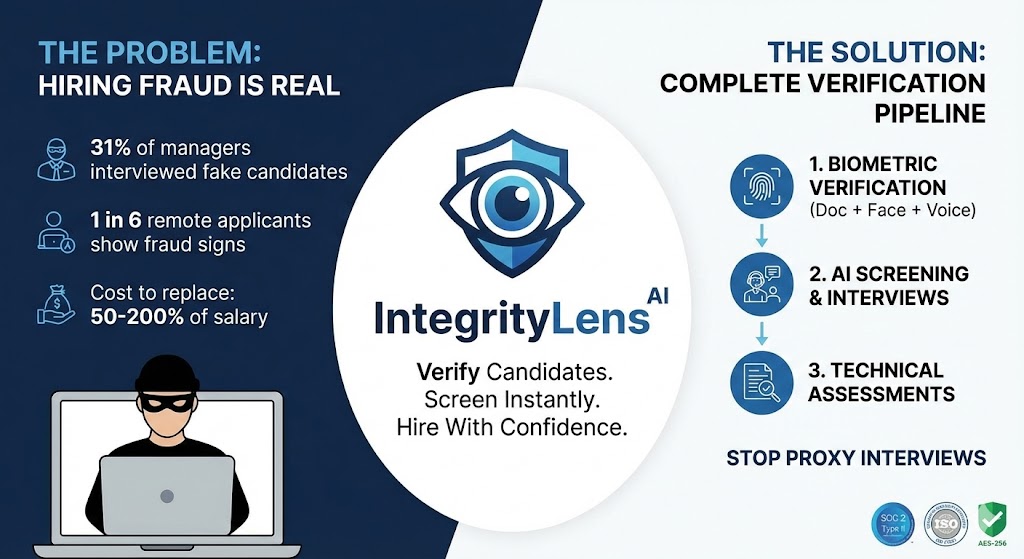
In a seasonal surge, the risk is not volume. The risk is unverified access and unlogged decisions at scale.Back to all posts
Real Hiring Problem
Recommendation: when inbound volume spikes, do not scale review. Scale triage with risk-tiered routing, then force identity verification before any privileged step (live interview, assessment access, offer). Scenario: you open a seasonal requisition set and receive thousands of applicants in days. Recruiters create a shadow queue in a spreadsheet to keep up. Hiring managers start interviewing from calendar links. A background check gets ordered late because the team wants to "save money" until finalists. Two weeks later, Legal asks you to reconstruct why a rejected candidate was screened out. You cannot, because the rubric lived in email and the identity check was never gated before the interview. Operational risk: SLA breach happens first. Time-to-event balloons at unowned queues ("someone needs to review these"). Legal exposure follows because decisions lack tamper-resistant feedback and consistent rubric storage. Fraud risk increases because unverified identities get access to assessments, internal links, and sometimes privileged information. Cost pressure is structural. Replacement costs can be 50-200% of salary depending on role, so the seasonal funnel is not "temporary" risk. It is compressed risk.
WHY LEGACY TOOLS FAIL
Recommendation: stop treating each tool as a step. Treat the funnel as an instrumented workflow with event logs, routing, and reconciliation. Why the market failed to solve this: most stacks are a chain of point solutions. The ATS stores applicants, background check vendors run late-stage checks, and coding challenge tools sit outside the system of record. In a surge, these systems force sequential checks that slow everything down, and they do not share a unified evidence pack. Common failure modes during high volume: - Waterfall workflows: recruiters wait for one step to complete before triggering the next, creating queue pileups and unpredictable time-to-event. - No immutable event log: you have statuses, not auditable timestamps tied to reviewer actions and evidence artifacts. - No review-bound SLAs: queues do not page anyone when they breach. They just grow. - No standardized rubric storage: scoring lives in chat or notebooks, which is not defensible. - Shadow workflows and data silos: sourcing and screening insights never write back to the ATS, so downstream interviewers operate blind.
OWNERSHIP & ACCOUNTABILITY MATRIX
Recommendation: assign explicit owners for routing, controls, and scoring. Unowned steps become SLA breaches and audit gaps. Ownership model that holds in seasonal volume: - Recruiting Ops owns workflow design, routing rules, queue instrumentation, and SLA escalation. - Security owns identity policy, step-up verification thresholds, access control, and audit policy for evidence packs. - Hiring Managers own job-relevant rubrics, minimum evidence requirements, and final scoring discipline. - Analytics (or People Analytics) owns segmented risk dashboards, time-to-event reporting, and reconciliation monitoring. Source of truth: - ATS is the system of record for lifecycle state, decisions, and rubric artifacts. - Verification service is the system of record for identity events and evidence attachments, but must write back immutable references into the ATS. - Interview and assessment systems can generate evidence, but cannot be the only place evidence lives. Evidence must be linked into the ATS-anchored audit trail. Automation vs manual review: - Automated: risk scoring, routing, identity gate prompts, scheduling, evidence capture, plagiarism and telemetry flags. - Manual: exception handling, adverse action review when applicable, and any final disposition that affects employment eligibility.
MODERN OPERATING MODEL
Recommendation: build a risk-tiered funnel with parallelized checks, identity gating before access, and event-based orchestration. Instrumented workflow approach: Integration realities to plan for: use idempotency keys so replays do not duplicate candidates, retries for vendor timeouts, and reconciliation jobs that compare ATS state versus verification and assessment events.
Risk-tiered funnel. Assign each inbound applicant a triage tier based on integrity signals and job-fit signals. Use tiers to decide what happens next, not gut feel.
Identity verification before access. Do not allow live interviews, assessment links, or offer workflows until the identity gate is passed. Treat these as privileged steps.
Event-based triggers. Every state transition emits an event with timestamps. Downstream actions subscribe to events, not to human reminders.
Automated evidence capture. Every screening outcome must produce an artifact: transcript, rubric score, verification result reference, and reviewer identity.
Analytics dashboards. Track time-to-event per stage, SLA breaches by queue, and integrity signal rates segmented by role, geography, and source.
Standardized rubrics. Store the rubric schema and completed scoring in the ATS so decisions are reproducible.
Time-to-triage (application_received to triage_assigned)
Queue age by owner (oldest item per lane)
Identity gate pass rate and step-up rate by segment
Time-to-offer by risk tier (not overall average)
SLA breach count and mean time to recover
WHERE INTEGRITYLENS FITS
IntegrityLens sits between Recruiting Ops and Security as workflow glue, so high-volume routing is enforceable and audit-ready without spawning shadow queues. - Enforces an identity gate before access using biometric verification (liveness, face match, document authentication) so unverified identities do not enter privileged steps. - Runs AI-powered screening interviews 24/7 with evidence-based scoring artifacts that write back into the ATS lifecycle. - Supports AI coding assessments across 40+ languages with plagiarism detection and execution telemetry to reduce low-signal reviewer time. - Generates immutable evidence packs with timestamped logs, reviewer notes, and tamper-resistant feedback tied to candidate state changes. - Operates with 256-bit AES encryption baseline and runs on Google Cloud SOC 2 Type II audited infrastructure with ISO 27001-certified infrastructure, supporting GDPR/CCPA-ready controls.
ANTI-PATTERNS THAT MAKE FRAUD WORSE
Recommendation: remove bypass paths. Fraud concentrates where identity is unverified and evidence is not logged. - Letting candidates access assessments or live interviews before identity verification, then trying to "clean it up" later. - Using a single generic inbox or spreadsheet triage queue with no owner, no SLA, and no immutable event log. - Auto-rejecting based on opaque scores without storing rubric context and reviewer accountability, which increases legal exposure and makes appeals non-defensible.
IMPLEMENTATION RUNBOOK
Define lanes and thresholds (same day) - Owner: Recruiting Ops + Security + Hiring Manager - SLA: 4 hours to publish routing rules before campaign launch - Logged: risk-tier definition version, approvers, effective timestamp
Inbound ingest and dedupe - Owner: Recruiting Ops - SLA: application_received to candidate_created within 5 minutes - Logged: source, requisition, idempotency key, dedupe decision
Automated triage score and routing - Owner: Recruiting Ops (policy), Analytics (monitoring) - SLA: candidate_created to triage_assigned within 10 minutes - Logged: triage tier, contributing signals, policy version, timestamp
Identity gate before access (required for Tier 2 and Tier 3) - Owner: Security (policy), Recruiting Ops (workflow) - SLA: triage_assigned to identity_requested within 15 minutes; identity_requested to identity_verified target under 3 minutes when completed - Logged: document auth result, liveness result, face match result, verification duration, exceptions and reviewer notes
Screening interview lane (Tier 1 and Tier 2) - SLA: invite_sent within 30 minutes; completion within 48 hours or expire by default - Logged: invite timestamp, completion timestamp, transcript reference, scoring rubric output
Assessment access (Tier 2 and Tier 3 only after identity_verified) - Owner: Hiring Manager (rubric), Security (access control) - SLA: assessment_link_issued within 1 hour of identity_verified; auto-revoke after 72 hours - Logged: link issuance, access expiration, execution telemetry, plagiarism flags, score artifact
Human review queue for exceptions and step-up verification - Owner: Security for identity exceptions, Hiring Manager for scoring exceptions - SLA: review_bound SLA of 8 business hours; escalation to CPO delegate at 12 hours - Logged: reviewer identity, decision, evidence references, rationale tied to rubric criteria
Offer decision and evidence pack finalization - Owner: Recruiting Ops (process), Hiring Manager (decision) - SLA: decision_to_offer within 24 hours of final score completion - Logged: immutable evidence pack link, final rubric, approver timestamps, offer issued timestamp
Reconciliation and audit export (daily during surge) - Owner: Analytics + Security - SLA: daily job completes by 06:00 local - Logged: mismatch report (ATS state vs verification and assessment events), retries executed, unresolved exceptions
Vendor timeout causes partial state. Use retries with backoff and an idempotency key so you do not create duplicate verification sessions.
Candidates reapply and fork identities. Dedupe on email plus device and document hash references where permissible, then route to step-up verification.
Review queues silently breach. Treat SLA breaches as incidents with an escalation path and daily queue age reporting.
Related Resources
Key takeaways
- Treat high-volume hiring like access management: identity gate before privileged steps, then step-up verification for higher-risk cases.
- Use parallelized checks instead of waterfall workflows so you do not block the whole funnel on one slow vendor or manual queue.
- Make timestamps the control surface: SLAs, queue health, time-to-event analytics, and escalation when reviews breach.
- Centralize evidence: rubric, identity artifacts, reviewer notes, and decisions belong in an ATS-anchored audit trail.
- Govern automation: risk scoring can triage, but hiring decisions must remain evidence-based and reviewable to reduce legal exposure.
Use this as a starting policy document for Recruiting Ops and Security. It is designed to be versioned, approved, and referenced in your immutable event log.
Key design: identity is required before any privileged step, and every automated action must emit an event with a policy version for audit reconstruction.
version: "2026-06-15"
approvers:
  recruiting_ops: "recruiting-ops-lead@company.com"
  security: "iam-policy-owner@company.com"
  people_analytics: "people-analytics@company.com"
effective_at: "2026-06-20T00:00:00Z"

lanes:
  tier_1_low_risk:
    description: "High-volume, low-risk roles. Fast lane with evidence capture."
    requires_identity_before:
      - "assessment_link"
      - "live_interview"
      - "offer"
    steps:
      - event: "triage_assigned"
        sla_minutes: 10
      - event: "screening_interview_invite_sent"
        sla_minutes: 30
      - event: "screening_completed_or_expired"
        sla_hours: 48
  tier_2_standard:
    description: "Most candidates. Identity-gated before any privileged step."
    requires_identity_before:
      - "assessment_link"
      - "live_interview"
      - "offer"
    step_up_verification_triggers:
      - "mismatch_on_document_fields"
      - "deepfake_signal_detected"
      - "proxy_interview_signal_detected"
    review_sla_business_hours: 8
  tier_3_high_risk:
    description: "Elevated fraud risk or privileged access roles. Step-up verification required."
    requires_identity_before:
      - "any_interview"
      - "assessment_link"
      - "offer"
    required_controls:
      - "biometric_liveness"
      - "document_authentication"
      - "face_match"
      - "manual_exception_review"
    review_sla_business_hours: 4

logging_requirements:
  always_log_events:
    - "application_received"
    - "candidate_created"
    - "triage_assigned"
    - "identity_requested"
    - "identity_verified"
    - "identity_exception_opened"
    - "assessment_link_issued"
    - "assessment_completed"
    - "reviewer_decision_recorded"
    - "offer_approved"
  evidence_pack_must_include:
    - "policy_version"
    - "rubric_schema_id"
    - "rubric_scores"
    - "verification_result_references"
    - "reviewer_ids_and_timestamps"
    - "disposition_reason_codes"

access_controls:
  access_expiration_by_default:
    screening_invite_hours: 48
    assessment_link_hours: 72
  auto_revoke_on:
    - "identity_failed"
    - "offer_declined"
    - "no_show"
Outcome proof: What changes
Before
Recruiting Ops relied on spreadsheet triage and calendar scheduling. Identity checks were performed late, and rubric notes lived in email and interview tool exports, creating audit gaps and rework when candidates appealed decisions.
After
The team implemented a risk-tiered funnel with identity gating before interviews and assessments, SLA-bound review queues, and ATS-anchored evidence packs for every offer decision.
Implementation checklist
- Define 3 risk tiers with explicit routing rules and owners.
- Insert an identity gate before any live interview, assessment access, or offer workflow.
- Implement review-bound SLAs with escalation and timestamped queue reporting.
- Store standardized rubrics and reviewer notes in the system of record.
- Create immutable evidence packs per candidate and require them for offer approvals.
- Reconcile integrations with idempotency keys and retry policies so no candidate is processed twice.
Questions we hear from teams
- What is the minimum identity gate you should enforce during seasonal hiring?
- Enforce identity verification before any privileged step: live interviews, assessment access, and offer workflows. In a surge, the cost of unverified access is higher than the cost of early gating because it creates downstream rework and fraud exposure.
- How do you prevent automated triage from becoming a legal liability?
- Treat triage as routing, not final decisioning. Store the rubric schema, the tiering policy version, and the evidence used for the route, then require human review for exceptions and adverse outcomes when applicable.
- What should a CPO ask for in an audit-ready hiring record?
- A tamper-resistant timeline: who changed the candidate state, which rubric was used, what evidence artifacts were captured, and when identity was verified relative to interviews and assessments. If you cannot retrieve it, it is not defensible.
Ready to secure your hiring pipeline?
Let IntegrityLens help you verify identity, stop proxy interviews, and standardize screening from first touch to final offer.
Watch IntegrityLens in action
See how IntegrityLens verifies identity, detects proxy interviewing, and standardizes screening with AI interviews and coding assessments.