Funnel Health Triage: Pinpoint the Stage That's Bleeding Candidates
Your funnel is not "slow" or "competitive." It is leaking at a specific timestamped step. Instrument it like access management, then staff and fix the exact choke point.
Unexplained drop-off is usually unowned work. Instrument each stage with timestamps, SLAs, and evidence packs, then fix the one queue that is actually bleeding your funnel.Back to all posts
Real hiring problem
Your funnel is leaking at a specific step, but you cannot see it because the timestamps and evidence are split across systems. Under audit, the question is not whether you hired fast. The question is whether the decision is defensible and linked to provable identity continuity. External signals say this risk is active: 31% of hiring managers report interviewing someone later found to be using a false identity (Checkr). One real-world remote pipeline found 1 in 6 applicants showed signs of fraud (Pindrop). When your funnel health view ignores identity gating and evidence completeness, you are optimizing speed while accumulating legal and fraud exposure. Replacement cost ranges are material at the CPO level: SHRM cites 50-200% of annual salary depending on role. Unexplained drop-off compounds this because it drives reruns, interviewer load, and inconsistent decisions that are hard to defend.
Offer targets miss while top-of-funnel volume looks fine.
Manual review queues grow silently because no SLA is attached to the queue.
Hiring managers complain about "candidate quality" when the real issue is stage friction and inconsistent rubrics.
Legal asks for approvals and evidence, and the team cannot reconstruct the timeline without email archaeology.
Why legacy tools fail
Legacy ATS and point vendors optimize their own step, not the end-to-end chain of custody. The result is sequential checks, fragmented timelines, and no unified evidence pack tied to the ATS record. Operationally, the failure modes are consistent: no immutable event log across vendors, no review-bound SLAs for manual exceptions, and no standardized rubric storage that lets you separate true candidate drop-off from reviewer inconsistency. Shadow workflows emerge to compensate, and if it is not logged, it is not defensible.
Sequential workflows: verification, interviews, assessments, and checks run in a waterfall, creating avoidable time-to-event spikes.
Siloed systems of record: each tool has partial truth, so "drop-off" becomes an attribution argument.
No evidence packs: decisions are not packaged with identity proof, rubric, and telemetry for audit retrieval.
No SLAs: manual review becomes unbounded time, and delays cluster exactly where risk is highest.
Rubrics are optional: inconsistent scoring creates artificial drop-off that looks like candidate behavior.
Ownership and accountability matrix
Assign ownership per stage, declare what is automated versus manually reviewed, and name the system of record. This is how you convert "unexplained" drop-off into owned queues with breach reasons and timestamps. Recommendation: Recruiting Ops owns workflow and SLAs. Security owns identity policy, fraud thresholds, and audit policy. Hiring Managers own rubrics and scoring discipline. Analytics owns dashboards and segmentation definitions. The ATS remains the single source of truth for stage state, with evidence packs attached as immutable references.
Recruiting Ops: stage definitions, SLA targets, queue staffing, exception routing, and breach reason taxonomy.
Security: identity gate policy, step-up verification triggers, fraud review playbooks, retention controls, and audit logging requirements.
Hiring Manager: rubric criteria, pass-fail thresholds, override justification requirements, and interviewer calibration.
Analytics: time-to-event models, segmented risk dashboards, benchmarking approach, and data quality checks.
System of record: ATS for stage status; IntegrityLens evidence packs linked to the candidate timeline; interview and assessment artifacts write back to ATS-anchored audit trails.
Modern operating model: instrumented workflow
Recommendation: instrument hiring as an event-driven control system. Every stage has entry and exit events, SLAs, an owner, and required evidence. Identity is gated before access to interviews or assessments, and risk signals trigger step-up verification instead of slowing every candidate. This model supports two CPO priorities at once: speed and defensibility. Speed improves because checks are parallelized and queues are staffed to SLAs. Defensibility improves because every decision is tied to identity continuity and a time-stamped evidence pack. Operational metrics to run weekly: stage-to-stage conversion, time-to-event percentiles (p50, p90), SLA breach counts by owner, and evidence pack completeness rate. Segment all of them by role family, geography, source, and risk tier to avoid false narratives driven by mix changes.
Verification start rate versus completion rate (by device type and geography).
Step-up verification rate and manual-review rate (risk-tiered funnel health).
Assessment start-to-submit delta and plagiarism-flag rate (quality metrics, not vanity metrics).
Interview no-show rate after identity gating (proxy interview deterrence effect).
Rubric completion rate within SLA (reviewer discipline as a controllable variable).
Where IntegrityLens fits
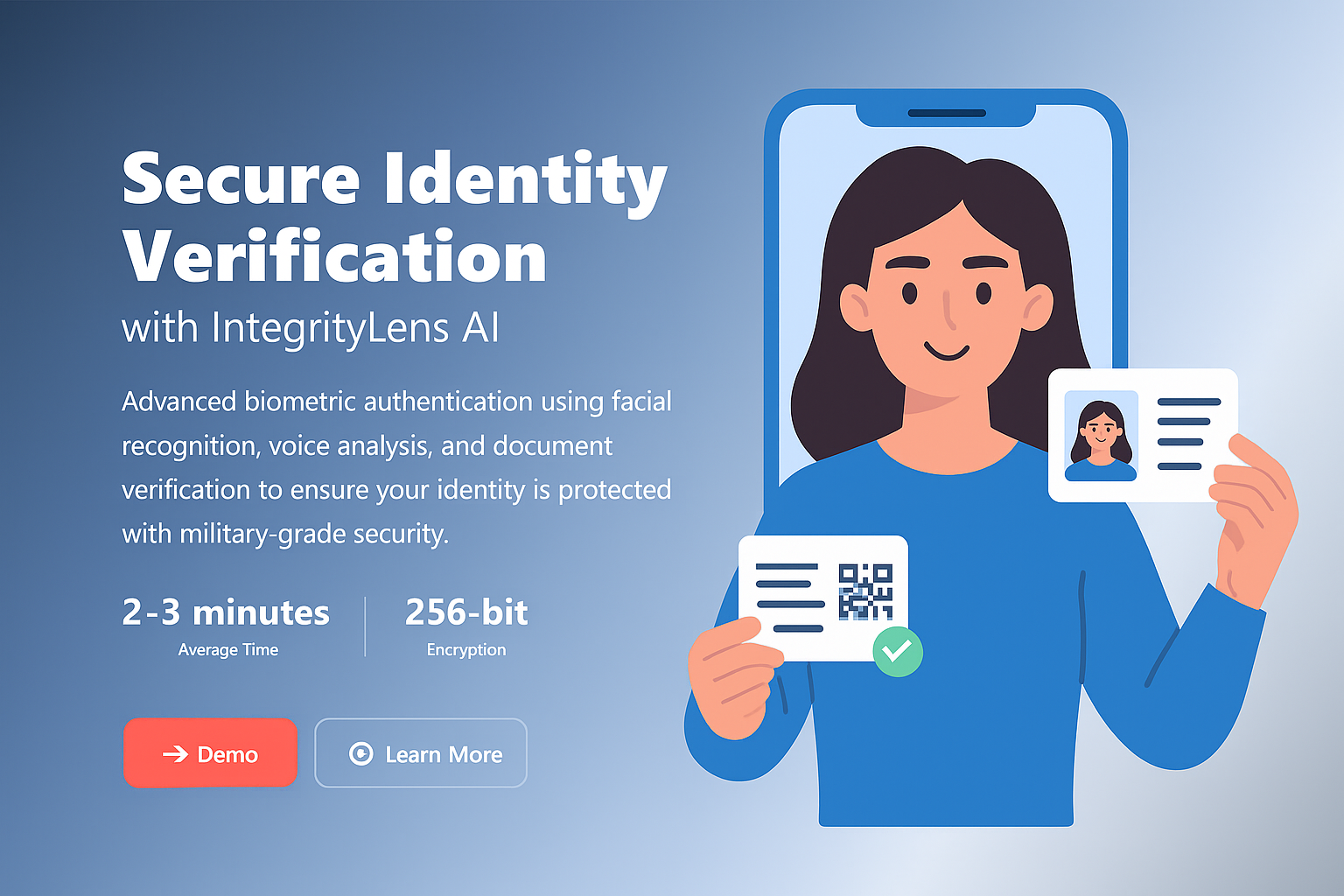
IntegrityLens acts as the ATS-anchored control plane that keeps identity, screening, assessment, and decisions in one instrumented timeline. It reduces unexplained drop-off by turning each stage into a logged event with required evidence and enforced SLAs, so you can see exactly where the funnel is bleeding and why. It enables the modern model by: - Running an identity gate before access using biometric verification (liveness, face match, document authentication) with typical end-to-end verification in 2-3 minutes. - Parallelizing AI screening interviews (24/7 availability) with verification so qualified candidates do not wait for scheduler bandwidth. - Capturing assessment telemetry and plagiarism detection across 40+ languages and writing outcomes back to the candidate record. - Producing immutable evidence packs and ATS-anchored audit trails for approvals, overrides, and reviewer notes. - Applying multi-layered fraud prevention: deepfake detection, proxy interview detection, behavioral signals, device fingerprinting, and continuous re-authentication to preserve identity continuity across stages.
One candidate timeline in the ATS with linked evidence packs for every pass, fail, and override.
Risk-tiered routing so manual review is reserved for high-signal cases, not every applicant.
Segmented funnel dashboards that recruiting leaders can run without pulling spreadsheets from vendors.
Anti-patterns that make fraud worse
Do not fix drop-off by adding friction everywhere. Fix it by enforcing identity continuity and instrumenting the exact choke point. Avoid these three anti-patterns: - Letting candidates access interviews or assessments before identity is gated, then trying to reconcile identity after the fact. - Allowing rubric-optional interviews where decisions move forward without standardized scoring and tamper-resistant notes. - Creating manual exception channels in email or chat that are not written back to the ATS event log and evidence pack.
They break chain of custody between identity and decision.
They create unowned queues and unlogged approvals.
They make it impossible to prove who did what, when, and based on which evidence.
Implementation runbook
name: "Applied"
name: "Identity Gate"
name: "AI Screen Interview"
name: "Technical Assessment"
name: "Panel Interview"
name: "Offer"
"stage_conversion_rate"
"time_to_event_p50"
"time_to_event_p90"
"sla_breach_count"
"evidence_pack_completeness_rate"
"risk_tier"
"role_family"
"region"
"source"
Compute stage conversion deltas and flag the largest negative change week-over-week.
Check evidence pack completeness at that stage first. Missing evidence is often misclassified drop-off.
Segment by risk tier. If high-risk candidates drop earlier, that is expected. If low-risk candidates drop at identity gate or scheduling, it is operational leakage.
Overlay SLA breaches. The stage with the highest p90 delay often matches the highest drop-off.
Require reason codes for withdrawal and rejection. "No response" is not a reason, it is a process failure that needs a timestamped trail.
Sources
- Checkr, Hiring Hoax (Manager Survey, 2025): https://checkr.com/resources/articles/hiring-hoax-manager-survey-2025
Pindrop, hiring process as a cybersecurity vulnerability: https://www.pindrop.com/article/why-your-hiring-process-now-cybersecurity-vulnerability/
SHRM, replacement cost estimates: https://www.shrm.org/in/topics-tools/news/blogs/why-ignoring-exit-data-is-costing-you-talent
Close: implementation checklist
If you want to implement this tomorrow, start with control and instrumentation, not a redesign. Checklist: - Pick one pilot role family and lock stage definitions as events with entry and exit timestamps in the ATS. - Add SLAs per stage and create a breach reason taxonomy owned by Recruiting Ops. - Turn on identity gate before access for interviews and assessments, owned by Security, with step-up verification for flagged sessions. - Require rubric completion and store rubrics as tamper-resistant evidence before any advancement, owned by Hiring Managers. - Create two review queues: standard and high-risk, each with explicit owners and review-bound SLAs. - Ship a weekly funnel health dashboard: stage conversion, time-to-event p50 and p90, SLA breaches, evidence pack completeness, segmented by risk tier, role family, source, and region. - Run a weekly ops review that answers: "Which single stage has the highest unexplained drop-off, and what staffing or policy change are we making this week?" Business outcomes you should expect when the model is enforced: reduced time-to-hire by removing unowned delays, defensible decisions because evidence is attached to timestamps, lower fraud exposure through identity continuity, and standardized scoring that reduces reviewer-driven leakage.
If legal asked you to prove who approved this candidate, can you retrieve it within 24 hours?
Can you show identity continuity from verification through interview through offer for any candidate ID?
Can you explain your biggest drop-off stage with timestamps and reason codes, not anecdotes?
If it is not logged, it is not defensible.
Related Resources
Key takeaways
- Unexplained drop-off is usually an instrumentation problem: missing timestamps, split systems of record, and unowned review queues.
- Measure funnel health by time-to-event and stage-to-stage conversion, segmented by risk tier and role family, not by applicant volume.
- Treat interviews and assessments as privileged access: identity gate before access, step-up verification on risk signals, and immutable logs for decisions.
- Operational fixes are staffing and policy changes: tighten SLAs where delays cluster, and reduce manual review volume with risk-tiered routing.
- A decision without evidence is not audit-ready: every pass, fail, and override needs an ATS-anchored evidence pack.
A practical policy file that turns your funnel into an instrumented workflow: stages as events, owners, SLAs, required logs, step-up verification triggers, and dashboard segmentation.
Use this to align Recruiting Ops, Security, Hiring Managers, and Analytics on what must be logged before a candidate can advance.
This directly supports pinpointing the highest unexplained drop-off by forcing reason codes, timestamps, and evidence references at every transition.
funnel_health_policy:
  scope:
    pilot_roles: ["Software Engineer", "Support Specialist"]
    regions: ["US", "CA", "UK"]
  stages:
    - name: "Applied"
      owner: "Recruiting Ops"
      sla_hours_to_next_event: 24
      required_logs: ["application_received_ts", "source", "role_id"]

    - name: "Identity Gate"
      owner: "Security"
      sla_hours_to_next_event: 2
      required_logs: ["verification_start_ts", "verification_end_ts", "verification_outcome", "evidence_pack_id"]
      step_up_triggers: ["device_fingerprint_anomaly", "liveness_inconclusive", "face_match_low_confidence", "deepfake_signal"]

    - name: "AI Screen Interview"
      owner: "Recruiting Ops"
      sla_hours_to_next_event: 48
      required_logs: ["invite_sent_ts", "interview_started_ts", "interview_completed_ts", "screen_score", "evidence_pack_id"]

    - name: "Technical Assessment"
      owner: "Hiring Manager"
      sla_hours_to_next_event: 72
      required_logs: ["assessment_start_ts", "assessment_submit_ts", "plagiarism_flags", "execution_telemetry_id", "scorecard_id"]

    - name: "Panel Interview"
      owner: "Hiring Manager"
      sla_hours_to_next_event: 96
      required_logs: ["panel_scheduled_ts", "panel_completed_ts", "rubric_id", "reviewer_notes_hash", "override_reason_if_any"]

    - name: "Offer"
      owner: "Recruiting Ops"
      sla_hours_to_next_event: 48
      required_logs: ["offer_created_ts", "offer_sent_ts", "approver_id", "approval_ts", "evidence_pack_id"]

  funnel_health_metrics:
    primary:
      - "stage_conversion_rate"
      - "time_to_event_p50"
      - "time_to_event_p90"
      - "sla_breach_count"
      - "evidence_pack_completeness_rate"
    segmentation:
      - "risk_tier"
      - "role_family"
      - "region"
      - "source"
  governance:
    system_of_record: "ATS"
    rule: "No stage advancement without required logs"
    audit_retrieval_sla_hours: 24
Outcome proof: What changes
Before
Offer volume was volatile even when applicant volume was stable. The team could not attribute drop-off to a specific stage because timestamps and rejection reasons lived in separate tools, and manual review queues had no explicit SLAs. Legal and Security could not reliably reconstruct decision timelines without pulling records from multiple vendors.
After
Stages were converted into events with owners, SLAs, and required evidence written back to the ATS. Identity gating was enforced before interview and assessment access, and high-risk sessions were routed to an owned review queue with an SLA. Weekly segmented dashboards exposed a single choke point (rubric completion delay) that was resolved through staffing and enforcement rather than adding more sourcing.
Implementation checklist
- Define stages as events with entry and exit timestamps in the ATS.
- Add SLA targets per stage and a breach reason taxonomy.
- Segment conversion and time-to-event by role, geography, source, and risk tier.
- Require identity gate before any interview or assessment access.
- Enforce rubric completion and tamper-resistant reviewer notes before advancing.
- Route high-risk sessions to manual review queues with explicit owners and SLAs.
Questions we hear from teams
- What is the single best metric for funnel health?
- Time-to-event percentiles per stage (p50 and p90) paired with stage conversion, segmented by risk tier. This shows where delays cluster and whether drop-off is operational (SLA breach) or policy-driven (risk routing).
- How do I separate candidate-driven drop-off from process-driven drop-off?
- Require reason codes at stage exit, enforce evidence pack completeness, and correlate drop-off with SLA breaches. If drop-off rises where timestamps are missing or rubrics are incomplete, it is process-driven.
- Where should identity verification sit in the funnel?
- Before any privileged access to interviews or assessments. If identity is verified after substantive evaluation, you cannot prove identity continuity and you risk proxy interviewing and deepfake interference.
- What should a CPO ask for in an audit-ready hiring record?
- A candidate timeline with timestamps for each stage, approver identities for key decisions, standardized rubrics, and linked evidence packs that prove identity continuity from verification through decision.
Ready to secure your hiring pipeline?
Let IntegrityLens help you verify identity, stop proxy interviews, and standardize screening from first touch to final offer.
Watch IntegrityLens in action
See how IntegrityLens verifies identity, detects proxy interviewing, and standardizes screening with AI interviews and coding assessments.