Device Farm Triage: One Fingerprint, 20 Applicants
An operator briefing for compliance leaders on turning repeated browser fingerprints into defensible, SLA-bound fraud controls.
A fingerprint cluster is not a verdict. It is a controlled trigger: gate access, step-up verify, and log a defensible decision.Back to all posts
Real Hiring Problem
Recommendation: Treat repeated browser fingerprints as an early integrity incident, not a late-stage surprise, and make it audit-ready from the first trigger. When the same browser fingerprint shows up across 20 "unique" applicants, your risk is two-fold: fraud exposure and an inability to prove consistent process. The compliance failure is usually evidence handling, not detection. External context: 31% of hiring managers report interviewing someone later found to be using a false identity, and 1 in 6 remote applicants showed signs of fraud in a real pipeline. Your control has to assume volume and ambiguity, not one-off bad actors.
Legal asks: "If legal asked you to prove who approved this candidate, can you retrieve it?"
Recruiting Ops asks: "How do we stop wasting interview loops without slowing every requisition?"
Security asks: "How do we escalate risk without accusing legitimate candidates?"
Why Legacy Tools Fail
Recommendation: Stop running device-farm response as sequential, tool-by-tool checks. Make it an event-based workflow with a single source of truth. Legacy stacks split identity, interviews, assessments, and dispositions across vendors. The result is slow waterfall checks, missing event logs, and evidence scattered in screenshots and email threads. Without unified evidence packs, you cannot show consistent policy application. Without SLA-bound review queues, holds linger and time-to-offer variance grows. Shadow workflows become integrity liabilities.
Sequential checks that slow time-to-offer and encourage bypasses.
No immutable event log tying signals to decisions.
No standardized rubric storage, so decisions cannot be replayed or audited.
No queue SLAs, so reviews stall silently.
Ownership and Accountability Matrix
Recommendation: Assign owners by control type and make the ATS the disposition authority, with security-grade evidence written back as artifacts. Recruiting Ops owns workflow and routing. Security owns thresholds, access policy, and audit controls. Hiring Managers own rubric discipline and any override rationale. Compliance owns adjudication policy and adverse action defensibility. Automate detection and gating. Keep adjudication human, but review-bound with SLAs and required evidence fields.

ATS: status, holds, disposition, and timestamps.
Verification: identity gate artifacts and timestamps.
Interview and assessments: rubric outputs plus telemetry tied to session IDs.
Modern Operating Model
Recommendation: Run device-farm detection as a continuous loop: detect, gate, step-up, adjudicate, and measure time-to-event. Identity verification must happen before access to privileged steps. Event-based triggers should open holds and queues automatically. Evidence capture must be automatic and tamper-resistant. Dashboards should segment risk by role, geography, and source, and report queue aging and detection-to-disposition time, not vanity averages.
Identity gate before access to assessments and live interviews.
Fingerprint cluster updates as first-class events.
SLA-bound adjudication queues with required evidence fields.
Evidence packs that store rubrics, telemetry, and reviewer attribution.
Where IntegrityLens Fits
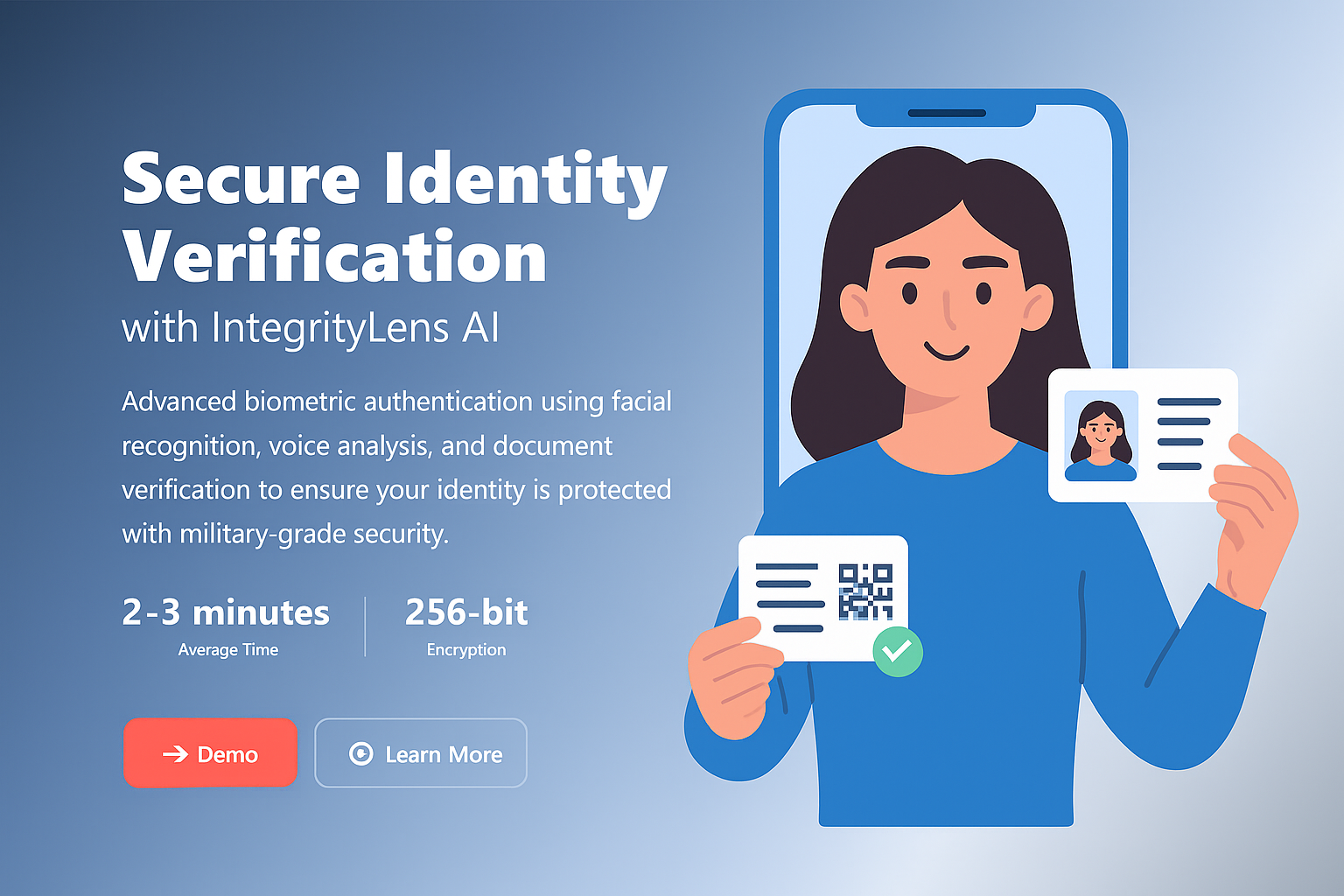
IntegrityLens enables an ATS-anchored operating model where device-farm signals trigger risk-tiered verification, not ad hoc suspicion. It combines biometric identity verification (liveness, face match, document authentication) with fraud prevention signals (deepfake detection, proxy interview detection, behavioral signals, device fingerprinting). It writes immutable evidence packs and audit trails back into the hiring record, and supports AI screening interviews available 24/7 with structured rubrics. Operational constraint: step-up verification is feasible because typical end-to-end verification time is 2-3 minutes for document plus voice plus face.
Identity gating before privileged access.
Parallelized checks instead of waterfall workflows.
SLA-bound review queues with reviewer accountability.
ATS-anchored audit trails and retrievable evidence packs.
Risk-tiered funnel with step-up verification.
Anti-Patterns That Make Fraud Worse
Recommendation: Avoid actions that create false positives, bypass holds, or destroy evidence provenance.
Auto-reject based on fingerprint reuse alone, without adjudication notes and corroborating signals.
Allow "just this once" scheduling that bypasses the hold and skips identity gating.
Keep evidence in email, screenshots, or chat instead of ATS-anchored evidence packs.
Implementation Runbook
Detect and cluster fingerprints (SLA 0-5 min). Owner: Security + Recruiting Ops. Log cluster metadata and timestamps.
Apply ATS risk hold on threshold breach (SLA 5 min). Owner: Recruiting Ops. Log rule ID, blocked stages, and hold event.
Correlate with identity and interview telemetry (SLA 30 min). Owner: Security. Log correlation summary and evidence IDs.
Compliance adjudication queue (SLA 4 business hours). Owner: Compliance. Log reviewer attribution, decision code, evidence IDs, and rationale.
Step-up verification (SLA 24 hours for completion; 4 business hours to disposition). Owners: Compliance + Recruiting Ops. Log request, completion, artifacts, disposition.
Release hold and grant access (SLA immediate). Owner: Recruiting Ops. Log release event and any access expiration controls.
Weekly metrics and on-demand evidence export. Owners: Analytics + Compliance. Log time-to-event metrics and evidence retrieval access.
Fingerprint cluster summary with time window and count.
Identity gate results: document auth, liveness, face match.
Interview and assessment rubrics plus telemetry flags.
Reviewer attribution, timestamps, and rationale referencing evidence IDs.
Close: Implementation Checklist
Recommendation: Implement the control tomorrow by gating privileged steps, binding reviews to SLAs, and making every decision exportable as an evidence pack. Define the threshold and exception handling. Add an ATS hold stage. Create an SLA-bound compliance queue with required evidence fields. Use step-up verification when not cleared. Store standardized rubrics. Report time-to-event metrics and queue aging. Outcome target: reduced time-to-hire variance, defensible decisions, lower fraud exposure, and standardized scoring across teams.
Set the fingerprint cluster rule and time window.
Block privileged steps with an ATS risk hold.
Enforce a 4-hour adjudication SLA with required fields.
Run step-up verification before interviews for non-cleared cases.
Make evidence packs retrievable for Legal on demand.
Related Resources
Key takeaways
- Treat repeated browser fingerprints as a compliance-controlled risk signal, not an accusation.
- Route fingerprint clusters into step-up verification with SLA-bound review queues to protect time-to-offer.
- Log every decision as an event with timestamps and reviewer attribution. If it is not logged, it is not defensible.
- Defense in depth matters: fingerprint reuse only becomes actionable when correlated with identity and interview telemetry.
- False positive management is an operating requirement. Your runbook must show how to clear legitimate shared-device cases.
Use this policy to standardize when a fingerprint cluster triggers an ATS risk hold, how cases route to Compliance, and what evidence must be present before disposition.
Design goal: reduce fraud exposure without creating inconsistent treatment or unlogged exceptions.
policy:
  name: device-farm-fingerprint-cluster
  version: 1.0
  scope:
    roles: ["remote", "hybrid"]
    stages_gated: ["coding_assessment", "live_interview", "offer"]
  signals:
    primary:
      - id: browser_fingerprint_hash
        description: "Hashed fingerprint derived from browser and device attributes"
    corroborating:
      - id: liveness_result
      - id: document_auth_result
      - id: face_match_result
      - id: proxy_interview_flag
      - id: deepfake_flag
      - id: capture_anomaly_flag
  thresholds:
    fingerprint_cluster:
      count: 20
      window_days: 14
      action: "risk_hold"
  routing:
    on_risk_hold:
      queue: "compliance-adjudication"
      sla_hours: 4
      required_fields:
        - reviewer_id
        - decision_code
        - evidence_ids
        - rationale
  step_up_verification:
    required_when:
      - condition: "fingerprint_cluster_triggered"
        unless: "identity_gate_passed AND no_corroborating_flags"
    expected_completion_minutes:
      doc_voice_face: 3
  audit:
    immutable_event_log: true
    evidence_pack_required_for_disposition: true
    retention:
      biometrics: "zero-retention"
      decision_logs_days: 365
Outcome proof: What changes
Before
Fingerprint anomalies were discovered late, handled in Slack and email, and dispositions lacked consistent evidence references. Legal could not reliably retrieve who cleared a flagged candidate or which signals were reviewed at the time.
After
Fingerprint clustering triggered an ATS risk hold, step-up verification occurred before privileged steps, and each disposition produced an immutable evidence pack with timestamps and reviewer attribution.
Implementation checklist
- Define a fingerprint-cluster threshold and a time window (example: 20 applicants in 14 days).
- Implement a risk-tiered funnel with step-up verification before any privileged step (coding test, onsite loop).
- Create an SLA-bound review queue owned by Compliance and Security with clear escalation rules.
- Require an evidence pack for every adverse action decision: signals, timestamps, reviewer notes, and outcomes.
- Track time-to-event metrics: time from detection to disposition, and impact on time-to-offer variance.
Questions we hear from teams
- Is a shared browser fingerprint enough to reject a candidate?
- No. A fingerprint cluster is a risk signal that should trigger a controlled hold and step-up verification. Compliance should document corroborating signals and the rationale for any adverse action.
- How do you avoid false positives in shared-device environments?
- Use a decision tree that allows clearing candidates who pass identity gating and show no corroborating telemetry flags. Log the exception reason and evidence IDs so the policy is applied consistently.
- What should be in an audit-ready evidence pack for a device-farm case?
- The fingerprint cluster summary, identity gate artifacts (document auth, liveness, face match), any deepfake or proxy indicators, rubric outputs, reviewer attribution, timestamps, and the final disposition with rationale.
Ready to secure your hiring pipeline?
Let IntegrityLens help you verify identity, stop proxy interviews, and standardize screening from first touch to final offer.
Watch IntegrityLens in action
See how IntegrityLens verifies identity, detects proxy interviewing, and standardizes screening with AI interviews and coding assessments.