Circuit Breakers for Background Checks Without Hiring Delays
When a background check API blips, your hiring funnel should degrade gracefully, not melt down. This playbook shows how to add circuit breakers, safe fallbacks, and audit-ready logs so offers keep moving without taking on blind risk.

If a vendor outage forces your team to improvise, you do not have a policy. You have a hope.Back to all posts
When a background check outage becomes an offer incident
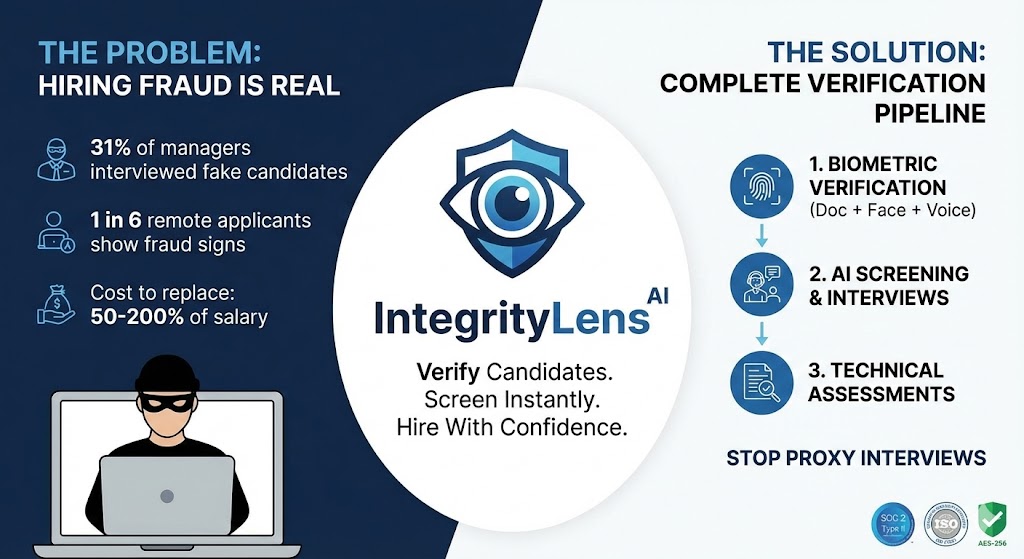
Recommendation: treat third-party screening calls as a controlled dependency, not a blocking step that recruiters will work around. In PeopleOps terms, an outage is not only downtime. It is inconsistent treatment of candidates. When one recruiter retries five times and another "skips for now," you create unequal process, billing surprises, and an audit narrative you cannot defend. External context: Checkr reports that 31% of hiring managers say they have interviewed a candidate who later turned out to be using a false identity. Directionally, that implies identity risk is showing up in normal hiring operations, not only at high-security companies. It does not prove your org has the same rate or that every identity mismatch is malicious, but it does justify designing a pipeline that does not quietly drop verification steps under pressure.
What you will control by the end
Recommendation: implement circuit breakers plus fallbacks so you can keep hiring moving while keeping risk policy intact. By the end, you should be able to: - Identify which third-party calls can fail open vs must fail closed (by role risk tier). - Add a circuit breaker that stops retry storms and routes work into a queue. - Use idempotency so a recruiter clicking "retry" does not create duplicate checks or conflicting results. - Preserve an Evidence Pack entry for every exception: who approved, why, what was pending, and what happened next. - Run a canary rollout and a kill switch so you can change behavior during a live incident without redeploying your entire stack.
Ownership, automation, and systems of truth
Recommendation: make ownership explicit so outage behavior is predictable, not negotiated in Slack. Who owns what (typical, adjust to your org): - Recruiting Ops owns workflow states, templates, and candidate communications. - Security or Compliance owns risk policy for when checks can be deferred and what compensating controls apply. - Hiring Managers do not override policy, but they can request escalation with documented rationale. What is automated vs manually reviewed: - Automated: circuit breaker decisions, queuing, retries, status updates to ATS, and candidate messaging for known outage states. - Manual review: exceptions to proceed (for pre-defined tiers only), alternate vendor triggers, and any "start-date at risk" approvals. Systems of truth: - ATS is the system of record for stage and final disposition. - Verification and screening services are the system of record for check initiation, outcomes, and Evidence Pack artifacts. - Your integration layer is the system of record for delivery attempts (webhook receipts, retries, idempotency keys).
If the ATS says "offer pending background" but the screening vendor is down, the integration layer sets an explicit state like "screening-delayed-vendor-outage" and timestamps it.
Any deviation from policy must create an Evidence Pack entry with approver, reason, and expiry (for example, "proceed with conditional offer until check completes").
What is a circuit breaker in hiring integrations?
Recommendation: use circuit breakers on any vendor call that can block offers, start dates, or interview scheduling. A circuit breaker is a control that stops repeated failing calls to a dependency, returns a safe response quickly, and periodically tests recovery. In hiring, the goal is to prevent retry storms, duplicate charges, and inconsistent candidate handling. Practical hiring interpretation: - Closed: vendor is healthy, calls flow normally. - Open: vendor is failing, calls are not attempted inline. You queue work and show an explicit delayed status. - Half-open: you allow a small number of test calls. If they pass, you close the breaker. If they fail, you keep it open. For CHRO concerns: circuit breakers protect speed (no spinning wheels), cost (no duplicate checks), risk (no silent bypass), and reputation (consistent candidate communication).
Implementation steps that hold up in audit
Recommendation: implement this as a policy-backed workflow, not as a hidden developer feature. - For low-risk roles, you might allow conditional offer with a strict expiry and a required completion before start date. - For high-risk roles (admin access, finance approvals, production credentials), fail closed: no offer release until check completes. - This can be your integration service or a managed workflow layer, but it must be the one place that enforces timeouts, retries, and idempotency. - Keep the ATS clean: it should receive a status update, not implement vendor-specific retry logic. - Set a strict request timeout (for example, 8-12 seconds) so recruiters are not stuck waiting. - Use exponential backoff with jitter and a hard cap on attempts to avoid retry storms. - Track rolling error rate (5xx, timeouts), not only absolute count. - Open the breaker when the error rate crosses a threshold for a time window and minimum request volume, so one-off blips do not flip behavior. - Queue and retry later (default). - Route to alternate vendor (only if contract and policy allow). - Trigger manual review for a bounded set of roles with documented compensating controls. - Your vendor call should include a stable idempotency key like candidateId + jobId + checkType + version. - Webhook handling must be idempotent so duplicate vendor callbacks do not create multiple ATS updates or multiple invoices. - Every request and webhook should carry a correlation ID that maps to the candidate profile and requisition in the ATS. - Log the breaker state changes and the exact reason a candidate was queued or escalated. - Start with a small percentage of traffic or one business unit. - Add a kill switch to force "queue only" if behavior is causing delays or false positives in escalation.
Classify which checks are "inline blocking" vs "async" by role tier
Put every third-party call behind a single integration boundary
Add timeouts and retry budgets before you add fancy logic
Implement circuit breaker thresholds based on failure rates, not anecdotes
Define fallbacks that are policy-safe
Use idempotent webhooks and idempotency keys
Observability: trace a candidate through the outage
Rollout safety: canary plus kill switch
If the ATS is unavailable, do not drop vendor results. Store them in the integration layer with a retry queue for ATS updates.
Surface a clear internal banner: "ATS update pending" so recruiters do not re-trigger checks.
Reconcile later using idempotency keys and a periodic backfill job.
Prefer OAuth/OIDC where vendors support it. If you must use API keys, store them in a secrets manager, rotate, and restrict by IP or workload identity.
Limit who can trigger manual overrides and require reason codes for every exception.
Use least-privilege service accounts and log access to Evidence Packs.
A circuit breaker policy you can hand to Recruiting Ops and IT
Recommendation: write the rules as a shared policy artifact so Recruiting Ops, Legal, and IT are aligned before the next outage. Use the following example as a starting point and adapt thresholds to your baseline error rates. Treat the numbers below as illustrative examples, not performance claims.
Anti-patterns that make fraud worse
Recommendation: avoid these three behaviors because they create unreviewable exceptions and blind spots. - Letting recruiters "skip verification" with no Evidence Pack entry and no expiry date. - Retrying vendor calls manually from multiple tools (ATS, email, vendor portal), creating duplicates and conflicting states. - Hiding outage states from candidates, which increases abandonment and creates pressure for unlogged side deals.
Where IntegrityLens fits
Recommendation: centralize hiring workflow and integrity controls so third-party failures do not create shadow processes. IntegrityLens AI combines an ATS with identity verification, fraud detection, AI screening interviews, and coding assessments so your funnel has a single, defensible control plane. For circuit breakers, IntegrityLens supports risk-tiered steps, Evidence Packs for exceptions, and integration patterns that avoid duplicate actions during outages. TA leaders and Recruiting Ops use it to keep offers moving without improvising policy. CISOs use it to ensure verification and screening decisions are logged, access-controlled, and reconstructable. It reduces the need to stitch together fragile point solutions when a vendor blips.
One-off ATS automations that break silently
Manual vendor portal checks with no audit trail
Untracked spreadsheet approvals for conditional offers
Ad hoc retries that cause duplicate charges
Disconnected tools with inconsistent candidate status
Operating model for speed, cost, and reputation
Recommendation: pre-authorize a small set of outage actions so you do not decide risk in real time. Set three pre-approved outage modes: - Mode A (default): queue and retry, candidates see a clear delay message, no recruiter action required. - Mode B (time-sensitive): conditional offer allowed for pre-defined low-risk roles with expiry and required completion before start date. - Mode C (high-risk): fail closed, escalate to Security/Compliance, no offer release. This turns a vendor outage from a bespoke debate into a controlled operating procedure, with predictable candidate experience and consistent risk posture.
Sources
- Checkr, Hiring Hoax (Manager Survey, 2025): https://checkr.com/resources/articles/hiring-hoax-manager-survey-2025
Questions to ask your screening vendors before renewal
Recommendation: vendor due diligence should include integration failure behavior, not only turnaround time. Ask: - Do you support idempotency keys to prevent duplicate charges and duplicate case creation? - What webhook guarantees exist (at-least-once delivery, signing, replay protection)? - Do you support OAuth/OIDC, and what are your key rotation expectations? - What status codes and error taxonomies should trigger a circuit breaker? - Can you provide an outage status feed so you can automate Mode A vs Mode C decisions?
Related Resources
Key takeaways
- Treat third-party checks as a dependency with failure modes, not a simple step in a workflow.
- Use circuit breakers to fail fast, queue work, and preserve a consistent decision policy.
- Define what proceeds vs pauses during outages, and log every exception into an Evidence Pack for audit.
- Make the ATS the system of record for status, but never the only system holding the risk rationale.
- Prefer OAuth/OIDC for vendor auth and use idempotent webhooks to prevent duplicate charges and duplicate decisions.
Drop this into your integration service or workflow engine as the source of truth for outage behavior.
Illustrative thresholds only. Tune using your own baseline error rates and candidate volume.
version: 1
owner:
  recruitingOps: "Owns ATS stages, candidate comms, queue visibility"
  securityCompliance: "Owns risk tiers, override approvals, retention"
  engineering: "Owns integration runtime, breaker logic, observability"

vendors:
  backgroundCheckProviderA:
    auth:
      method: "oauth2"
      scopes: ["checks:create", "checks:read"]
    endpoints:
      createCheck: "https://api.vendorA.com/v1/checks"
      status: "https://api.vendorA.com/v1/checks/{checkId}"
      webhook: "/webhooks/vendorA/checks"

circuitBreakers:
  background-check-create:
    timeoutMs: 10000
    rollingWindowSeconds: 120
    minRequestsInWindow: 20
    openWhen:
      errorRateGte: 0.35          # illustrative
      timeoutRateGte: 0.20        # illustrative
    halfOpen:
      testRequests: 3
      closeOnConsecutiveSuccess: 3
    retryPolicy:
      maxAttempts: 4
      backoff: "exponential"
      baseDelayMs: 500
      maxDelayMs: 15000
      jitter: true
    idempotency:
      keyTemplate: "{candidateId}:{jobId}:{checkType}:v1"
      dedupeTtlHours: 72

fallbacks:
  whenBreakerOpen:
    defaultAction: "QUEUE"
    queue:
      name: "screening.backgroundCheck.create"
      visibilityTimeoutSeconds: 300
      maxAgeHours: 48
    atsUpdate:
      status: "screening-delayed-vendor-outage"
      noteTemplate: "Background check delayed due to vendor outage. Auto-retry in progress. No recruiter action required."
    candidateMessage:
      templateId: "candidate-outage-delay"

riskTiers:
  low:
    allowConditionalOffer: true
    conditionalOfferExpiryHours: 72
    requiredBeforeStartDate: true
    manualOverride:
      allowed: true
      approvers: ["PeopleOpsDirector"]
      evidenceRequired: ["reasonCode", "expiry", "compensatingControls"]
  medium:
    allowConditionalOffer: false
    manualOverride:
      allowed: true
      approvers: ["SecurityComplianceLead"]
      evidenceRequired: ["reasonCode", "expiry", "compensatingControls"]
  high:
    allowConditionalOffer: false
    manualOverride:
      allowed: false
      onBreakerOpenAction: "FAIL_CLOSED"
      atsUpdate:
        status: "offer-blocked-screening-outage"
        noteTemplate: "Offer blocked: high-risk role requires completed background check."

audit:
  evidencePack:
    recordOn:
      - "breaker.state.change"
      - "fallback.queue.enqueued"
      - "manual.override.requested"
      - "manual.override.approved"
      - "webhook.received"
    retentionDays: 365
  webhookSecurity:
    requireSignature: true
    allowReplayWindowSeconds: 300

killSwitches:
  forceQueueAllBackgroundChecks: false
  disableAlternateVendorRouting: true

canary:
  enabled: true
  scope:
    businessUnit: "GTM"
  trafficPercent: 10
  rollbackOn:
    - "atsUpdateFailureRateGte:0.10"   # illustrative
    - "queueAgeP95MinutesGte:60"      # illustrative
Outcome proof: What changes
Before
Background checks were an inline step. When the vendor had partial outages, recruiters retried manually in vendor portals and sometimes issued offers without a consistent exception record.
After
Circuit breakers routed failing calls into a controlled queue with explicit ATS statuses, bounded retries, and pre-approved outage modes by risk tier. Exceptions created Evidence Pack entries with approver and expiry.
Implementation checklist
- Identify every third-party API call that is inline with offers or start dates.
- Define safe fallbacks (queue, manual review, alternate vendor) by role risk tier.
- Add a circuit breaker with clear open/half-open/closed thresholds and max retry budget.
- Make every call idempotent using a stable candidate+job key to stop duplicates.
- Implement a kill switch and a canary rollout for any new vendor integration.
- Write an outage communication template for recruiters and candidates (what happens next, and when).
Questions we hear from teams
- Should we ever let hiring proceed when a background check vendor is down?
- Yes, but only when you have a pre-approved policy by role tier that defines compensating controls, an expiry, and who can approve. Otherwise the outage becomes a silent bypass that you cannot defend later.
- How do circuit breakers reduce hiring risk if they sometimes fail fast?
- Failing fast is the point. It stops retry storms and forces work into a controlled path (queue, alternate vendor, or fail closed) with explicit states and audit logs, instead of invisible, inconsistent workarounds.
- What should candidates see during a vendor outage?
- A clear status that the check is delayed due to a vendor issue, what happens next (automatic retry or follow-up), and the expected timeline. Ambiguity increases abandonment and pressure for exceptions.
- What is the ATS role when the screening vendor is unreliable?
- The ATS should remain the system of record for stage and disposition, but the integration layer should own delivery attempts, retries, breaker state, and Evidence Pack logging so the ATS does not become brittle.
- Is this only an Engineering problem?
- No. PeopleOps and Recruiting Ops define the policy and candidate experience, Security defines which roles can never fail open, and Engineering implements the controls. If any one group acts alone, outages produce inconsistent decisions.
Ready to secure your hiring pipeline?
Let IntegrityLens help you verify identity, stop proxy interviews, and standardize screening from first touch to final offer.
Watch IntegrityLens in action
See how IntegrityLens verifies identity, detects proxy interviewing, and standardizes screening with AI interviews and coding assessments.